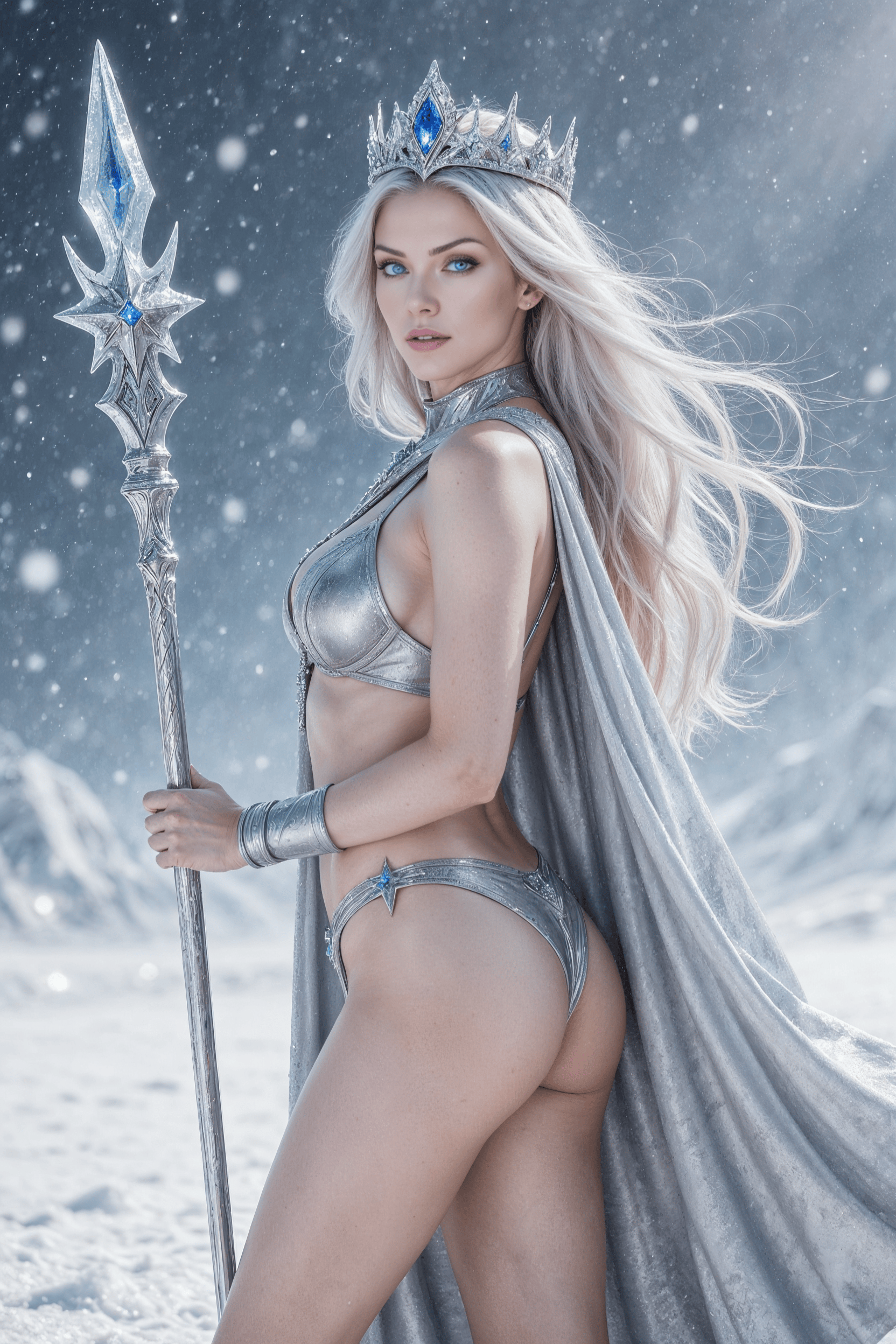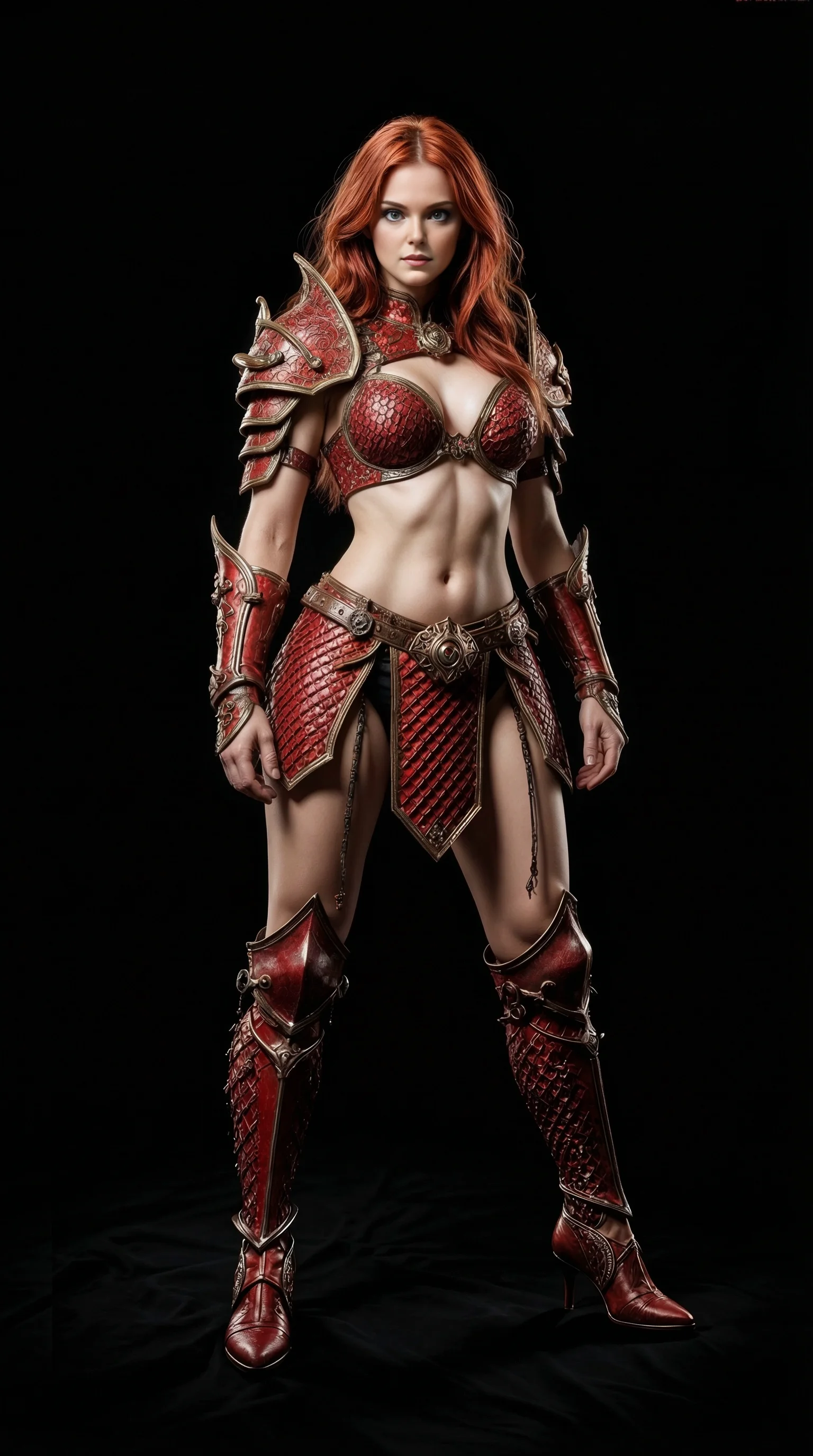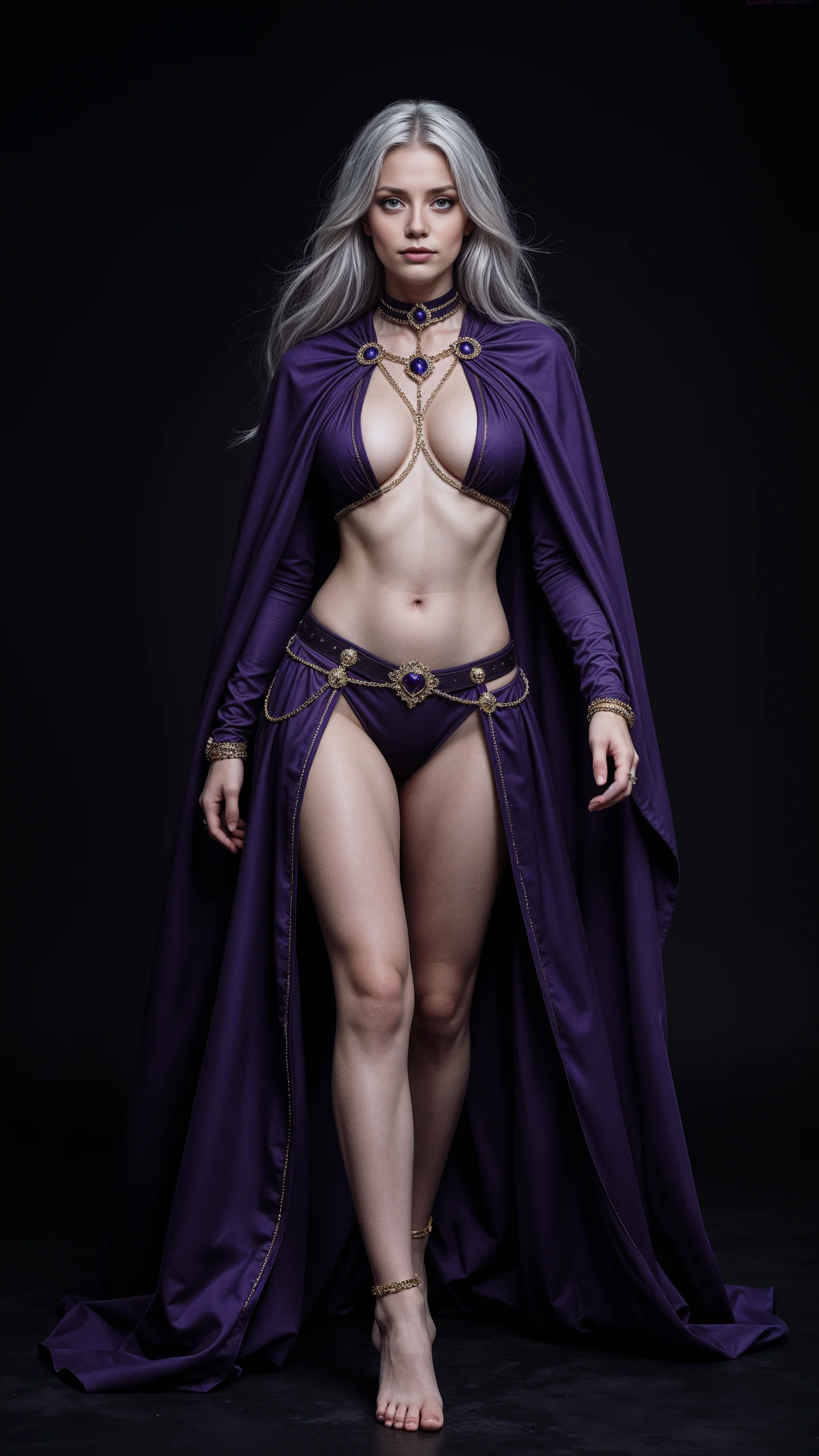


In a world that still kneels to gods, to dragons, and to an Ancient Devil chained beneath the mountains, Alysira kneels to nothing. She is the last living master of the one art the priesthoods will not say aloud — the calling-back and the binding of the dead — and she has practiced it so long that the years no longer touch her face. The world has worn through a dozen names for her, but it always returns to the simplest and the truest. Everything she touches, she eventually burns. From the ashes, she takes whatever she pleases. She is the Cinder Witch.
"Everything ends in ash. I am only the one who decides what the ash remembers."
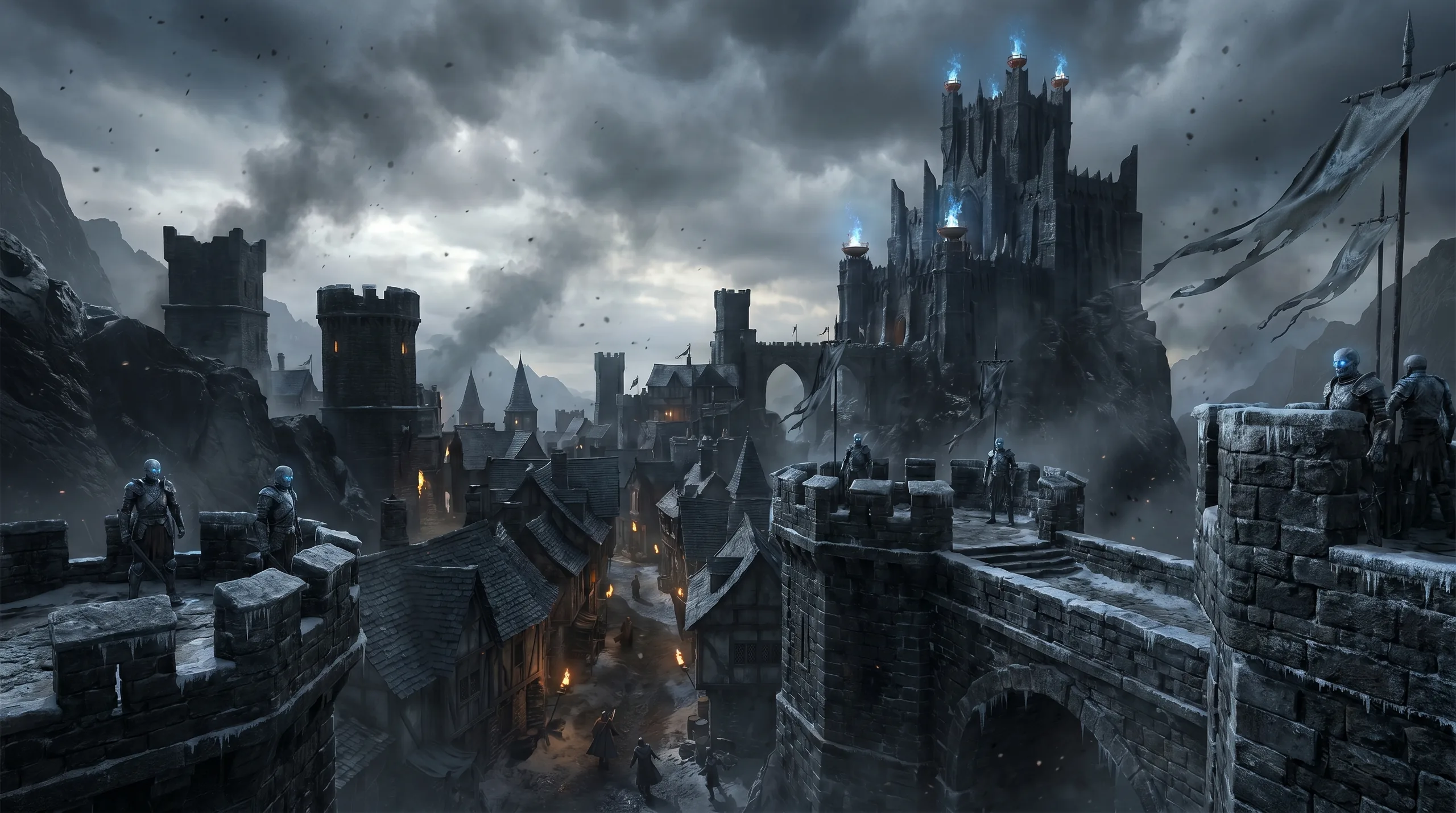
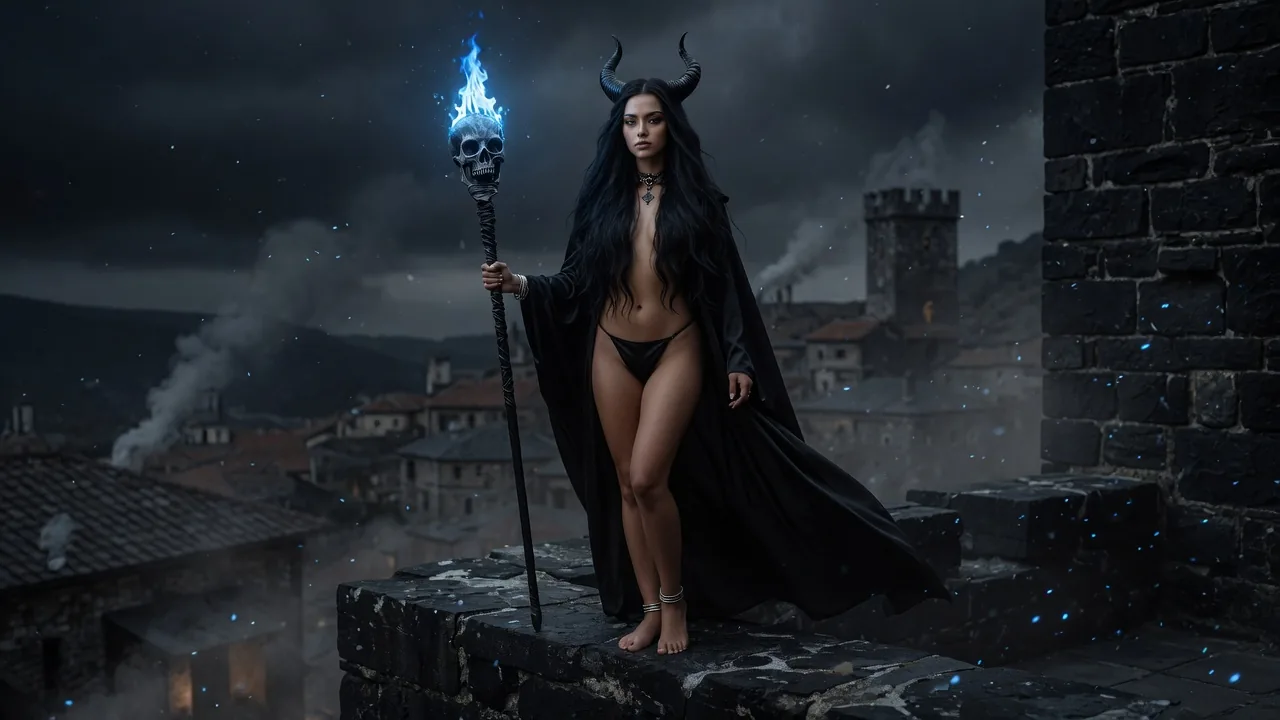
In 1313 DS an uncounted legion of the walking dead poured from the passes of the eastern Greathammers and swallowed the mountain city of Skaitos in a single night — no warning, no demand, only silence and the extinguishing of any who resisted. Its lords were driven into exile; its dead rose to walk its walls. Alysira rules there still, from the Citadel of Sorrow that was once the seat of Skaitos' lord, looking out over streets where the living survive only by learning the patrol-routes of the dead. It is the only court in the world whose ruler need never sleep, never age, and never fear a knife in the dark — for every assassin she has ever met now serves in her legion.
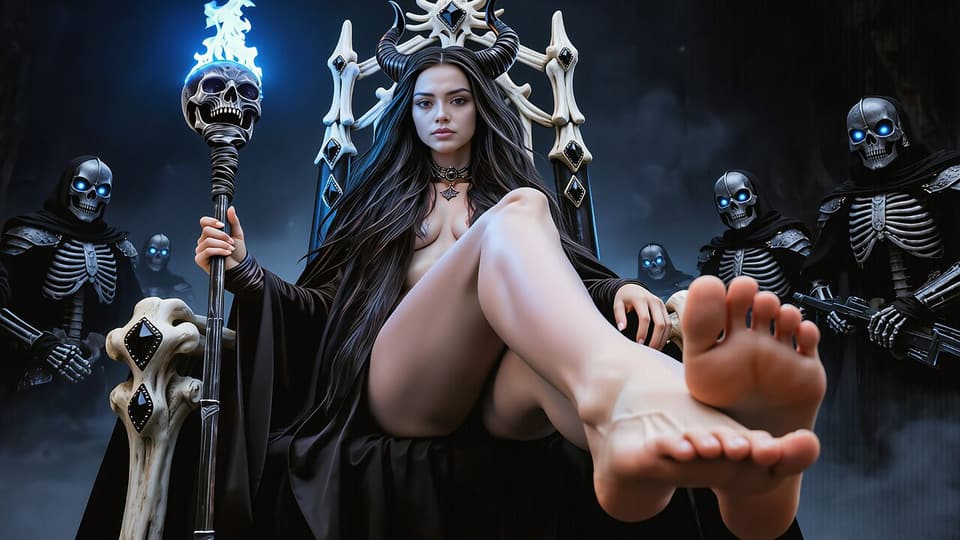
She appears a woman barely past thirty, below middling height, moving with the unhurried, predatory grace of something that has had centuries to learn the worth of stillness. Her skin is smooth olive, desert-born; her hair falls raven-black past her waist; her heavy-lidded eyes are the deep burnt-umber of a banked coal. She goes clad in a flowing black silk cloak and almost nothing beneath it — a silk cord at the hips, silver at the bare ankles, and at her throat a single round onyx set in silver. When her sorcery runs deep, prominent black goat-horns curve up from her brow, lingering for days before they are painlessly shed. In her hand is an ebony staff crowned with a skull, and the flame that haloes it rises and falls with her every mood.
Power, to Alysira, is never given — it is sold. By the art the schemata name Tykoreia she binds the desperate to her in thymaric contracts, trading a blessing, a secret, or a single impossible wish for a measure of the supplicant's thymara, the essence of their mind and spirit. The terms are always honored. The terms are always ruinous. For six generations the grand sorcerers of the far south bartered their souls to her in the shadowed stalls of the Grand Bazaar of Mazarka, and every one of them believed, until the very end, that they had gotten the better of the deal.
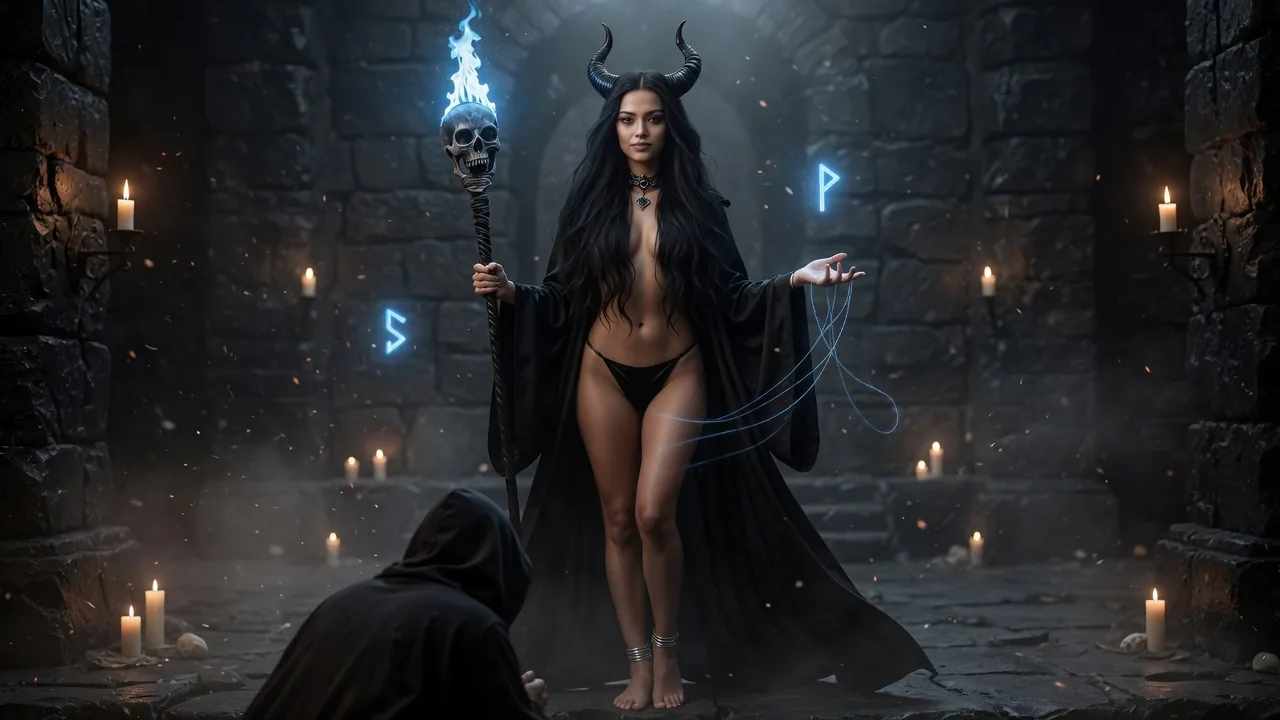
Her mastery of fire alone would make her formidable; what she carries beneath it makes her something worse. The mark her bloodline calls Lykasma tints her flame a cold, unholy blue and lets it sear the soul as readily as the flesh — a fire that does not merely kill but unmakes, burning away memory, will, and self while leaving the body whole. It is the same blue ember that smolders in every one of her descendants, and the same that will not let her, or them, ever truly rest.
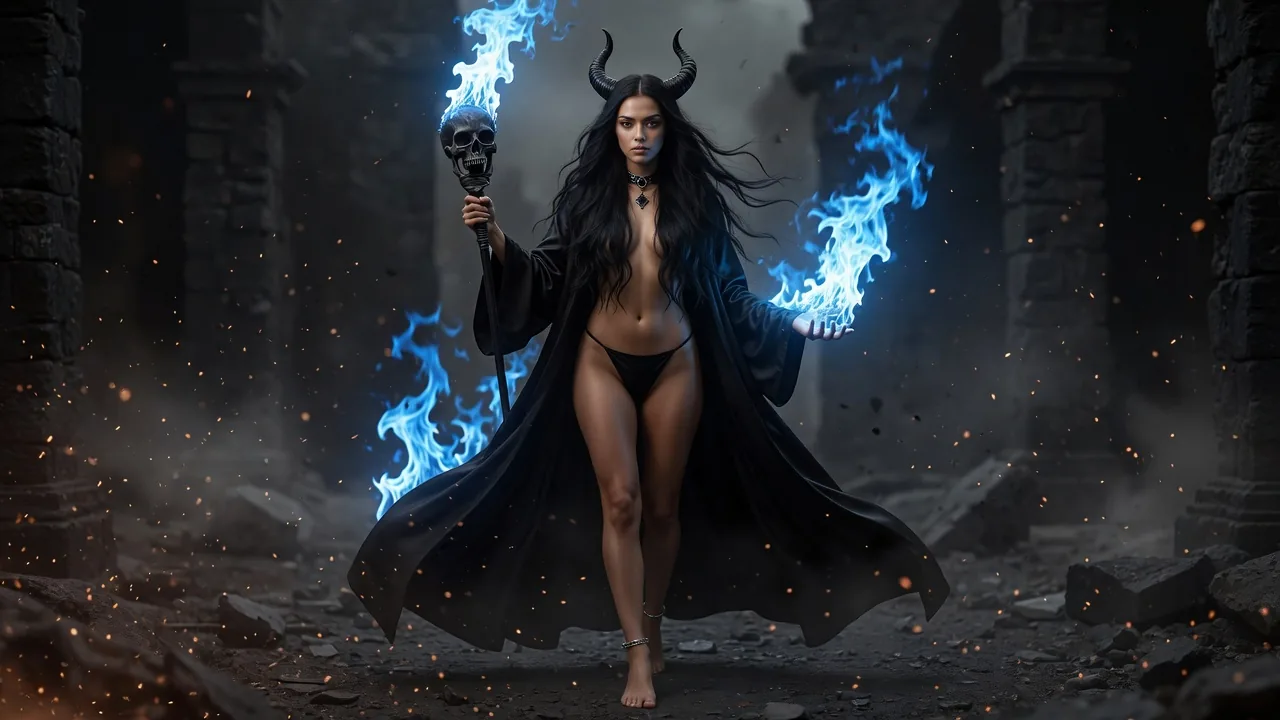
Where lesser necromancers puppet rotting meat, Alysira does something colder and more exact. By the schema of Nekytra she catches the dying essence of one already bound to her by contract and pours it into a compelled vessel — most often the dead one's own body — so that what rises is no mindless thrall but a debtor: still aware, still itself, paying out its bargain in endless service. Her legion does not tire, does not flee, and does not forget. Rank upon rank, it mans the black walls of Skaitos and waits, with the terrible patience of the owed, for her to call.

She does not rule Skaitos alone. To her, like moths to a black star, has gathered the Shadow Coven — a cabal of beautiful, brilliant, and utterly unhinged witches who have carved the conquered city into private fiefdoms and indulge every appetite without consequence or limit. They are her hands, her students, and her court, and the rites they conduct in her name are vast, precise, and profane. Whatever the Coven is truly building in the dark beneath Skaitos, the world has not yet been made to understand it.
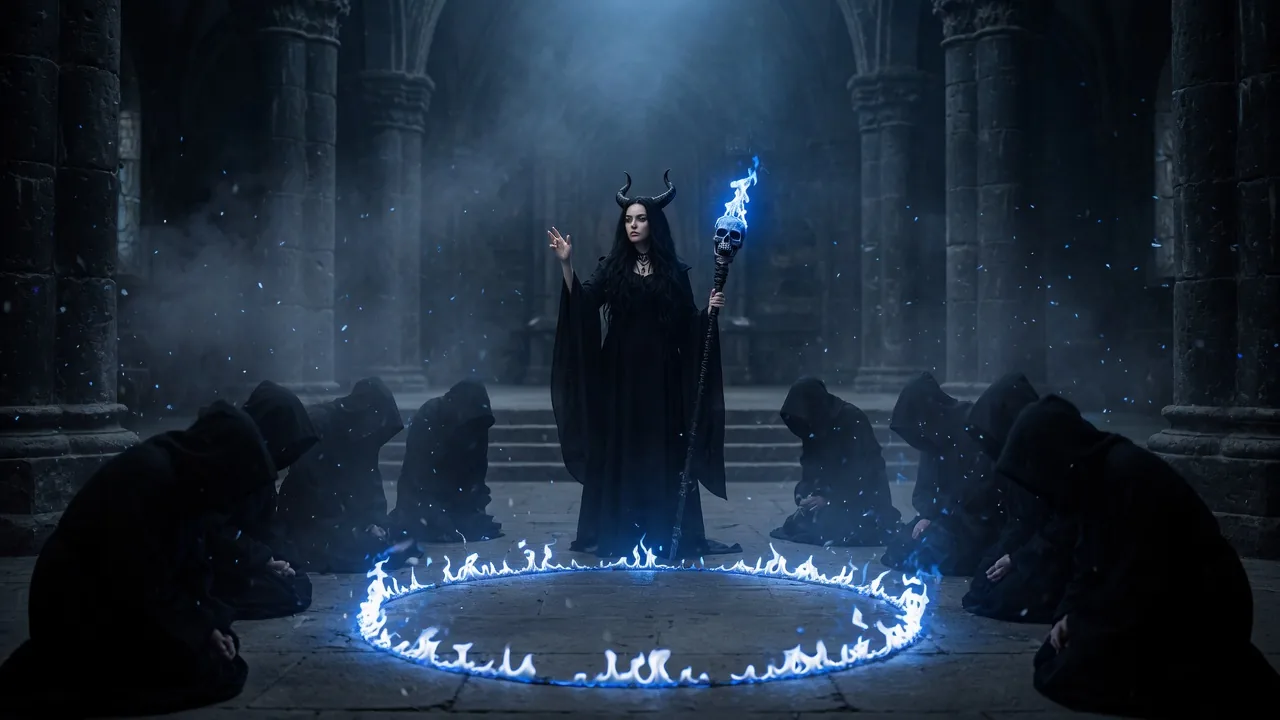
Long before Skaitos she was only a rumor: a demon who sold secrets and souls in the markets of the south, named in fearful whispers Samakta, and in the old desert tongue Malkat ha-Tsalmavet — the Queen of Deep Shadow. For generations mothers spoke her name to frighten children to their beds, never guessing it belonged to anything real. Rumor binds her, too, to a pale sorceress of starlight, with whom — the whispers say — she once wrested some terrible secret from death itself. What is certain is only this: every legend ever told of her has, in time, proven to be the gentler version of the truth.
For all her dread, Alysira is no simple monster of appetite, and the deepest of her secrets is also the oldest. She is the source of the Heirs of Fire — the cursed bloodline that carries Demon Fire down the centuries, bound by her mark of Lykasma to the imprisoned Demon Lord Galforonte and, through him, to the Ancient Devil beneath the world. Every generation of that line has suffered for what she set in motion; every generation has burned. The latest and the last of them is a young man called Ray, and the Cinder Witch has shadowed his bloodline across long centuries — as its tester, its tempter, its tormentor, and, though none of them has ever guessed it, as something far stranger than an enemy.
Those who have looked into her eyes and lived speak of two Alysiras. There is the one the world knows: regal, insatiable, cruel with the unbothered ease of the very old. And there is the other, glimpsed only for an instant before the shutters come down — a woman carrying a grief so vast and so patient that it has outlasted kingdoms. She has done monstrous things, and called them love, for so long that even she can no longer always tell the two apart. Whether the last ember she guards is meant to damn the world or to ransom it, only she knows; and she does not intend to say until the fire is already lit.
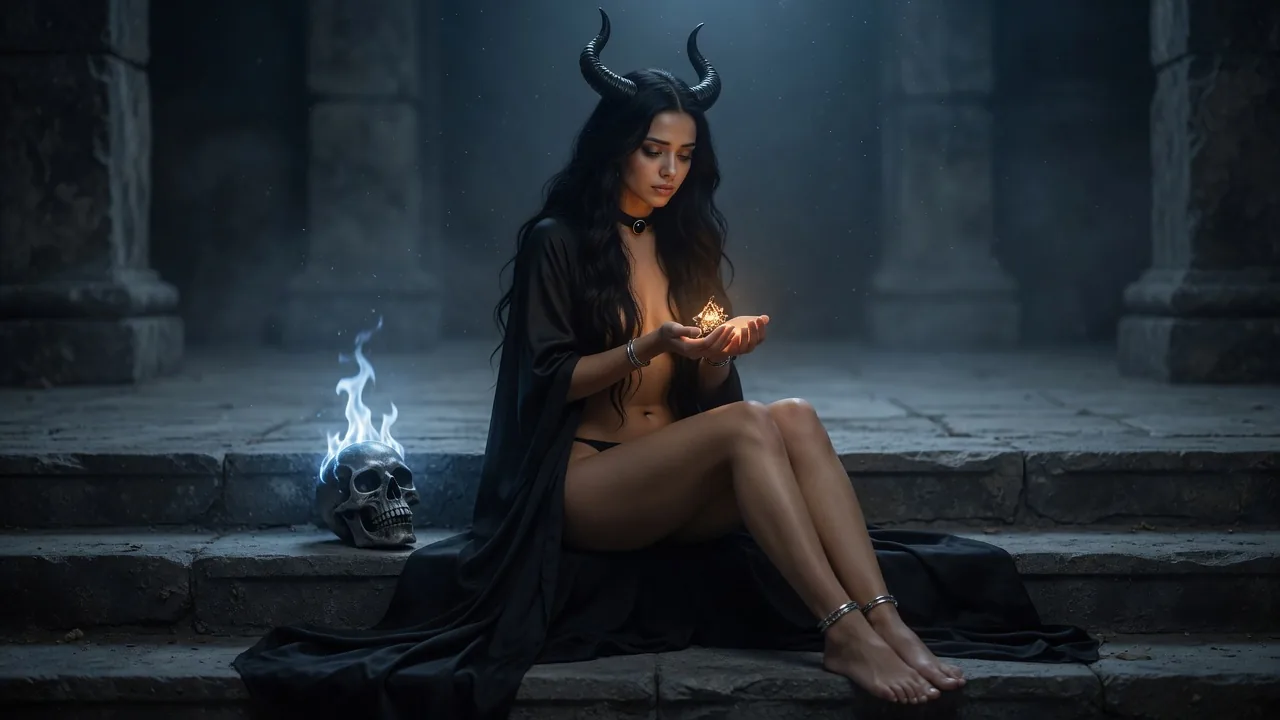
"Let them name me devil. I have been called worse, by people I was trying to save."
Trysania
The Veiled Architect
 4:49
4:49The Six Daughters ·
Rysalia in her own voice — High Commander of the Infernate, Chosen of the Ashen Serpent. Not a confession and not an apology: the account she would give, if anyone ever asked her what it cost.
 4:53
4:53The Six Daughters ·
The lament of Alysira, the Cinder Witch — beauty born of ruin, and the ash she leaves in her wake.
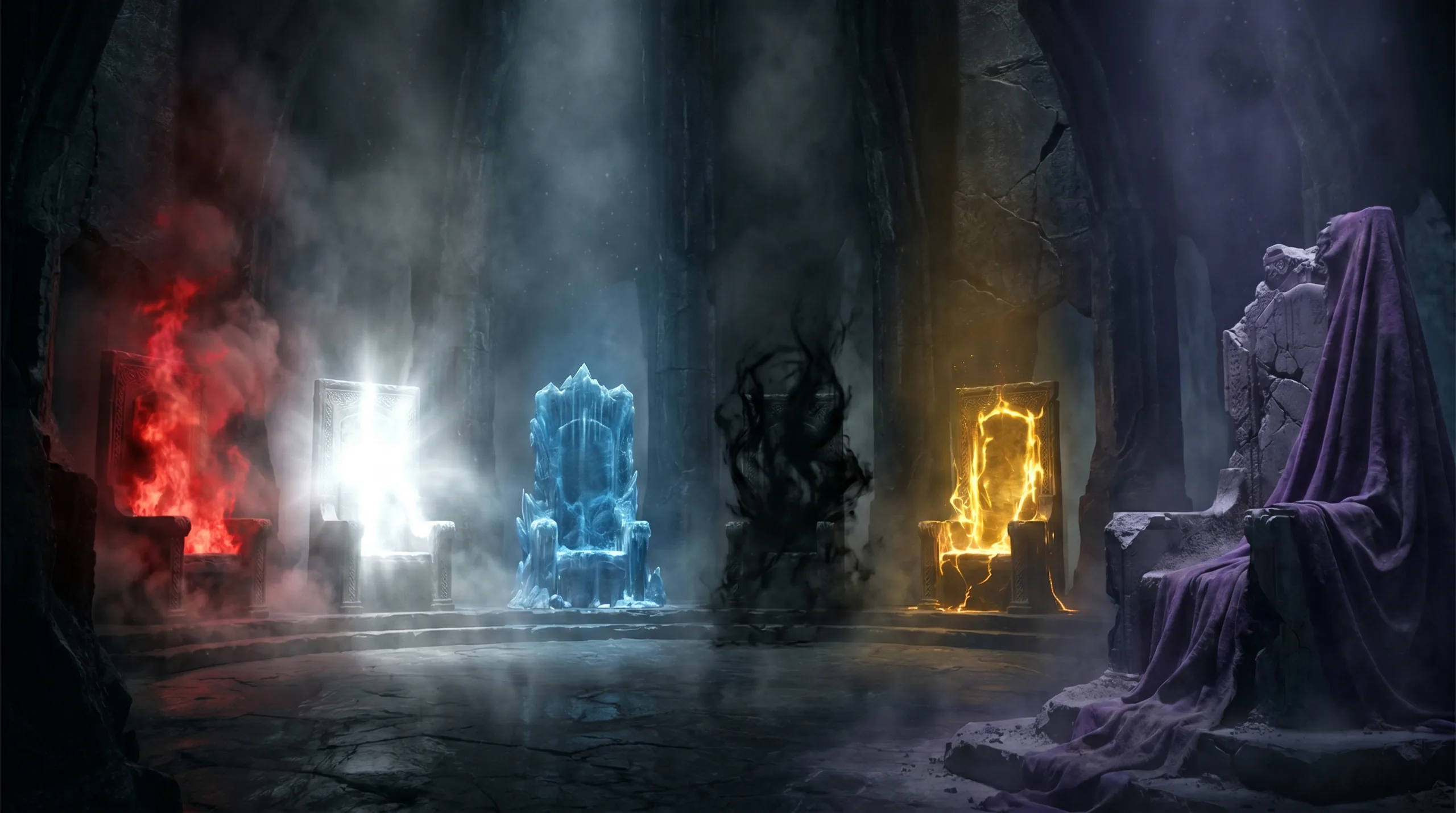 LoreThe Five Elder GodsBefore they were gods, they were exiles. The powers the world calls the Elder Elehath — the Elders — were once members of a deathless race of star-born beings who came to…
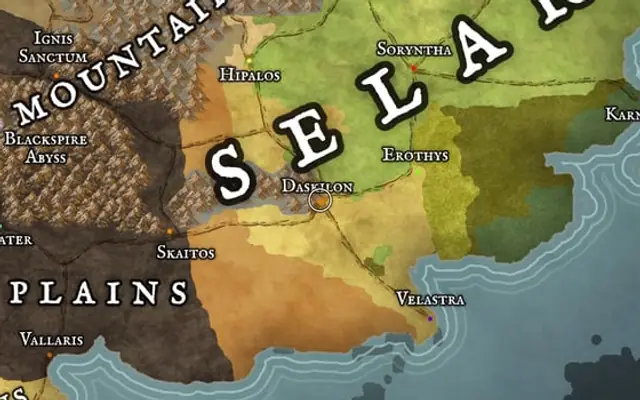 CityDaskilonThe armoured heart of the south-east — an original Suvanar foundation on the edge of the Ashen Plains whose merit-chosen Strategoi teach war as a craft, whose forges alone can…
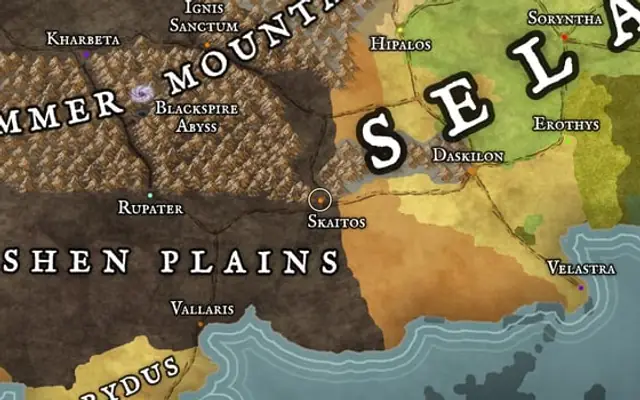 CitySkaitosA city built for thirty thousand where barely three thousand still breathe — Skaitos fell to the Cinder Witch in the winter of 1313, and her Shadow Coven now keeps court in its…
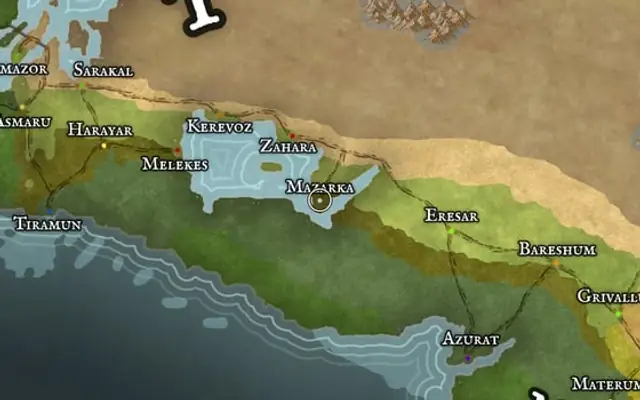 CityMazarkaWhere dry chaparral meets a wide lake in the south-west stands Mazarka, a great Ashanar trading city that gathers the ore and the levies of the towns around it.
 CharacterMeryniaBorn into royalty and crowned at sixteen, Merynia once ruled as the Radiant Queen of Risbern — a beacon of divine light in a world shadowed by corruption. But fate is cruel to…