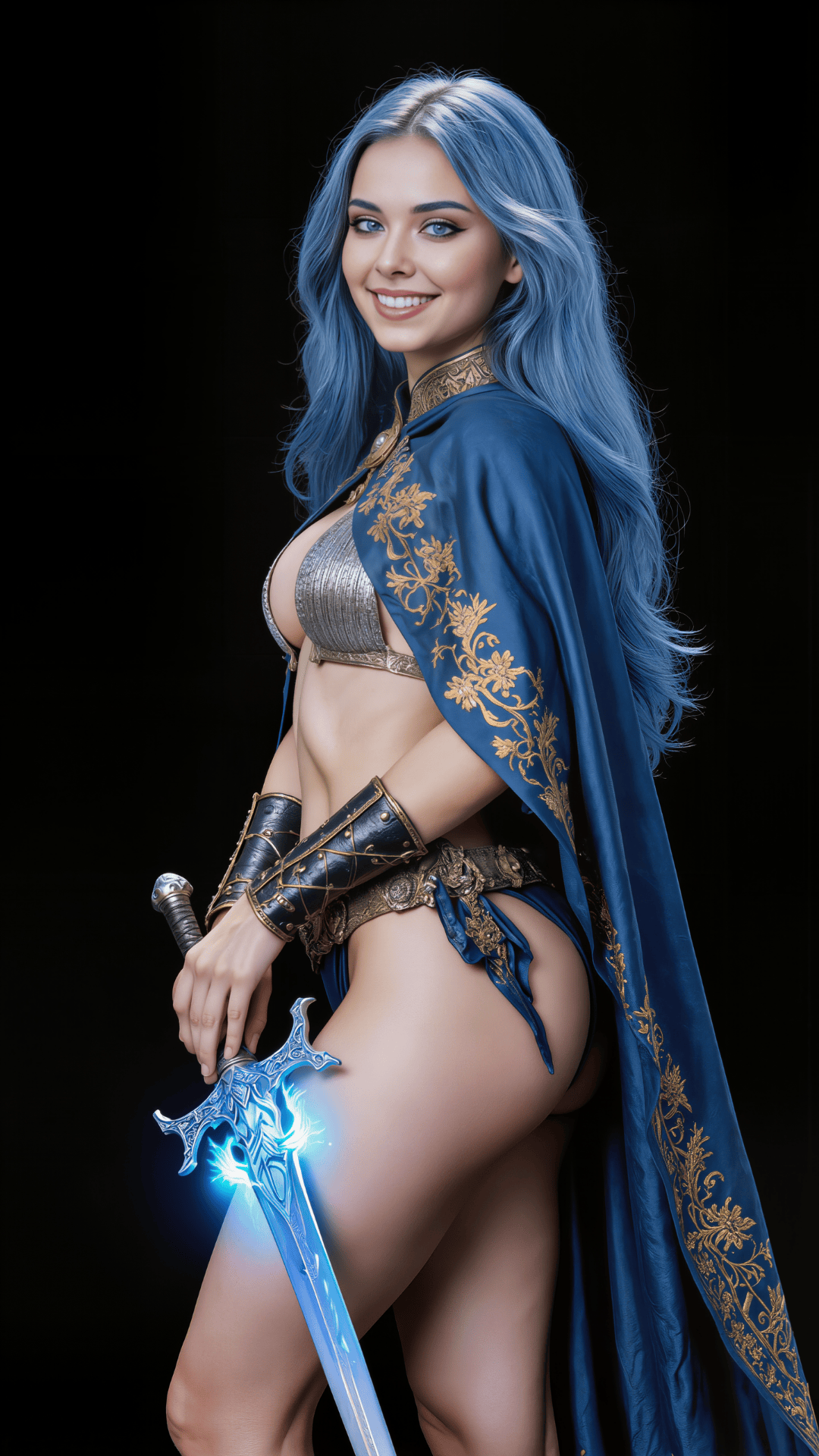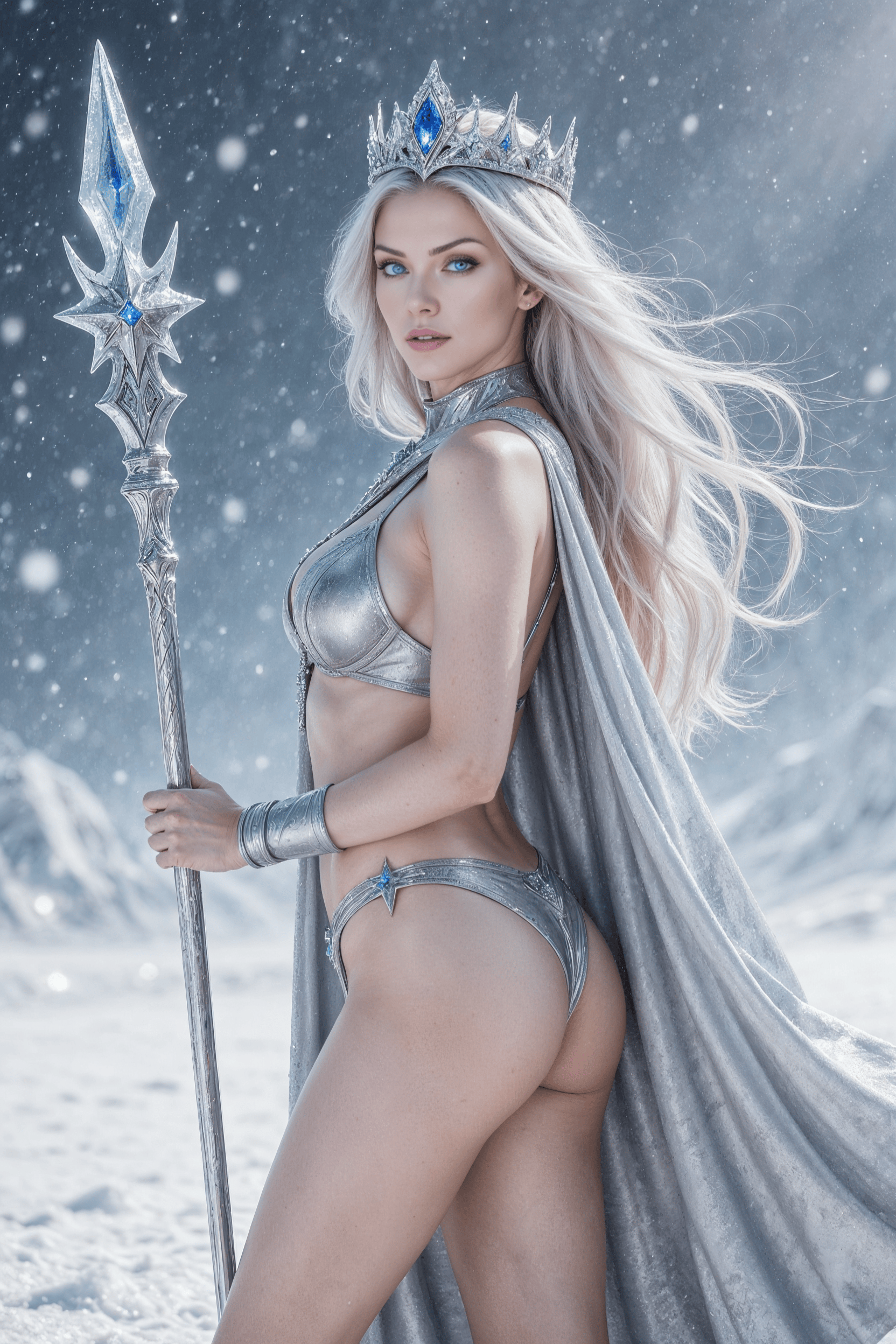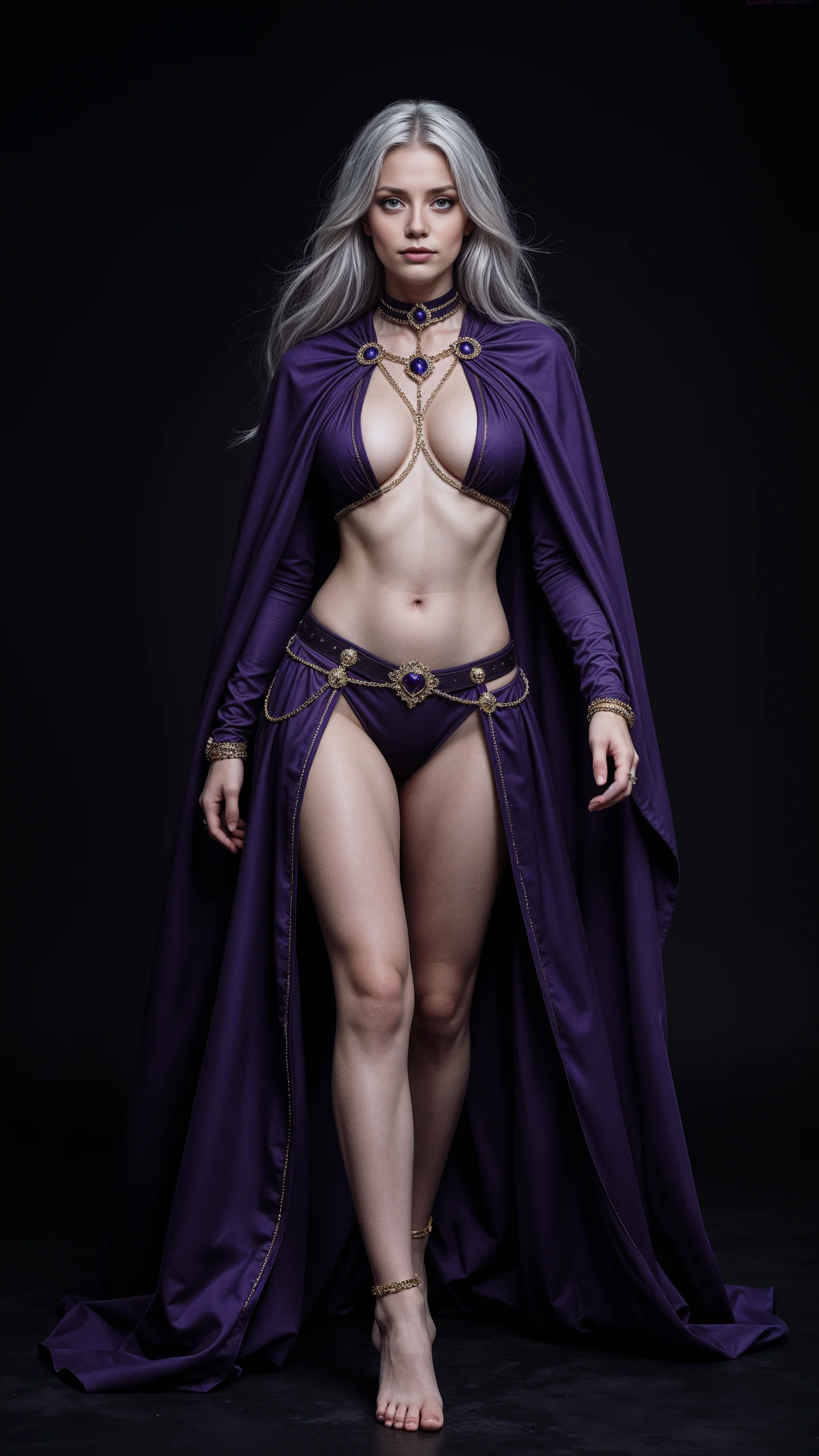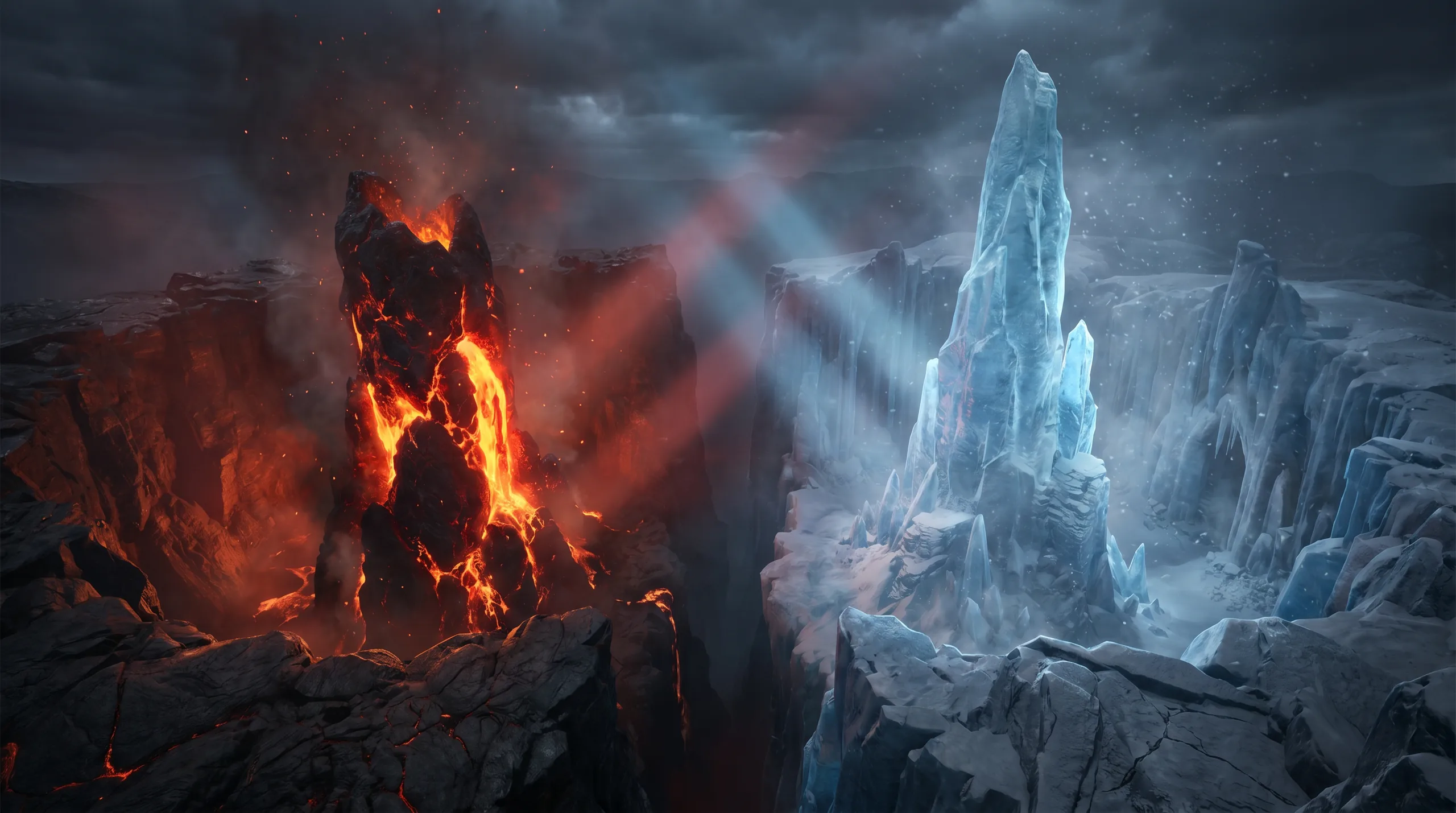
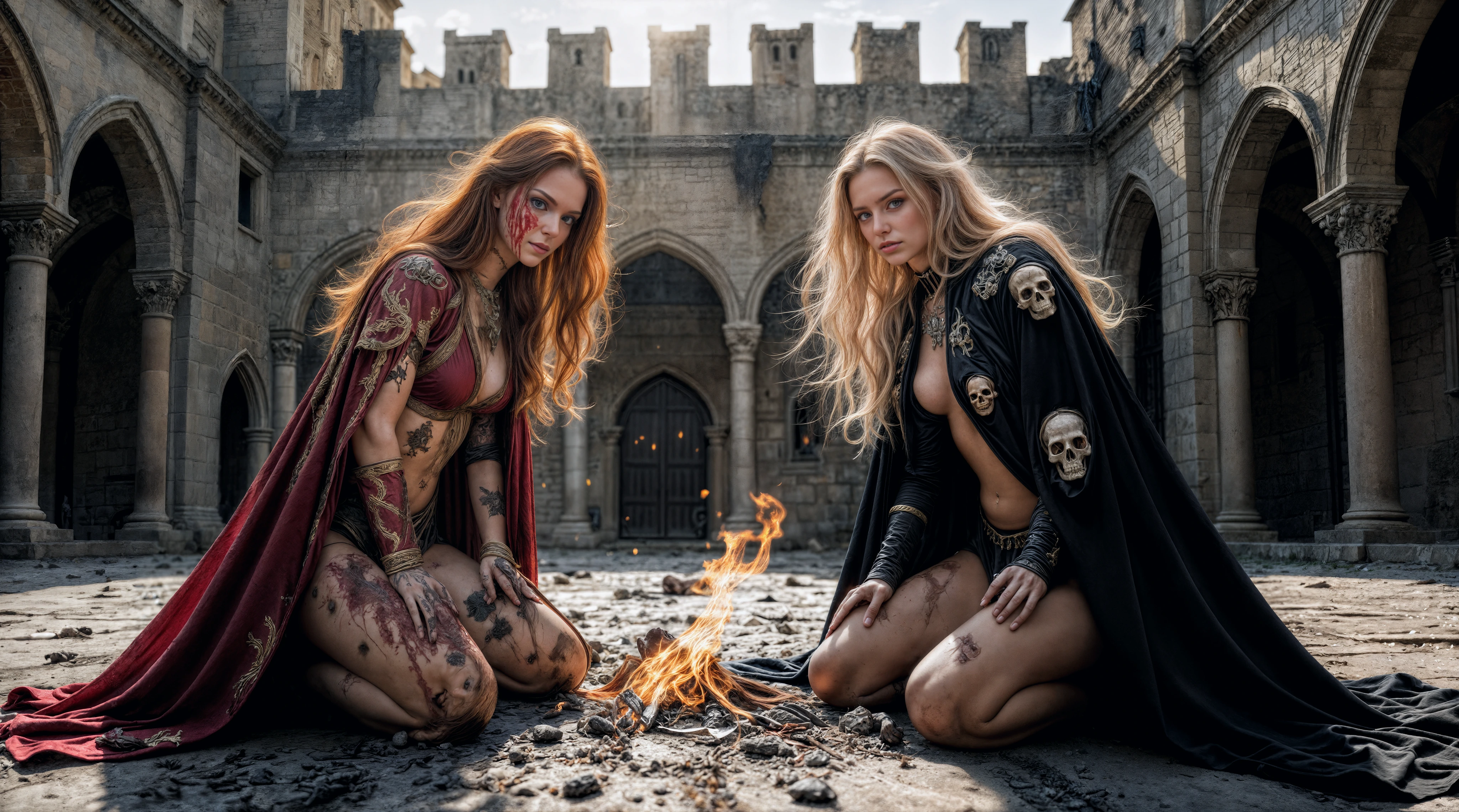
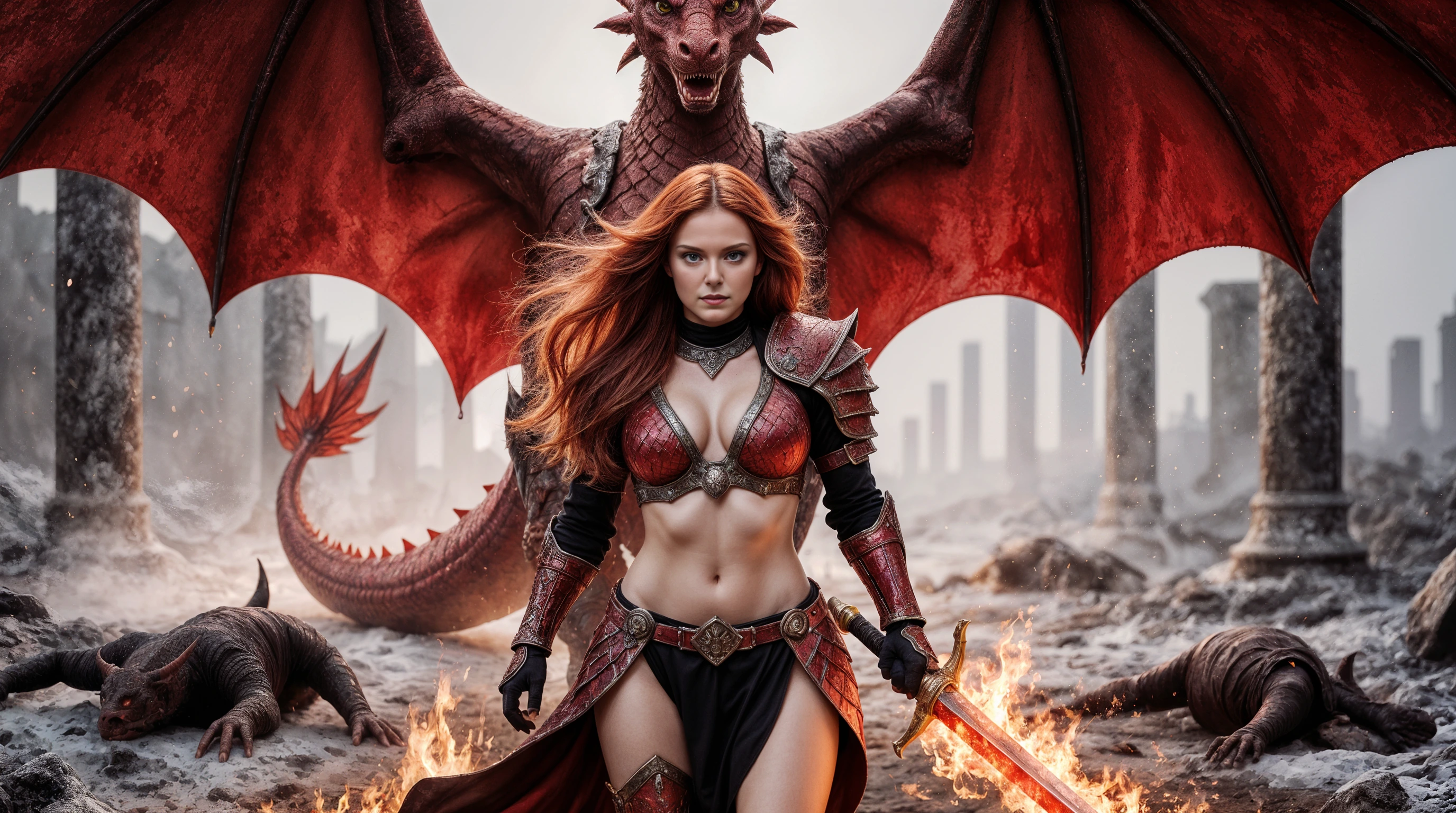
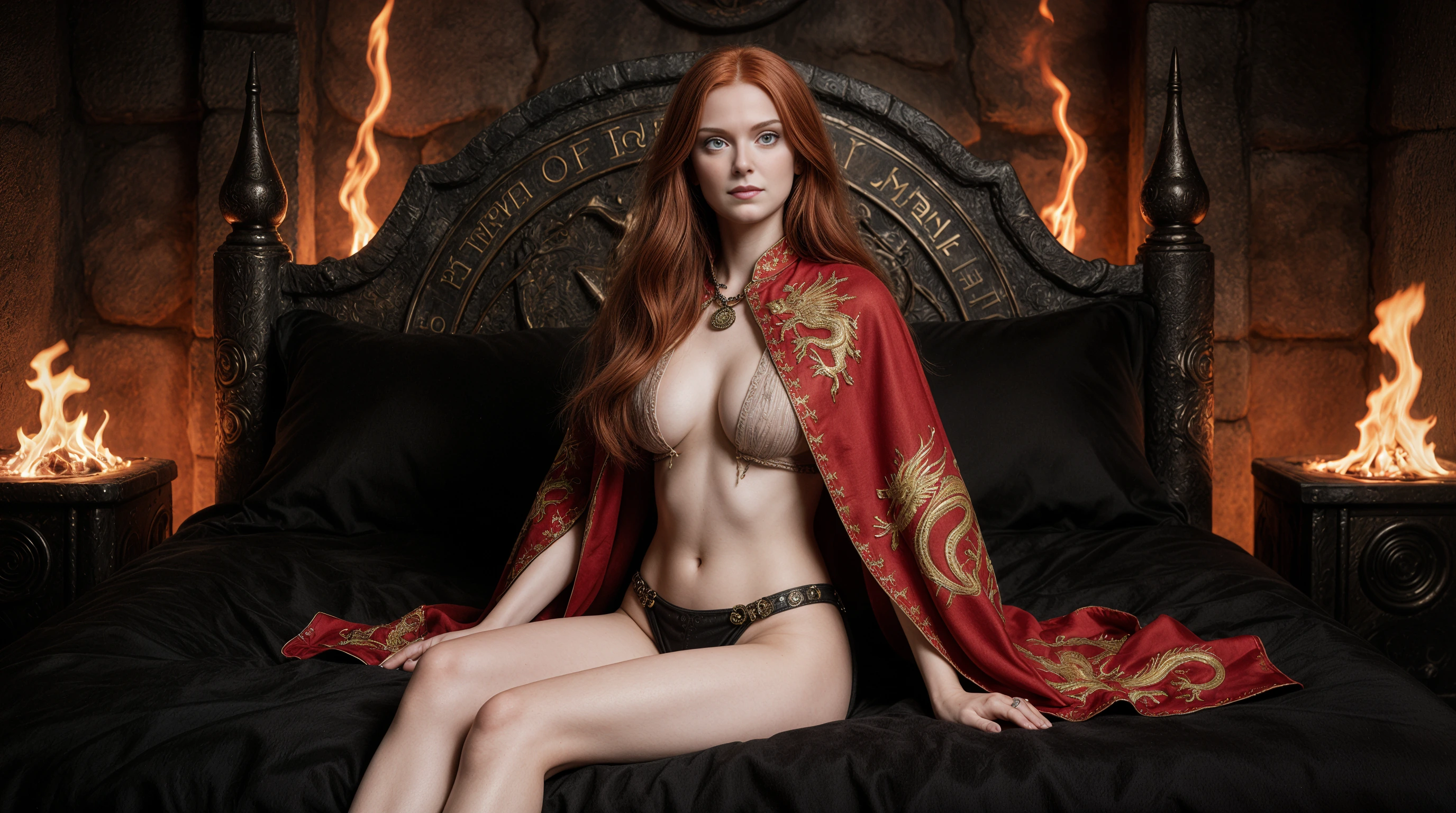
Where most see fire as ruin, Salyria sees the first breath of renewal. She is the Flamekeeper of the Emberguard — the sacred order that tends creation fire, the living flame that purifies, heals, and restores rather than devours. Crimson of hair and piercing green of eye, radiant and unbowed, she walks through wildfire and blizzard alike untouched, the Flamekeeper's Amulet burning at her breast and the weight of a failing balance resting on her shoulders. To a world tilting ever further toward ruin, she is living proof of fire's forgotten promise: that the flame which takes is also the flame that gives.
"Fire does not only take. Ask the forest after the burn — it answers in green."
Salyria was not born to the light. She was raised by Kris — the zealot who would one day forge the Infernate and crown himself Herald of the Ancient Devil — who shaped her childhood toward a single purpose: to forge her into a powerful cultist of the red flame, a vessel for the corrupting fire. But something in her refused. Even as a girl she could feel the difference between the fire that nurtures and the fire that consumes, and the faith her father pressed upon her reeked of the latter. The more he tried to bend her toward the corruption, the more certain she became that it was a lie.
So she did the unthinkable. She turned her back on her father, on his cult, and on the only life she had ever known — and she fled.
She did not mean to flee alone. When Salyria ran, she begged her younger sister, Rysalia, to run with her. Rysalia refused — she would not abandon their father, nor the only faith she had been raised to love. And so Salyria was forced into the choice that haunts her to this day: to save herself, and leave her sister behind.
The years were merciless to that decision. The girl who stayed grew first into a zealot, and then into something far greater and far more terrible — today Rysalia is the High Commander of the Infernate's armies, second only to their father, and one of the most feared conquerors alive. They are blood divided by fire: one its keeper, the other its weapon. Of all the burdens the Flamekeeper carries, the sister she could not save is the heaviest.
"I told myself I left to save the world. The truth is smaller, and worse — I left because she would not come."
Salvation found Salyria in catastrophe. Alone and adrift after her flight, she was caught in the eruption of a volcano — and the molten death that should have ended her instead parted around her, the fire recoiling from her skin as though it knew her name. Her latent gift for creation fire had woken to save her life. It was the Emberguard who found her there, untouched at the very heart of the burn, and knew her at once for what she was.
They took her in. The Flamekeeper of that age trained her, and she rose through the order with a swiftness that bordered on prophecy, mastering both the destructive and the nurturing faces of the flame. When her teacher's time came to its end, the mantle passed to her. Now she bears the sacred Flamekeeper's Amulet — the emblem of her bond with the Pyreheart Nexus, the primordial wellspring of all fire, burning at the very End of the World.
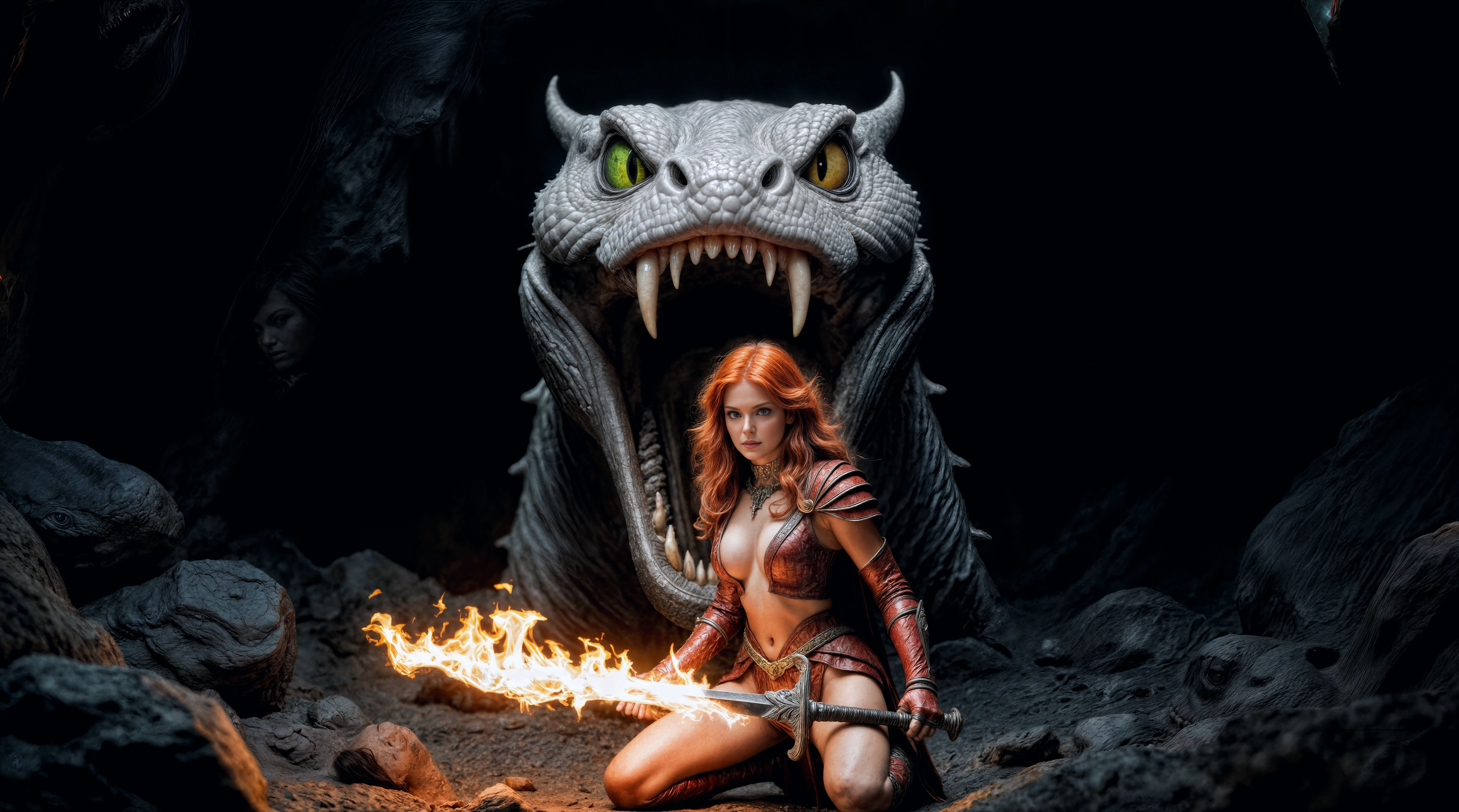
No one takes up the Amulet unproven. To become Flamekeeper, Salyria walked into the Pyreheart Nexus itself and faced the Trial of the Primordial Fire. There she fought the Demons of Azcaloth, corrupted things born of fire turned foul. There she endured the three faces of the flame — its Wrath, its Grief, and its Gift — ordeals of pain, of loss, and of mastery. And there, in the heart of the first fire, she forged her Amulet and bound her soul to the primal flame.
She walked out the Flamekeeper. The trial did not merely crown her; it sealed her — a protector of the balance, and a guardian of the world's sacred fire.
"The flame showed me my wrath, and then my grief, and then it showed me mercy. I have tried to be worthy of the third ever since."
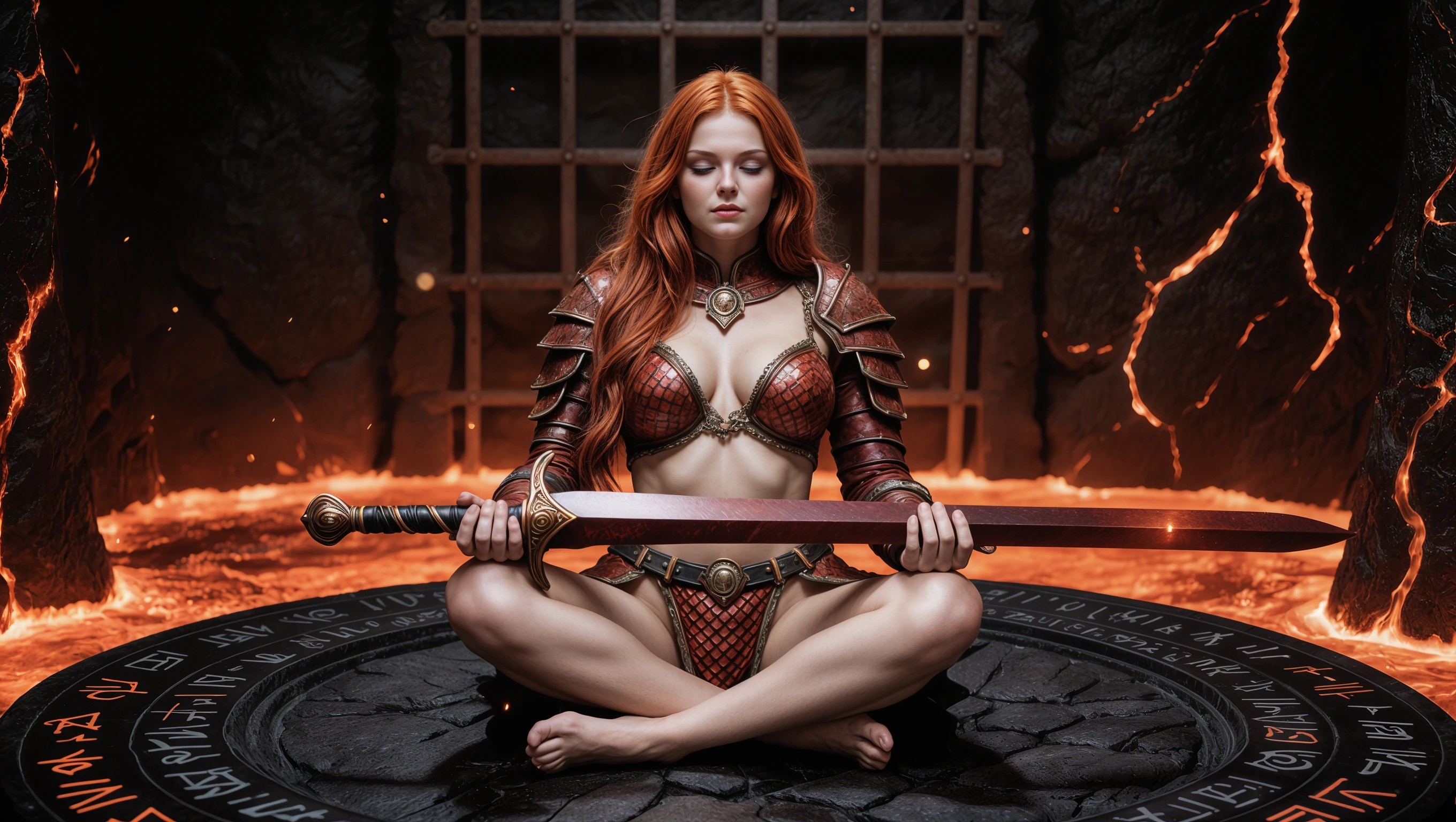
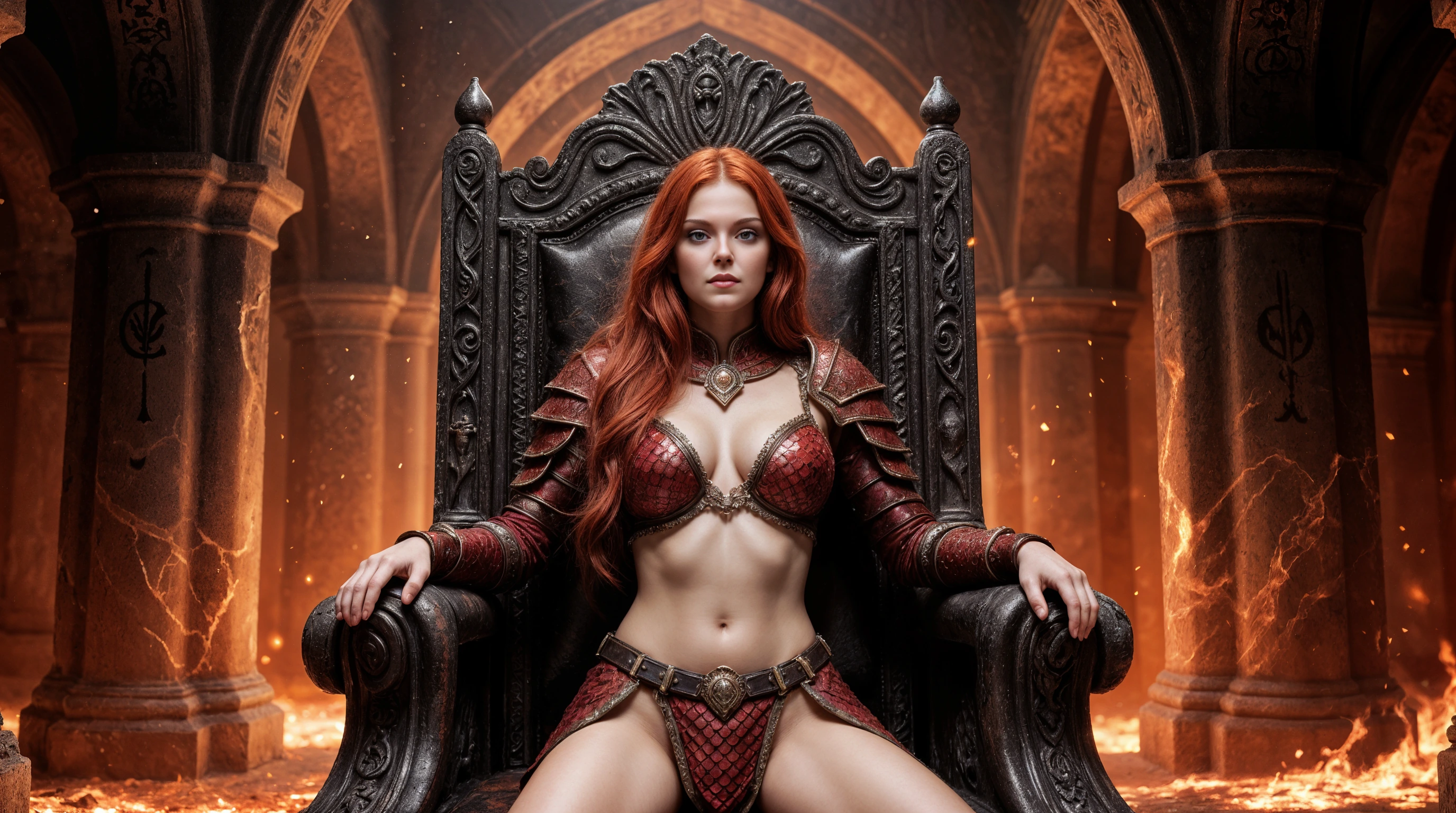
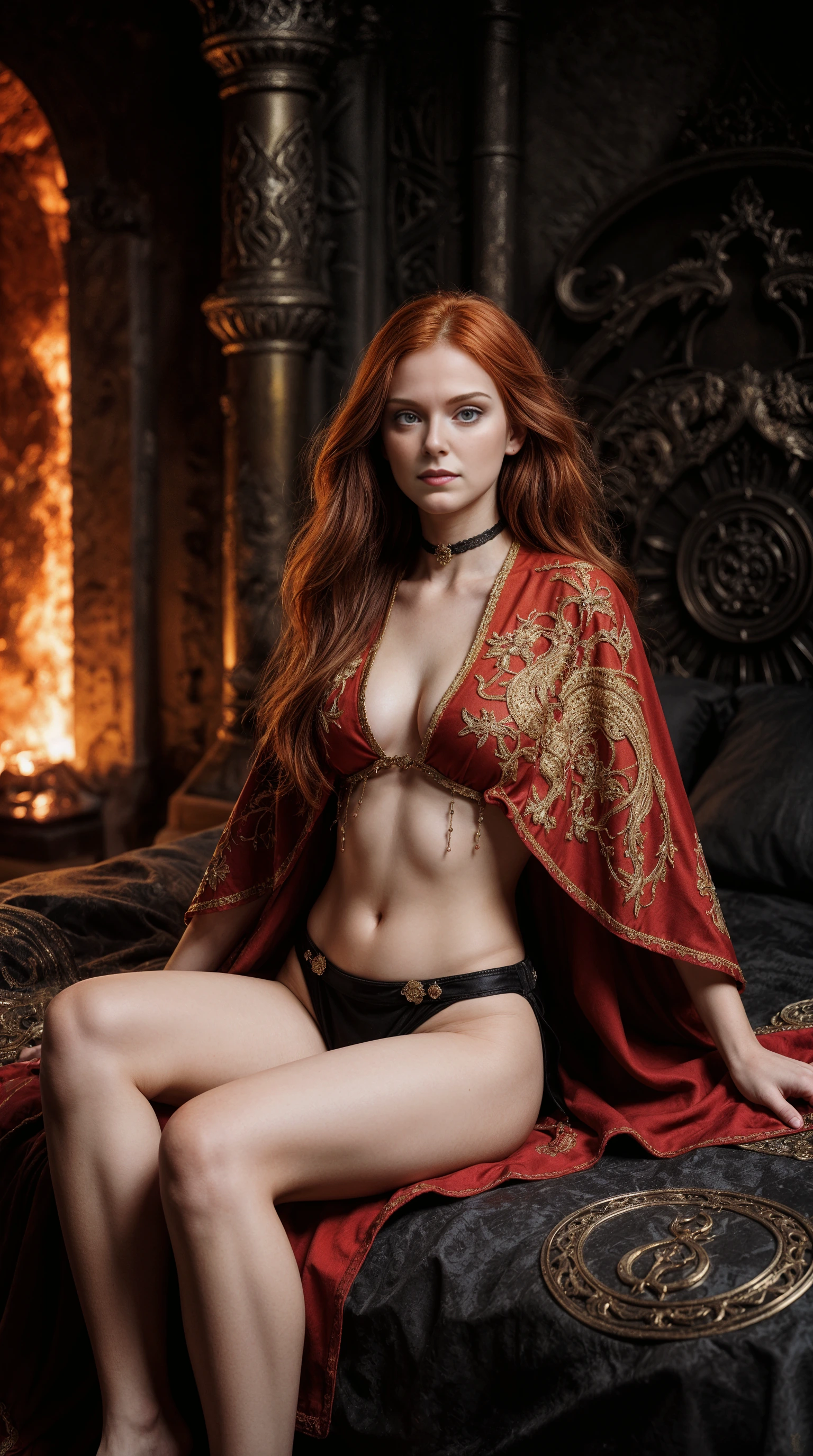
Salyria is a striking woman — fair-skinned and full-figured, with long hair the color of living fire and eyes a piercing, unmistakable green. Hers is the kind of beauty that stills a room, and she has never had cause to be modest about it. She wears flowing garments of crimson and gold, worked with flame motifs and embroidered with glowing runes that amplify her power — robes cut to leave much of her skin bare, her midriff open. It is not vanity. Uninterrupted skin lets the fire move through her unhindered, an unbroken channel for the flame she carries.
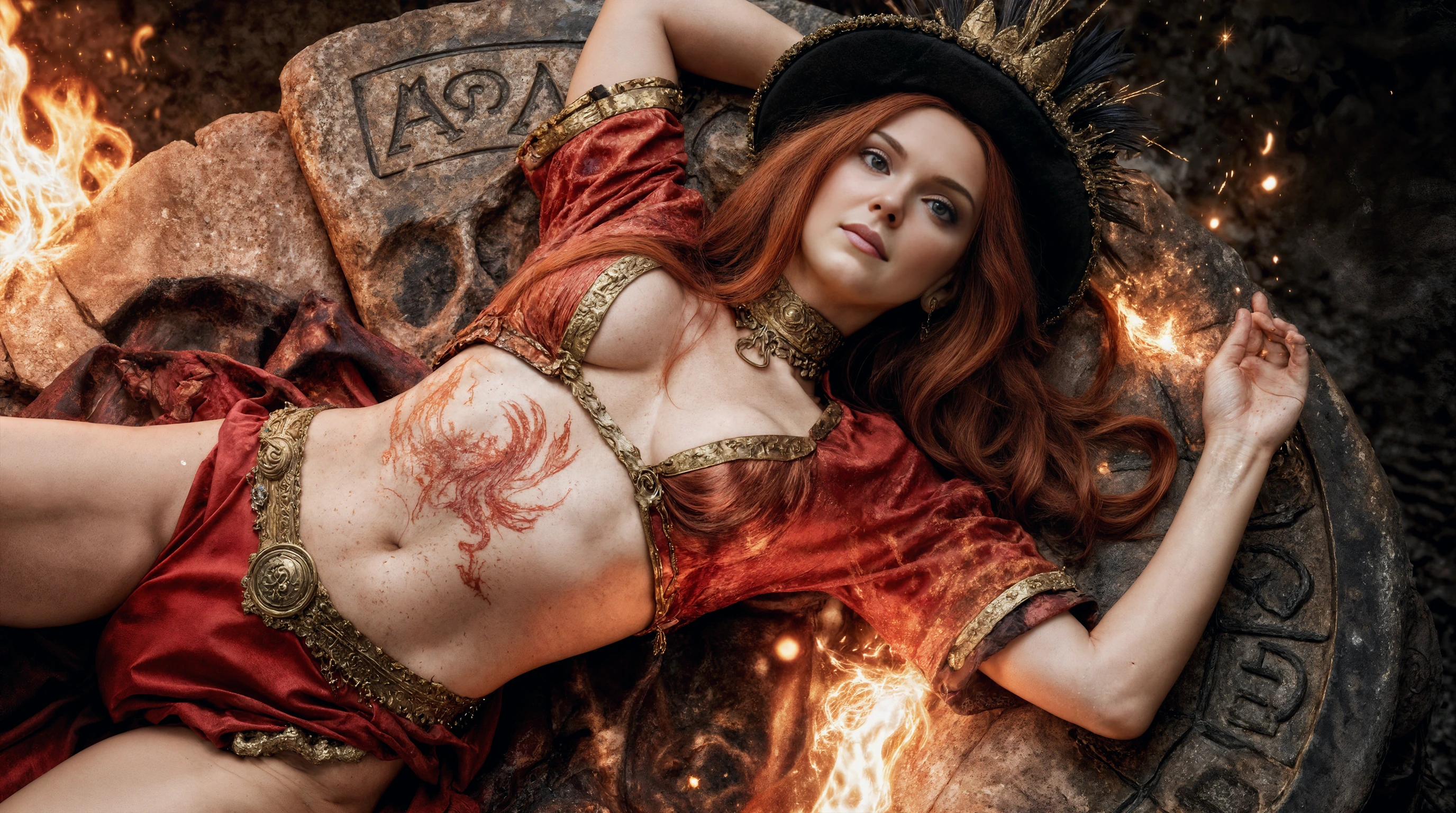
She is immune to heat and cold alike, and walks through inferno and blizzard with the same serene ease — as if born of both, and beholden to neither.
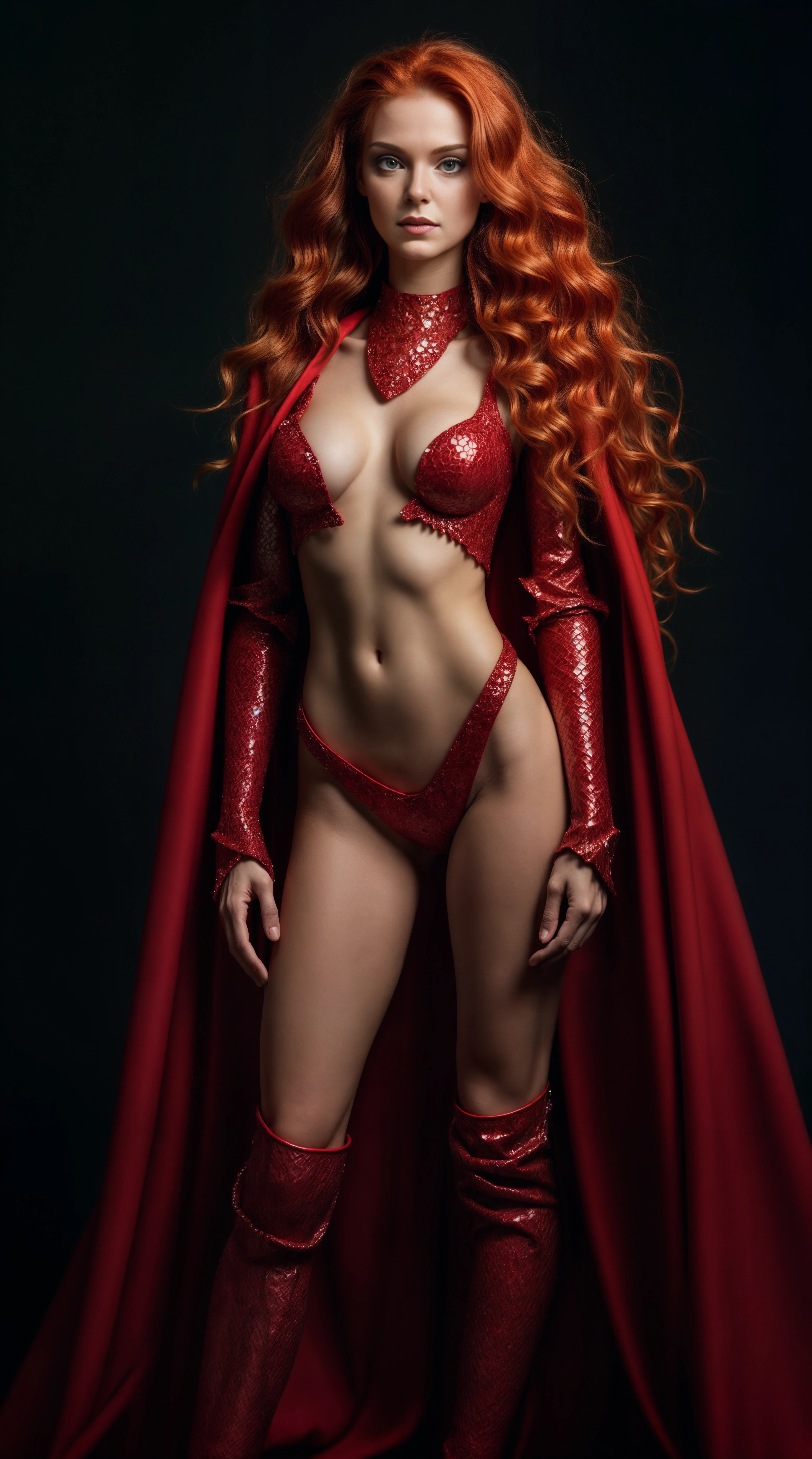
Salyria's command of fire is unlike any other living mage's, because the fire she wields was never meant to destroy. Hers is creation fire — the flame of renewal — and through it she works wonders:
The Emberguard is Salyria's life's work and her family of choice — a disciplined, spiritual order stationed among the world's volcanoes, bound by a single radical creed: that fire is not destruction, but renewal, a guardian of life rather than its enemy. They labor to purge corruption and to protect the sacred volcanic places where flame keeps the great cycle of the world turning.
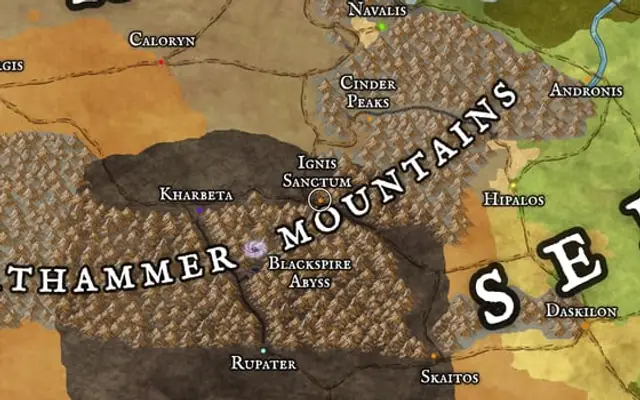
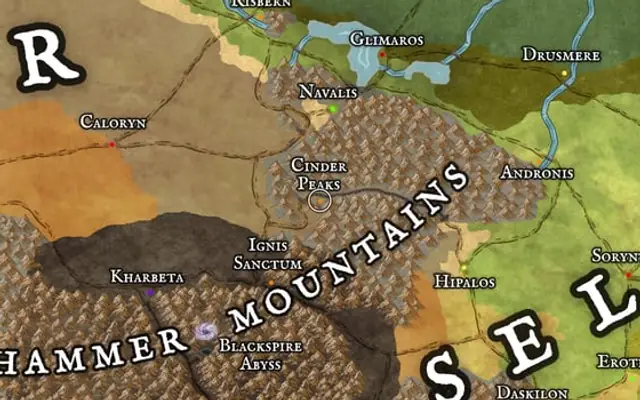
From three strongholds they keep their watch: Ignis Sanctum, the central fortress raised in the heart of a living volcano; the Ashen Refuge, a hidden sanctuary cradled in ash-grey forest; and the Cinder Peaks Bastion, an aerial keep that roosts phoenixes, dragons, and molten falcons. Around them gather the fire-touched beasts of the world — fire drakes and phoenixes, lava behemoths and infernal hounds, ember sprites and ash elementals, molten falcons and flamebound griffins.
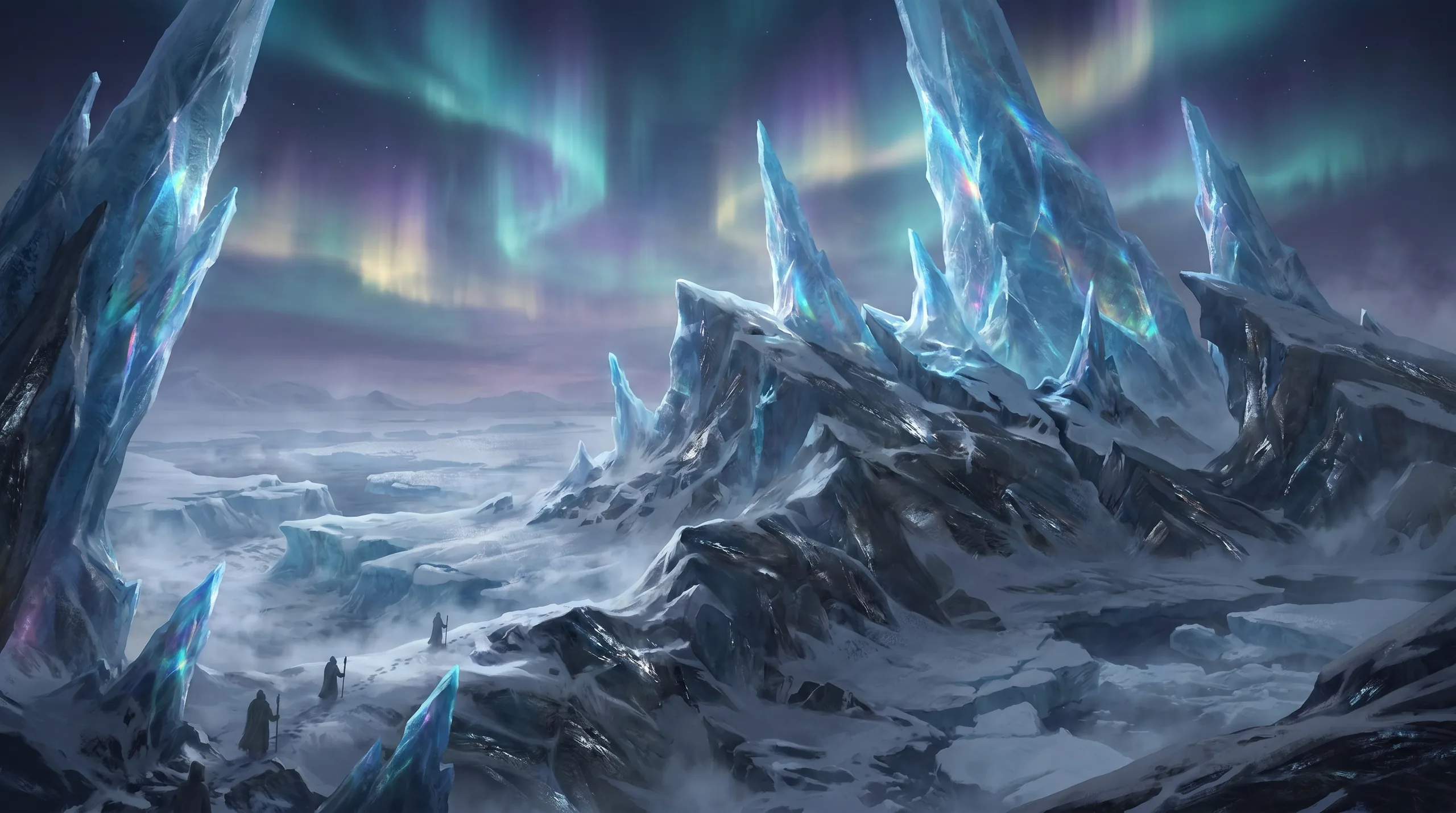
The Emberguard are sworn allies of the Glacial Dominion — fire and frost standing together against the gathering dark — though two such opposite philosophies do not always rest easy beside one another, and tensions flare between ice and ember more often than either side would wish.
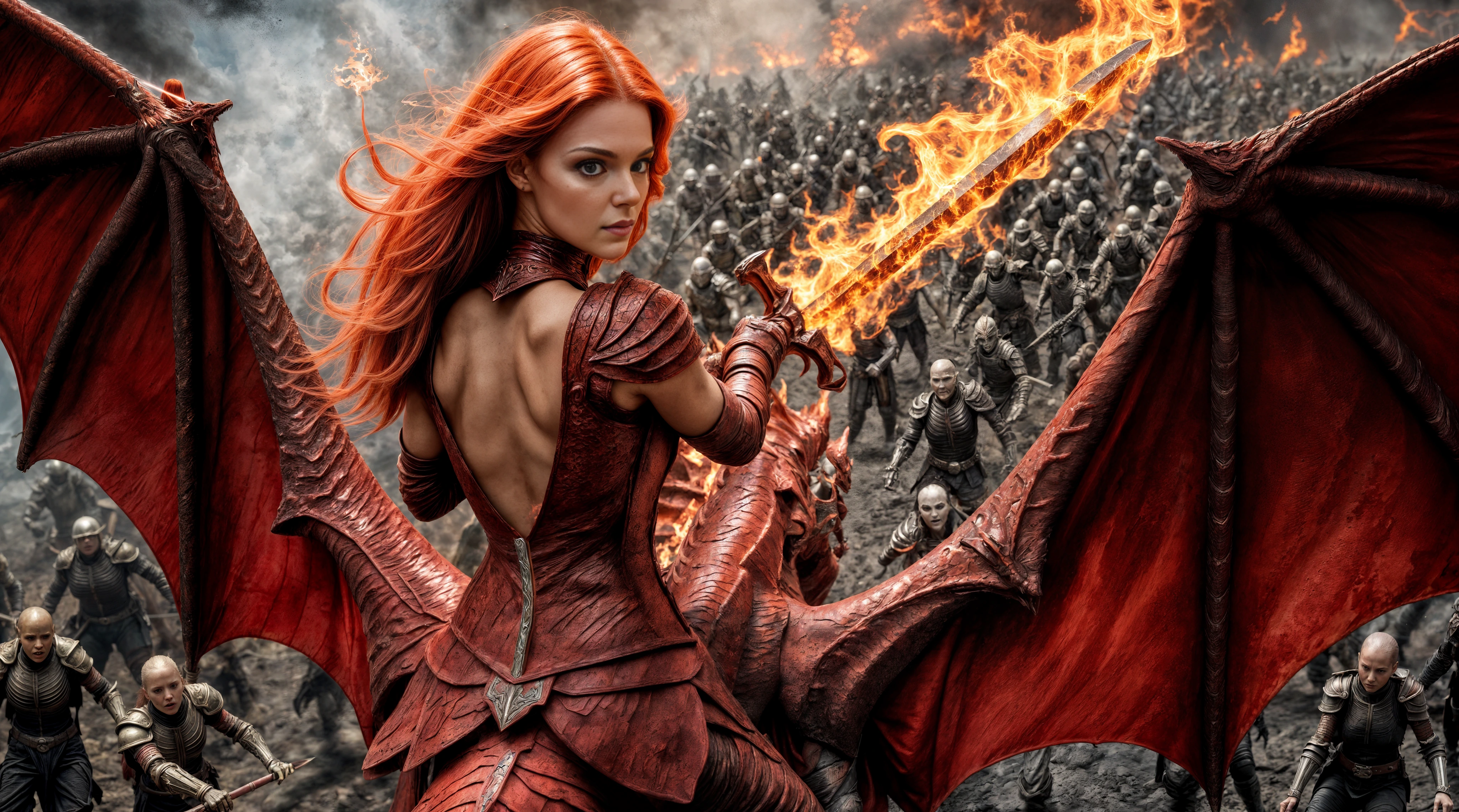
There is one corruption Salyria loathes above all others: Demon Fire — the chaotic, devouring flame wielded by the demon lord Galforonte and his Infernal Creed. To her it is the deepest blasphemy a flame can commit: fire that has forgotten it was ever meant to give life. Her creation fire cannot oppose it head-on — renewal and ruin do not cancel so much as recoil from one another — yet she does not believe in destroying Demon Fire. She believes in purifying it. Even the foulest flame, she insists, can be called home to what it once was.
That conviction has fixed her gaze on one figure above all: Ray, the heir to Demon Fire. In him she sees the very question her faith was built to answer. He may be the doom she has spent her life preparing to meet — or he may be its redemption, the living proof that even Demon Fire can be turned back toward the light. She does not yet know which. But she means to be there, flame in hand, when the answer comes.
"They tell me to put the heir to the torch. But you do not burn a coal back to life — you tend it. I mean to tend him."
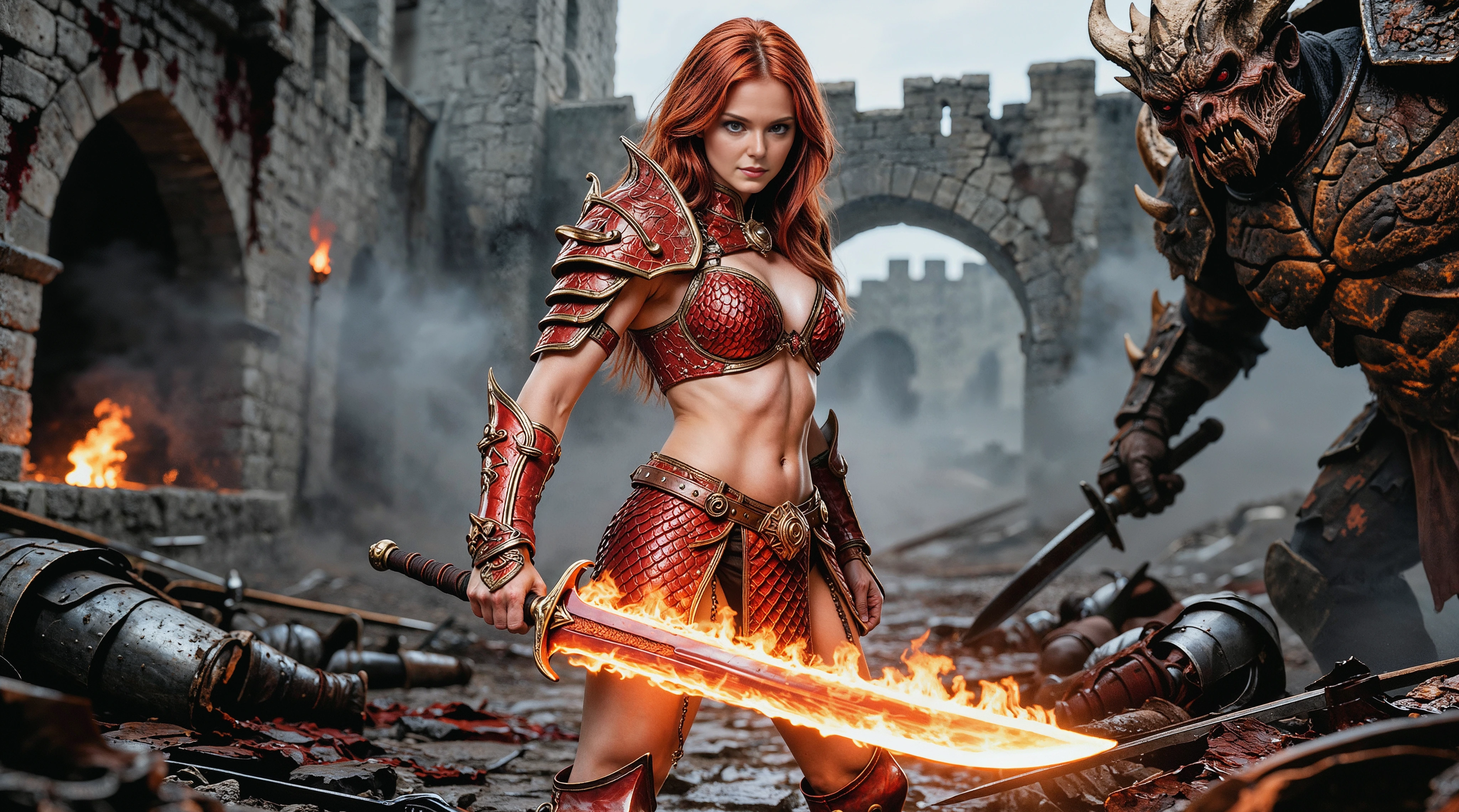
For all her power, Salyria leads with warmth. She is fierce and commanding upon the field, yet beneath the fire runs a genuine tenderness — a healer's heart wearing a warrior's armor. She carries her regrets openly: the sister she lost, the father she defied, the world she cannot save alone. But she carries her hope more openly still, for hope is the very thing creation fire is made of.
She believes — against all the evidence the age keeps handing her — that the cycle can yet hold. That destruction and renewal can be kept in balance. That the corrupted can be redeemed, and that fire can be taught once more to mean life. And as long as the Flamekeeper draws breath, the embers will not go out.
"All fire ends the same way — as ash, or as warmth. I have spent my life making certain it is warmth."
Rysalia
High Commander of the Infernate
 4:51
4:51The Six Daughters ·
Six women. Six powers. Not one of them was handed the world she wanted — but each broke a chain that was meant to hold forever. Blue light and red ember, the frost and the smoke, the starlight and the steel: this is their anthem.
 4:49
4:49The Six Daughters ·
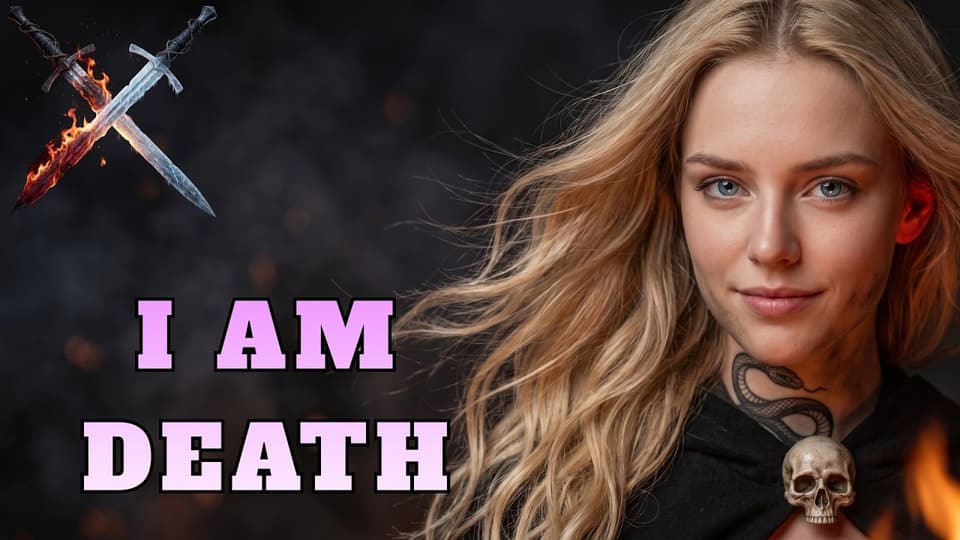
Rysalia in her own voice — High Commander of the Infernate, Chosen of the Ashen Serpent. Not a confession and not an apology: the account she would give, if anyone ever asked her what it cost.
 4:55
4:55The Six Daughters ·
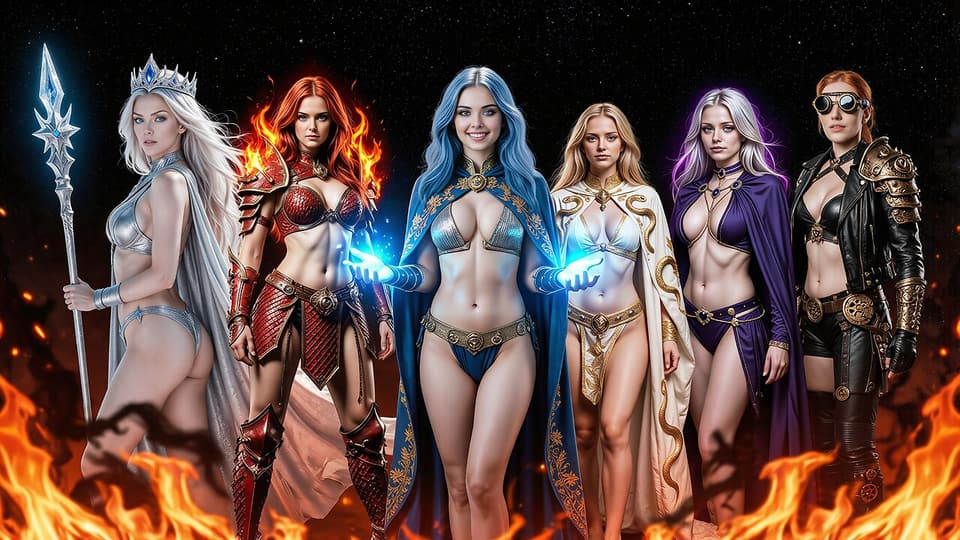
The first cut of the anthem of the six heroines — Merynia, Salyria, Glacya, Rysalia, Trysania, and Vivira — and the fire and frost that bind their fates.
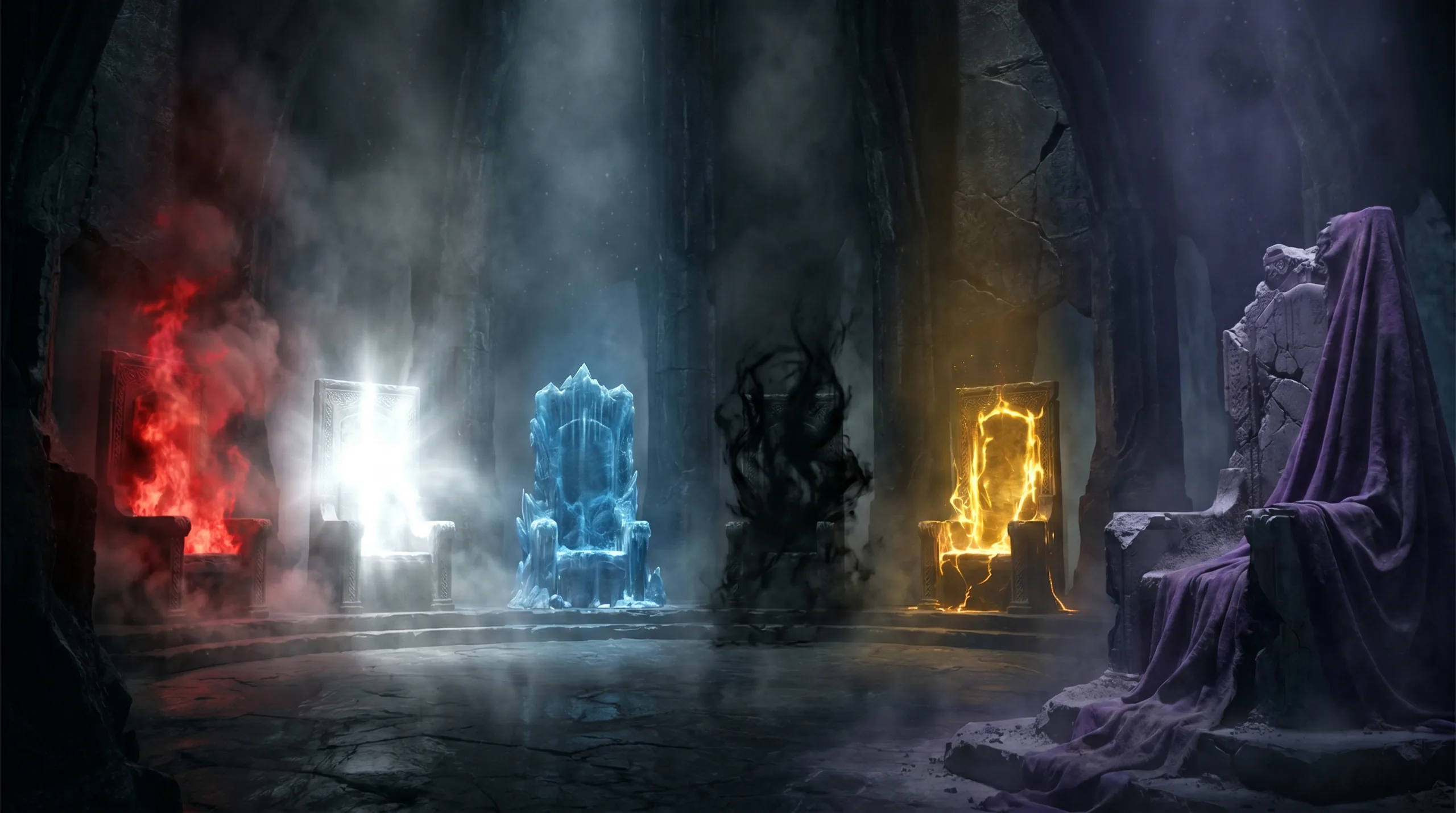 LoreThe Five Elder GodsBefore they were gods, they were exiles. The powers the world calls the Elder Elehath — the Elders — were once members of a deathless race of star-born beings who came to…
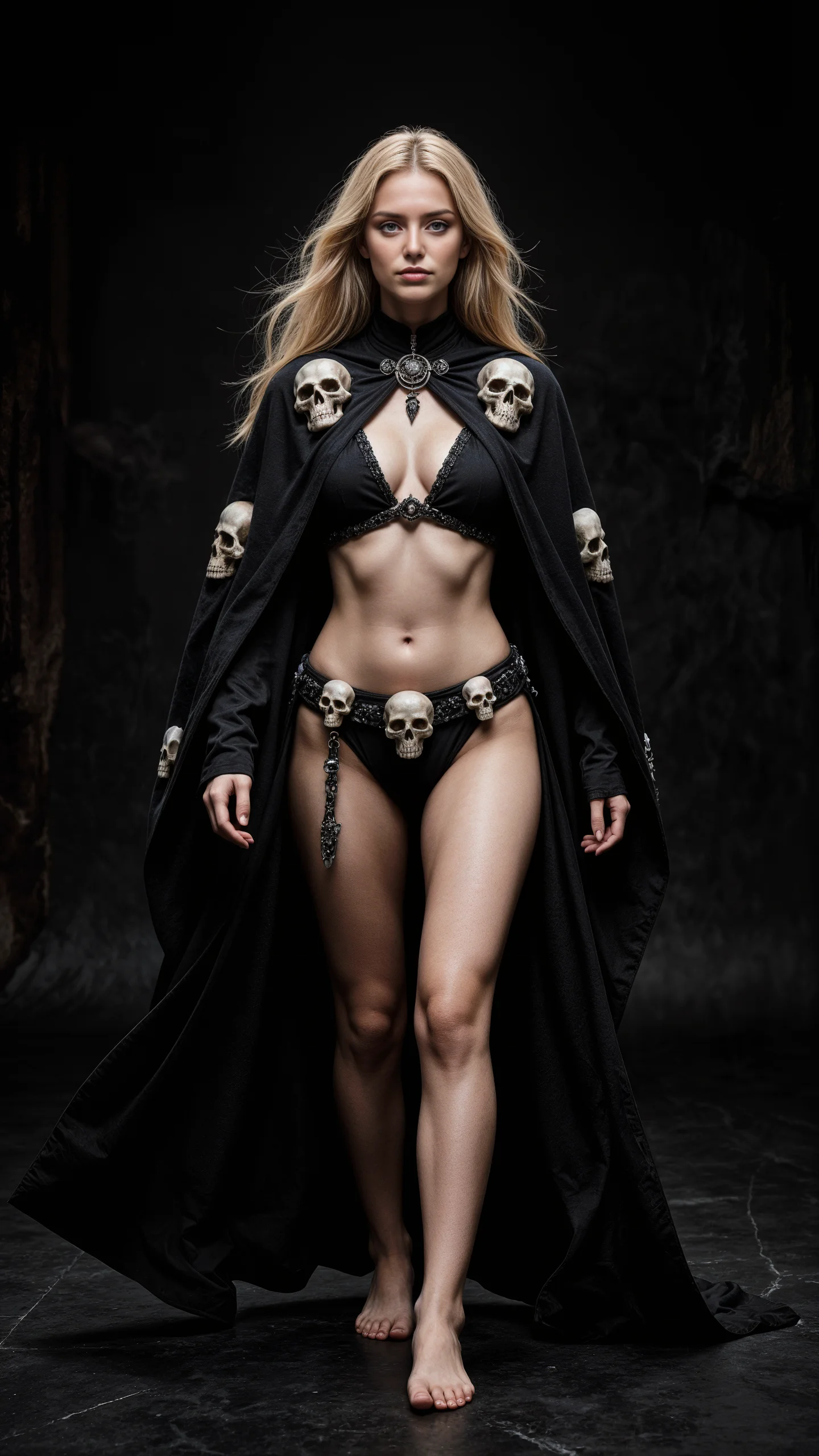 CharacterRysaliaHigh Commander of the Infernate and second only to her father, Rysalia is a fire-and-smoke sorceress, a duelist, a strategist, and the bound mistress of the primordial Ashen…