
Erothys, the River That Remembers
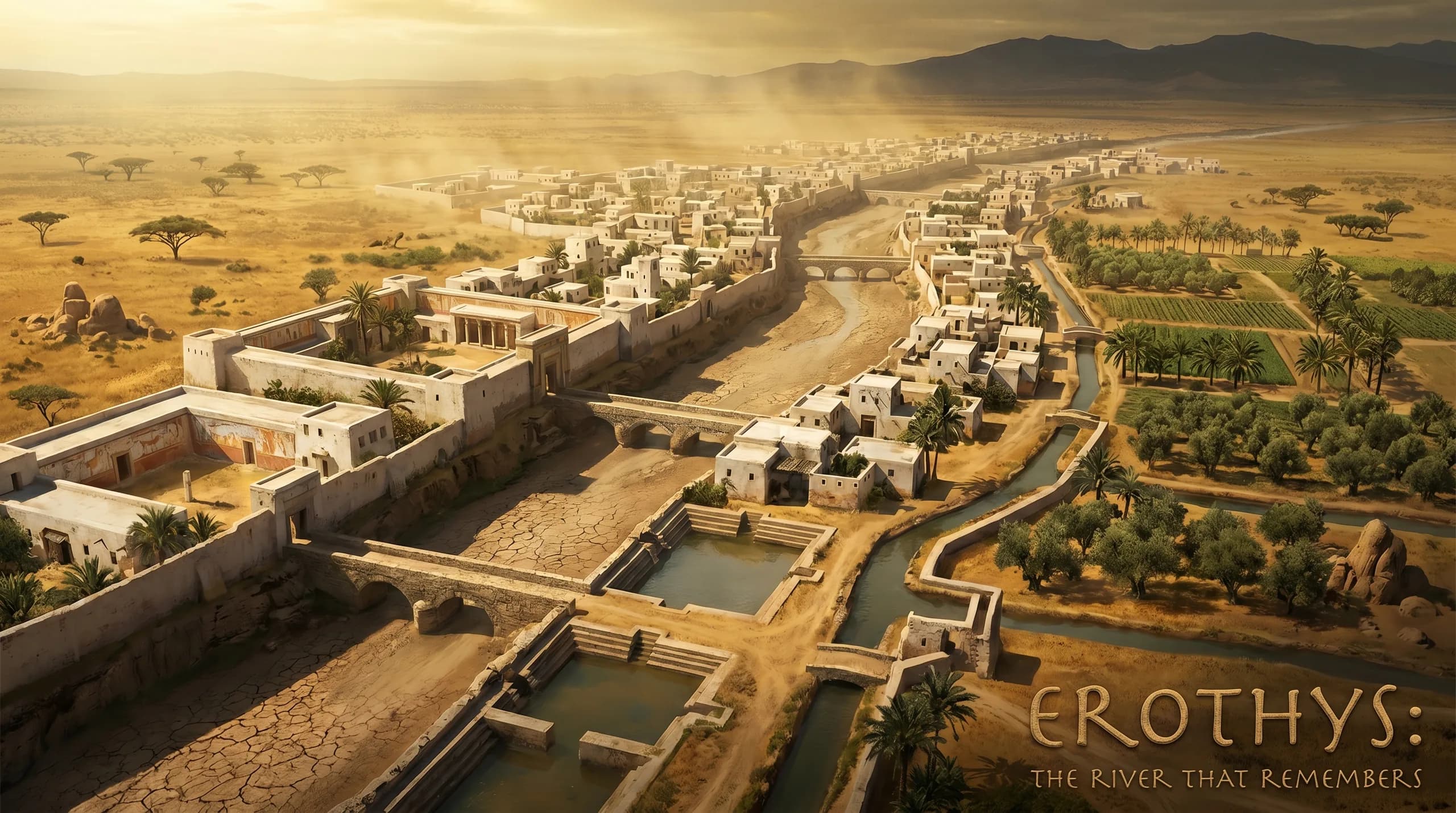
On the savanna frontier of the Daskilon faction runs a river that forgets itself. For much of the year the wadi of Erothys is a dry bed of dust and stone; then the rains come, and it roars back to life, and the markets that stood in its channel take to boats overnight. Along this fickle water stretches a long, low, sunstruck city of some sixteen thousand — not a walled metropolis but a ribbon of plantations and estates woven through with fields. Where Daskilon hammers steel and Hipalos breeds hooves, Erothys feeds them both. Erothys is where war meets the water-table, they say, and where the future of campaigns is read not in battle-plans but in reservoir levels and the color of the fields.
The Mastery of Water
Erothys lives or dies by its command of water, and it has made that command an art. An intricate network of irrigation canals, diversion channels, and great reservoirs catches the floodwaters and guides them into stepped basins and storage ponds, from which sluice-gates release them slowly into the plantation canals through the long dry months. From three biomes the city coaxes a careful variety — millet and sorghum and hardy wheat on the grasslands, legumes and oilseeds and fruit on the savanna, drought-deep pulses and dye-bushes and resins on the shrublands — and that variety is its quiet strength, for it keeps a martial faction from going brittle. Its whitewashed adobe villas, painted with bright frescoes of the Scorchmother and her harvests, scatter along the old channel, each plantation-node its own little world of shrine and market and yard.
The Market That Floats
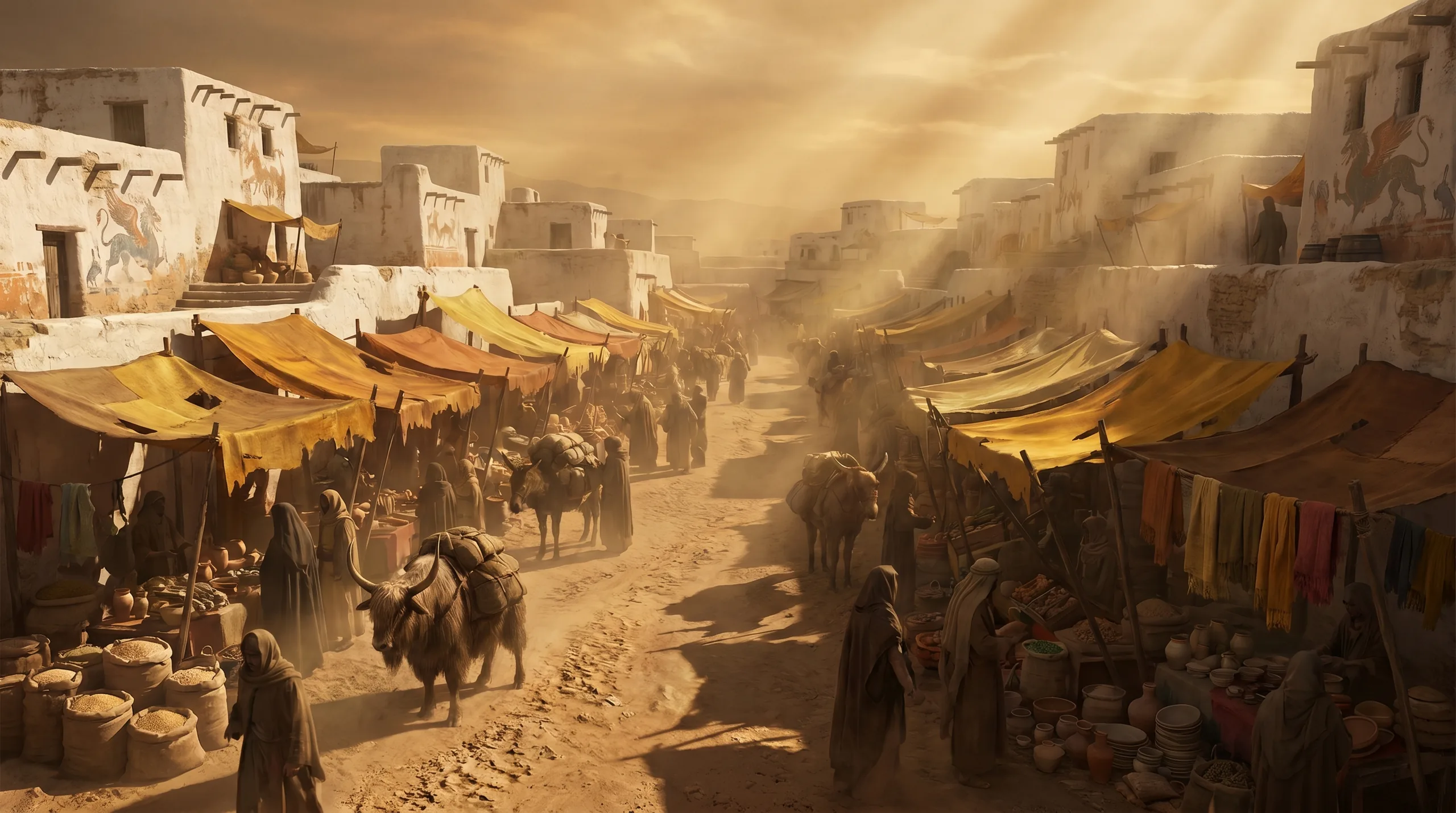
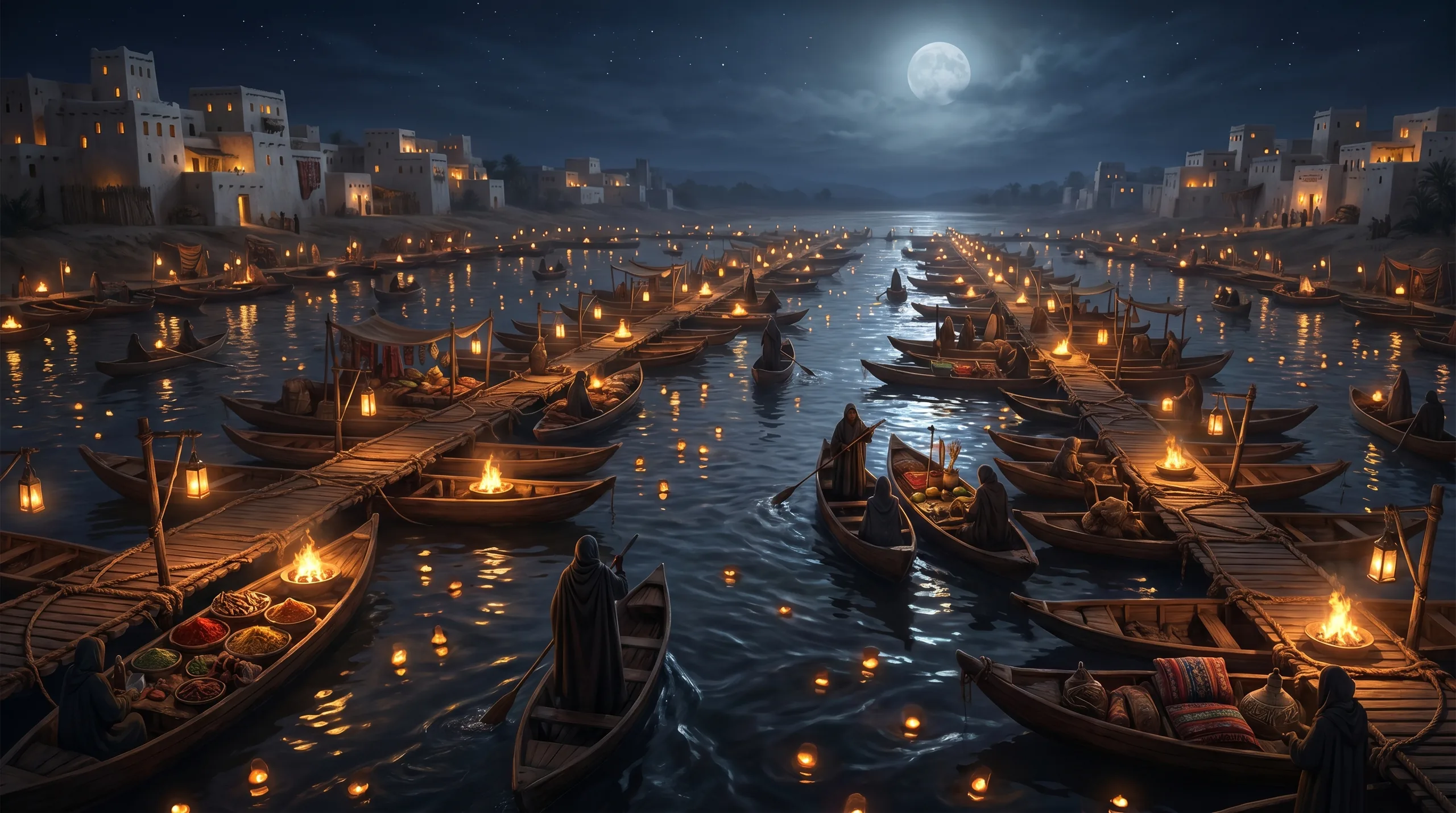
Erothys is famous less for what it sells than for how its markets appear and vanish with the river. In the dry season the empty channel becomes one enormous linear emporium, stalls and awnings running the length of the city where the water once flowed, heaped with grain, fruit, oil, textiles, and ceramics. Then the rains come, the stalls lift away, and the merchants take to flat-bottomed canoes and skiffs, mooring in long rows and lashing boat to boat with rope and hook until the flooded wadi is a floating lattice of market-vessels, buyers paddling and poling between them or simply reaching out from the bank.
The Scorchmother's Bargain
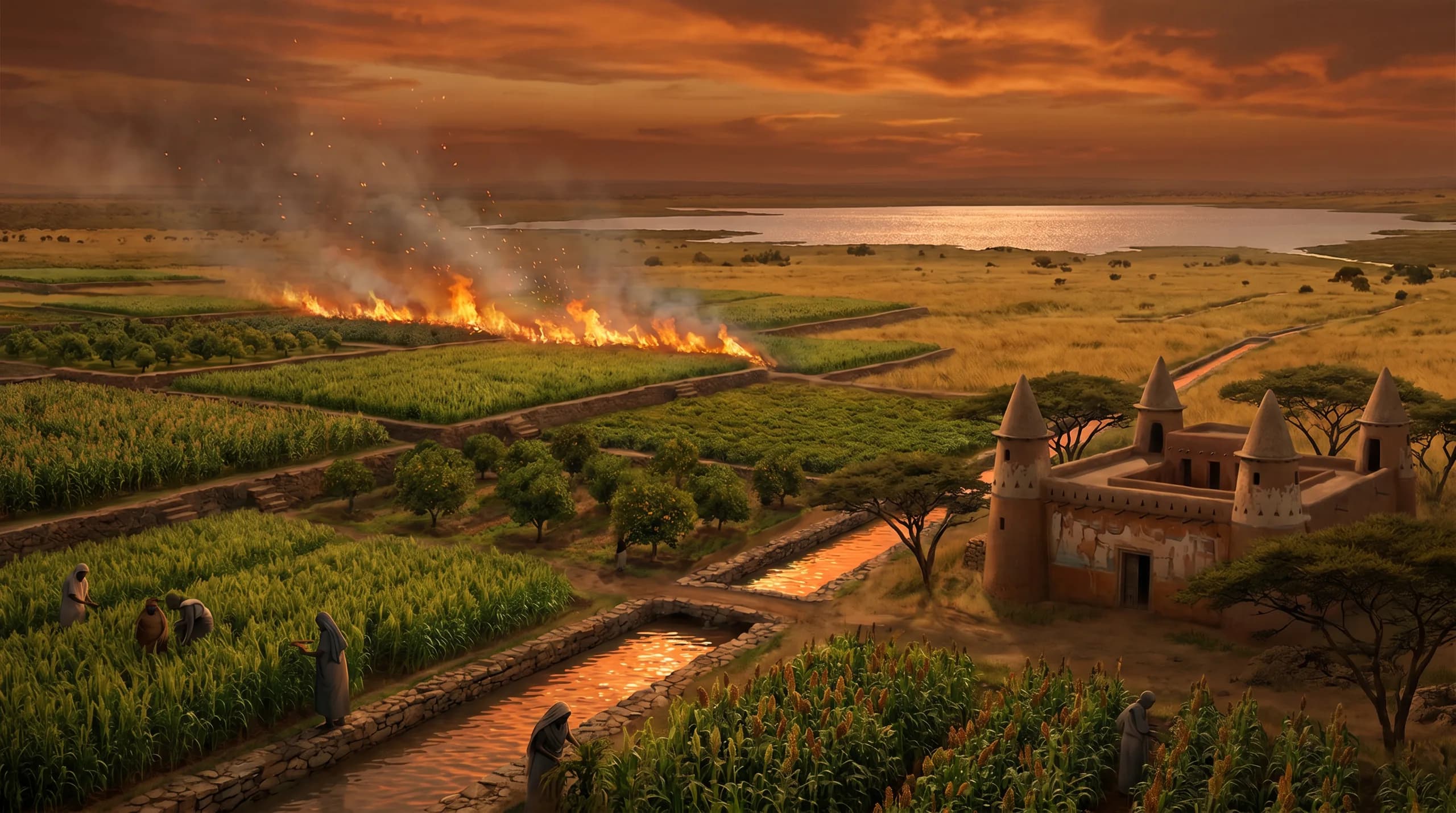
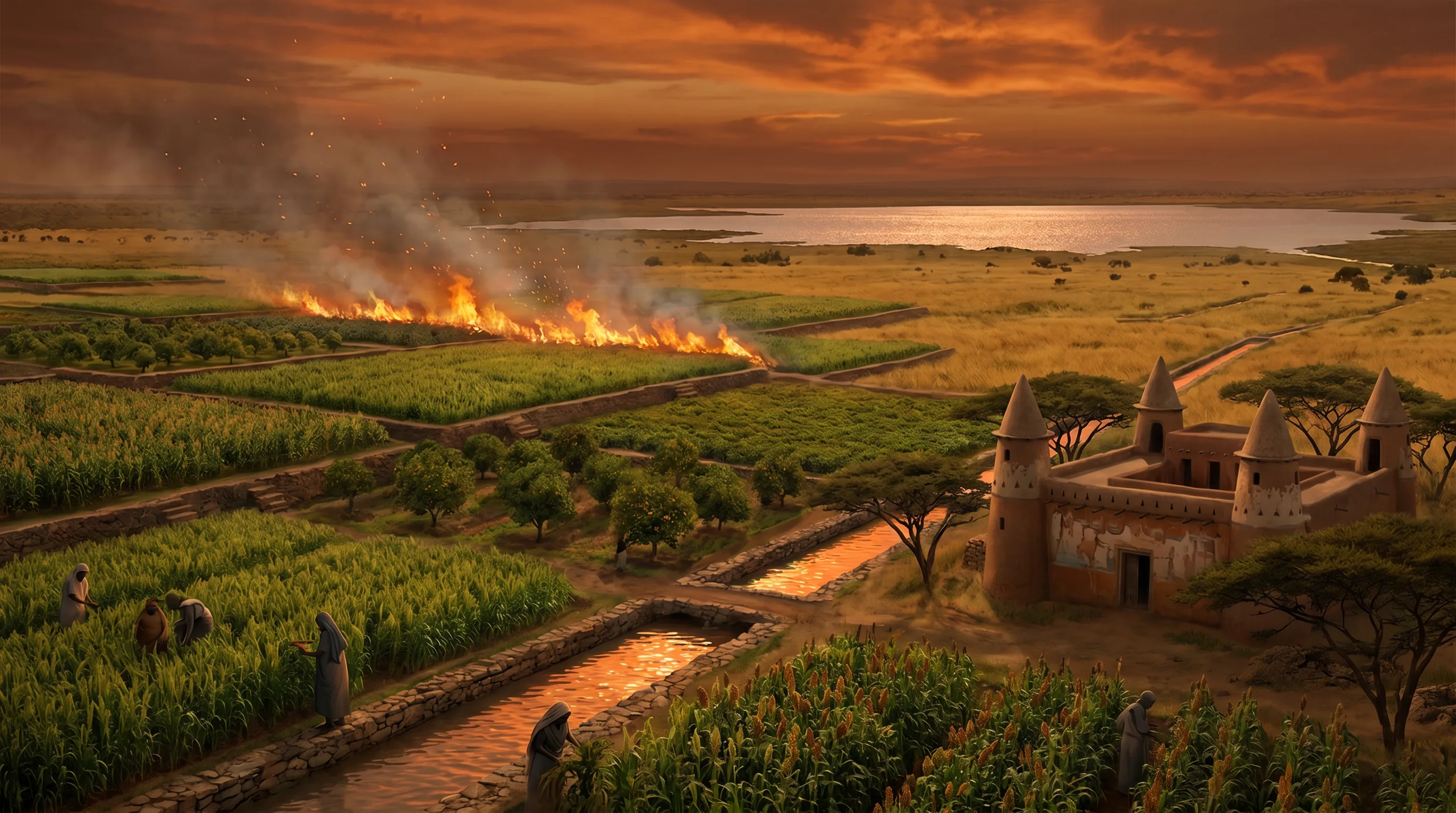
Erothys is devoted to Kaumatria, the Scorchmother — here not the vengeful fire of Tirbasos but the Ruby aspect of Growth and Labor. Scorchmother priestesses, sent from distant Velastra, bless the new canals, preside over the controlled burns that return ash and nutrient to the fallow fields, and mediate between landowner and worker through the lean years. The year turns on the river's moods: the First Flood Rite, when priestesses wade into the rising water to cast in grain and flowers; the Ember Fallow, when fields are ritually burned beneath hymns; and River Market Night, when the floating stalls are hung with little fire-lanterns whose mirrored flames on the current are said to be Kaumatria's own eyes, watching every bargain struck in her name.