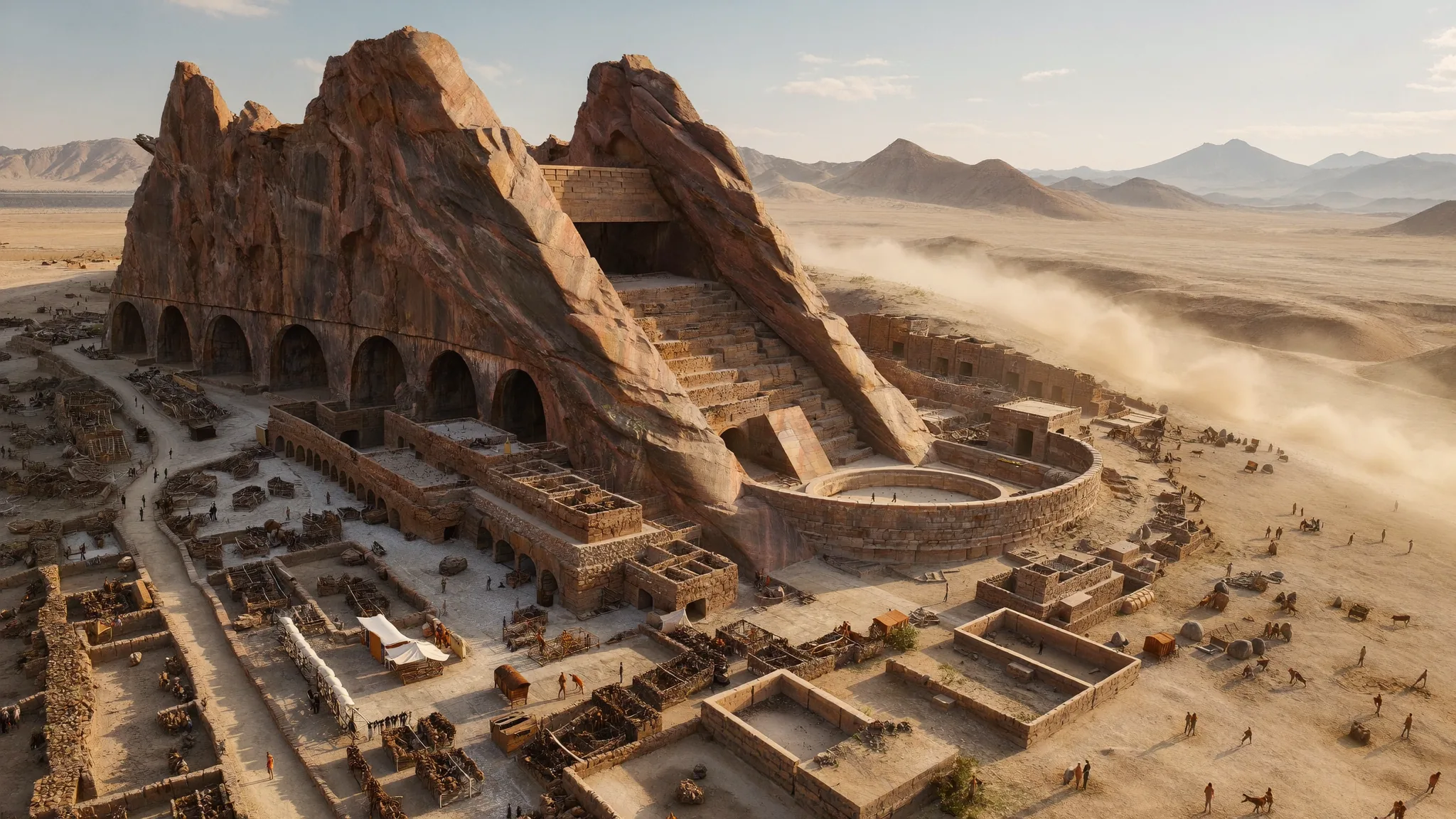
No river feeds Rupater. No harbor opens to it. No green field surrounds it. Where the lower Greathammer Mountains break down into volcanic desert, and the pale southern Ashen Plains run away toward a sea that most Rupatois will never see, there is only stone, glare, ash, and the rare and jealous water that hides inside the rock.
A city should not stand in such a place. Rupater stands because water was captured, because stone was cut, because clans who had killed one another for a hundred generations needed one patch of ground on which they could meet without dying — and because the dead required a house large enough to outlast the feuds of the living.
It is not, in the end, a settlement. It is a machine for turning enemies into a people.
The mountain keeps the living, they say here. Rupater keeps the road and the dead.
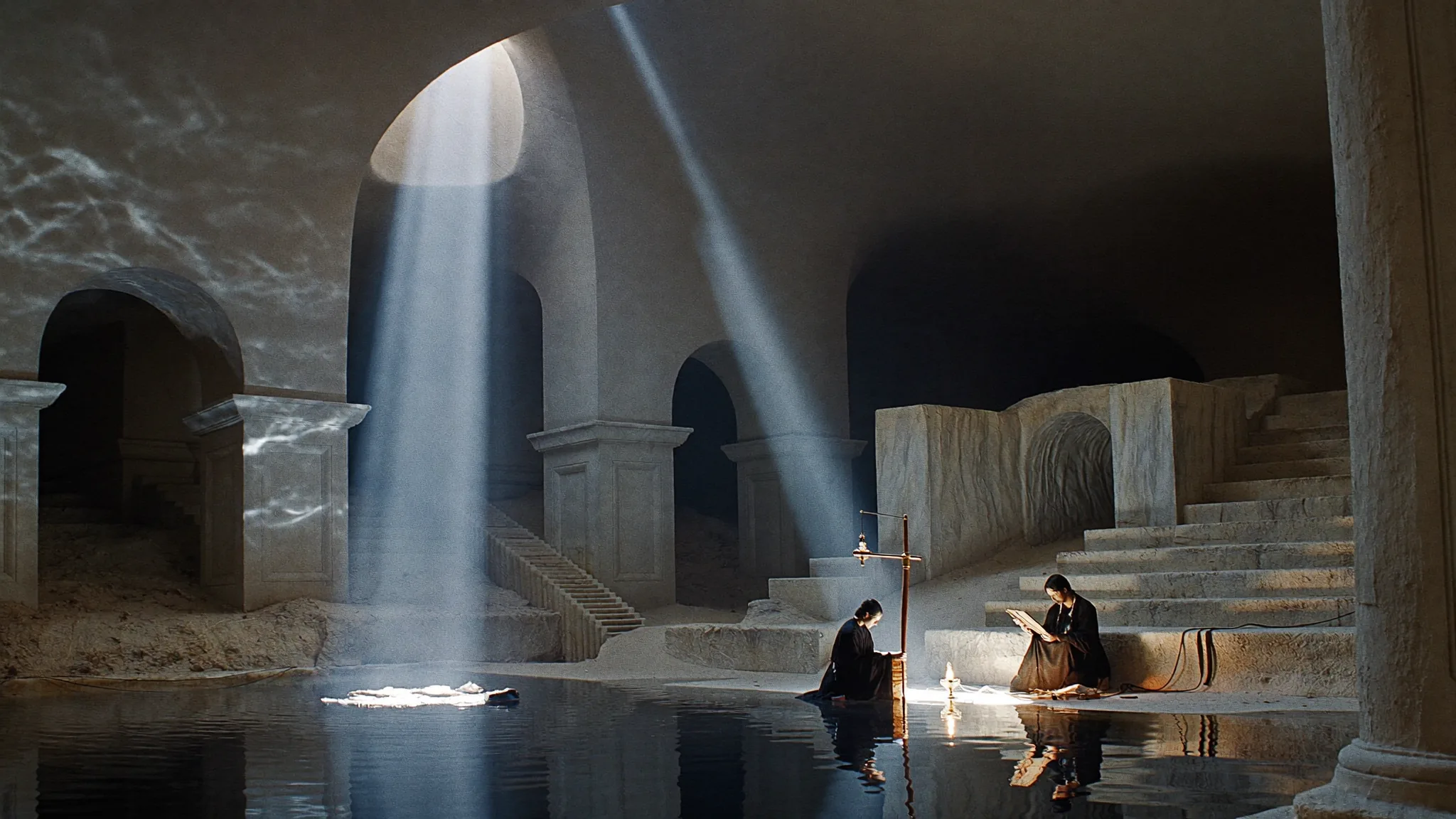
Long before there were walls, there was water: marble caves, sunken stone bowls, hidden pockets and fissures that held rain the desert had no right to keep. Later came dwarven engineers, who did not conjure a city out of empty rock so much as find a sacred meeting-ground already married to hidden water — and make its accidents permanent.
Beneath the market courts and behind the public halls lies the city's true body. Tiered cisterns. Settling chambers. Covered reservoirs, carved channels, water galleries, emergency vaults. The water-scribes who keep them measure level, seepage, contamination and usage-right with a seriousness that in gentler cities is reserved for scripture, and their arithmetic is the closest thing Rupater has to sovereignty. Every great movement through this city — a caravan, a festival, a clan delegation, a legion — is first and last a water question.
They can slow an army without touching a sword. They can hold a clan's elders outside the inner gates until the cisterns can bear them. It makes the water-scribes powerful without ever making them glamorous.
In Rupater, water is not scenery. Water is law.
The dwarves cut Rupater's passage into the Greathammers, and they were driven off rather than fully paid. Dwarven memory calls that theft and oath-breaking. Mountain memory calls it the hour the Greathammer peoples finally took possession of a road that other men had built to hold over them. The dwarven insult for the thieves — Rupatois — is now worn in the mountains as a name of pride, an accusation of bastardy and scoundrelry converted into proof that they kept what they won.
Their chisel-marks are still on the gate-stones. Some have been patched over. Others have been left deliberately bare, and whether that is insult, proof, warning, or trophy depends entirely on who is telling you the story.
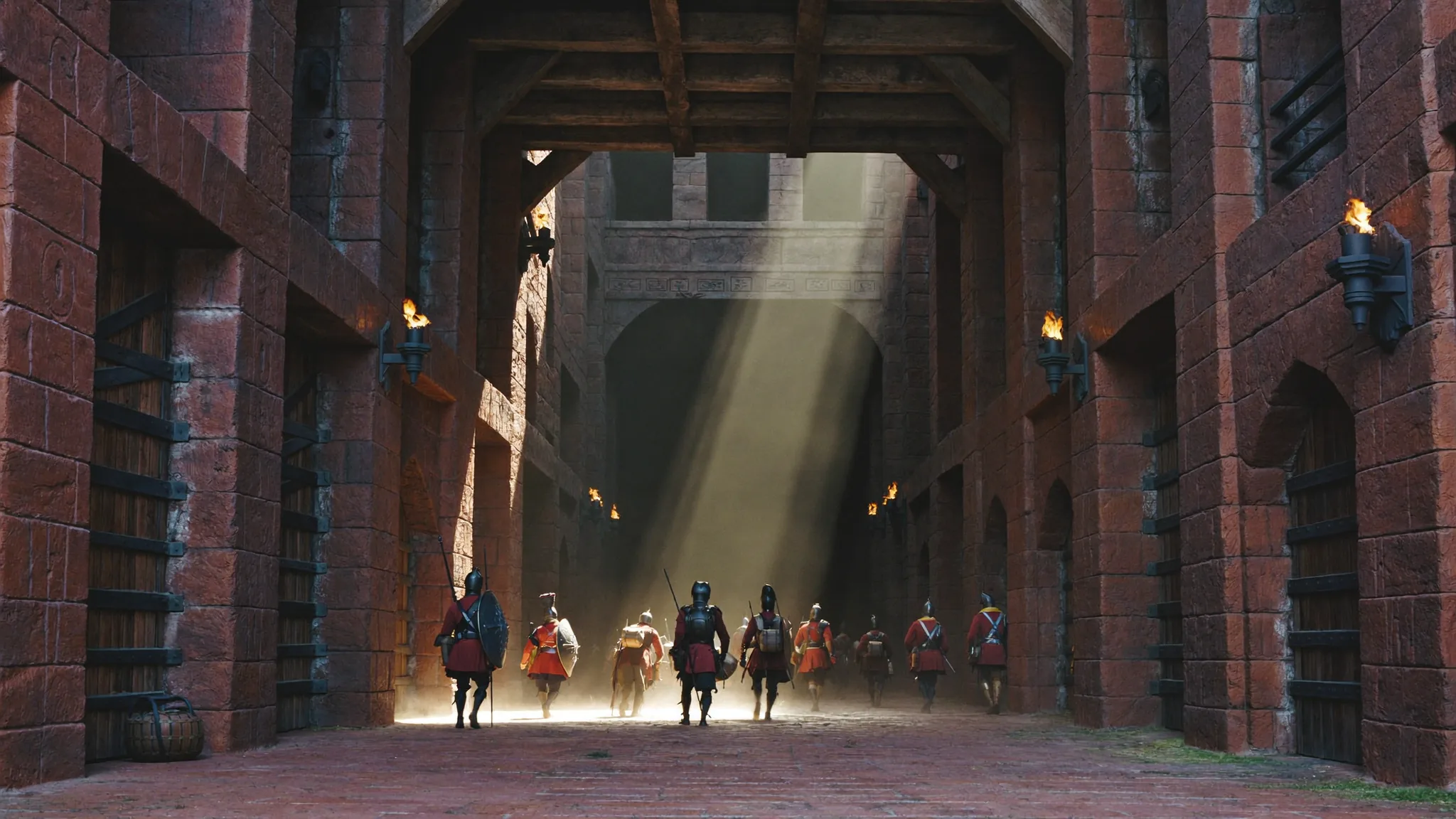
What they left behind is fortified not like a lowland highway but like a controlled wound in the mountain: gates, stone galleries, murder-holes, cistern doors, animal ramps. No one simply takes this road. One is entered onto a schedule, placed under token, assigned guides, and released to the next stage only when the waystations ahead can carry the burden.
For soldiers the discipline is absolute. A legion of five thousand would terrify, exhaust, or dominate every clan whose territory it crossed, so no legion crosses. It is broken into packets of eighty or a hundred, self-provisioned, gift-bearing, released a day apart, and pushed through the stone over the better part of a month.
A legion does not march through the Greathammers, the waystation keepers say. It is threaded through them.
Descend past the cisterns and the city stops being practical.
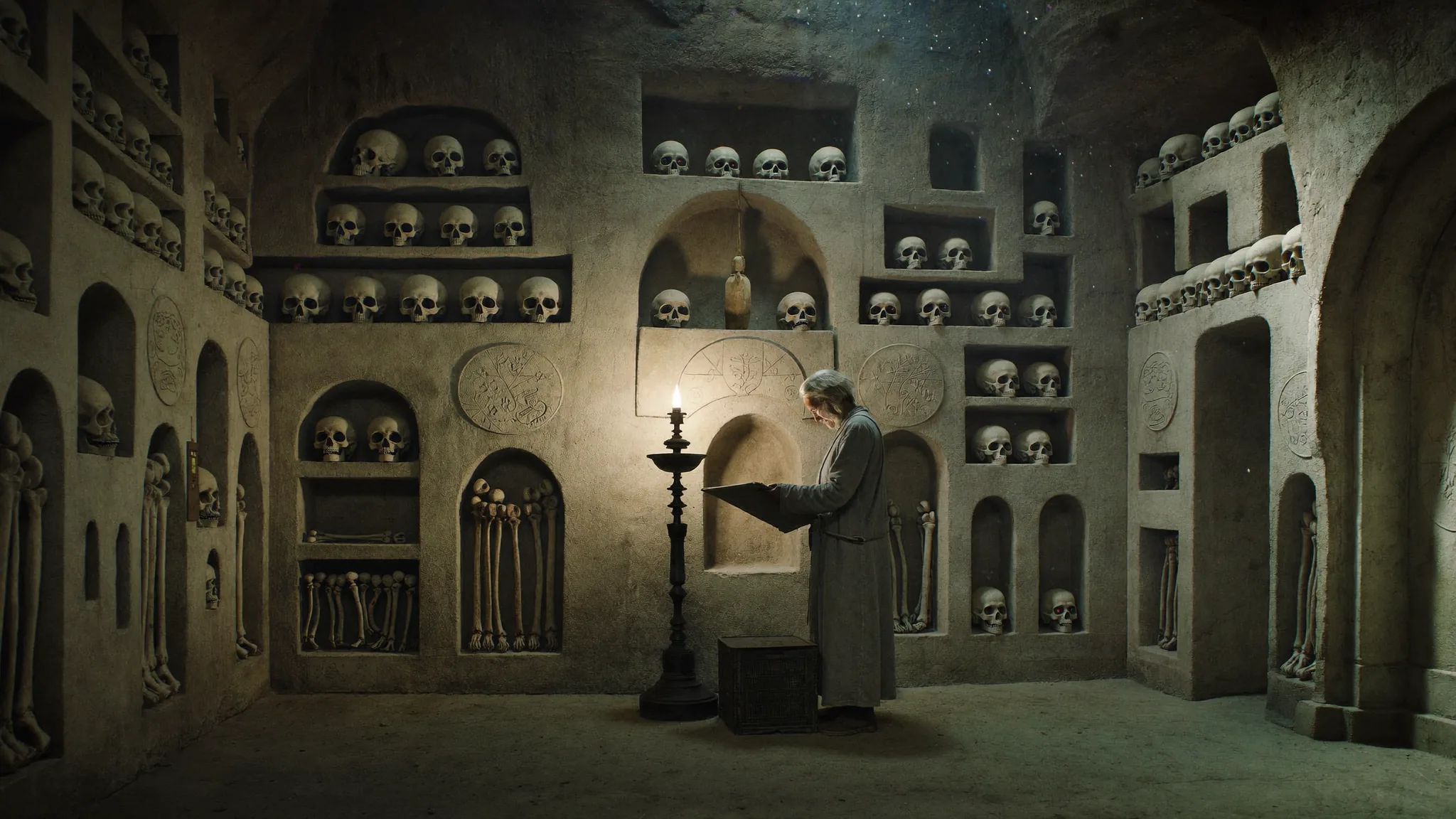
Beneath Rupater lie the ossuaries: catacombs, bone vaults, family chambers and clan niches, where the honored dead of the mountain clans are laid down beside the civic dead of the city itself. Elite families compete for the right to give their bones to the deeper vaults, and the right is not funerary but political — spiritual legitimacy, civic memory, and proof that a clan belongs to the larger order.
Here is the whole argument of Rupater, carved in bone. In life the clans feud, raid, poison wells and cut throats over grazing and water. In death their bones descend into the same stone and become one people. Rites mark origin without preserving difference; a skull may be catalogued by clan, but it goes down into the common dark all the same.
This is why theft from the ossuaries is not counted as theft. It is sacrilege against the only structure that makes safe passage, marriage exchange, and clan neutrality possible at all — an attack not on the dead, but on the peace.
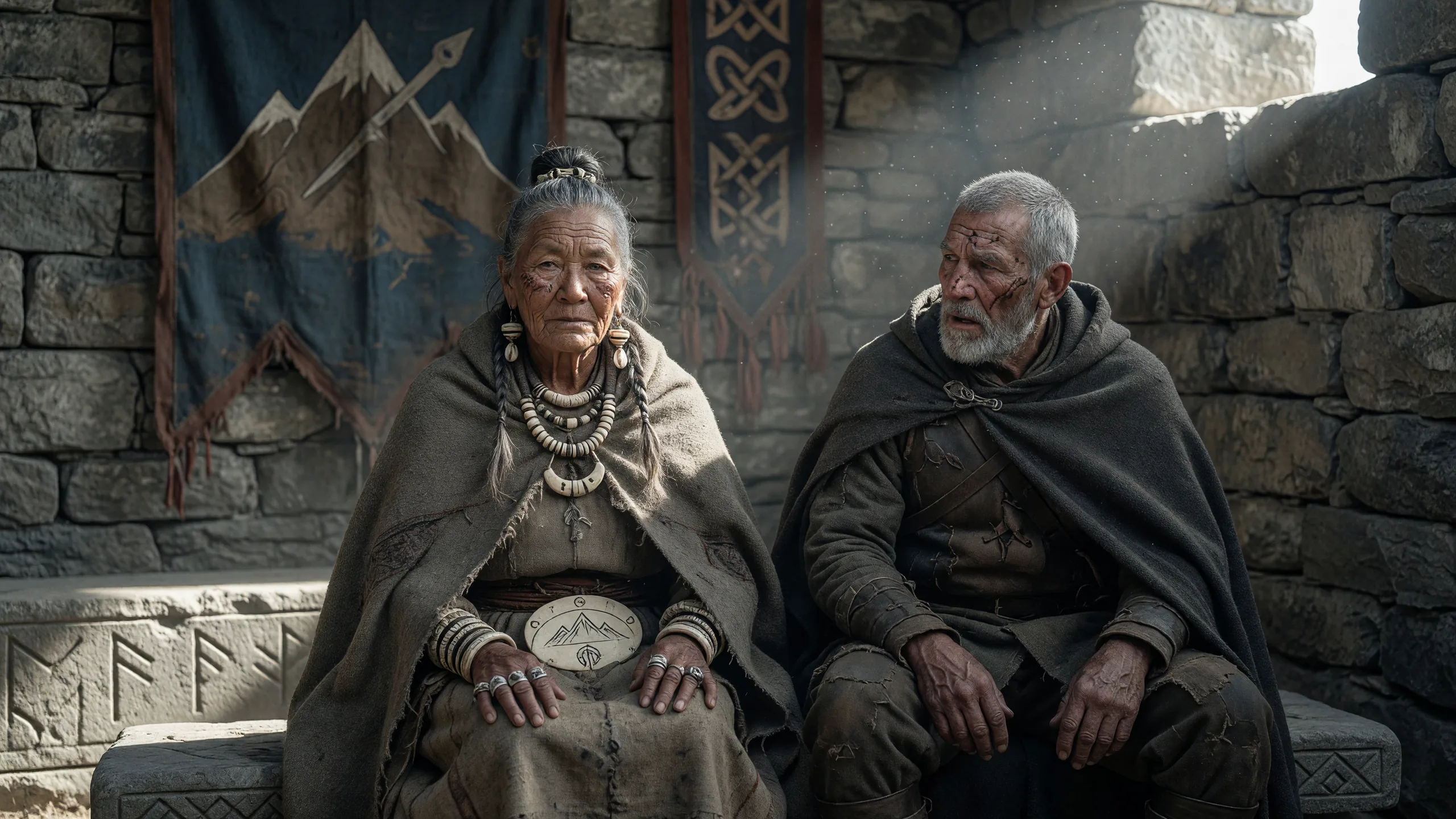
Foreigners who see Rupater's council of grey-bearded elders conclude that this is a city of men. They are half right, and the wrong half.
Every mountain clan is represented by a pair. The matriarch holds all authority that faces inward: descent, water, marriage intake, food, the belonging of children, and the right to recognize who may speak for the clan at all. The patriarch — very often a man married in from some other clan entirely — carries that authority outward, onto the road, into the market, and toward war.
The office belongs to the pair, never to the person. If one can no longer serve, both step down. A patriarch cannot become an independent lord of the city, because his mandate is not his; a matriarch cannot claim a voice abroad without the paired road-office. Authority here is not a crown split between a man and a woman. It is a working yoke.
They are usually old, chosen after long proof of endurance and judgment, and they are rarely gentle.
Women hold the hearth, the water, the bones, and the future, runs the saying. Men carry it onto the road.
The same logic governs marriage and property. Wealth belongs to the extended maternal house — dozens of kin sharing water rights, cave access, herd shares. A veteran home from a mercenary contract does not found an estate; he buys his way into his wife's hearth by surrendering his iron, coin, animals and plunder into it, and if the marriage fails he does not get it back. Outsiders mistake this for bride-price. The Rupatois logic is inverted, and they will correct you.
A man does not take a wife. He is taken into her water.
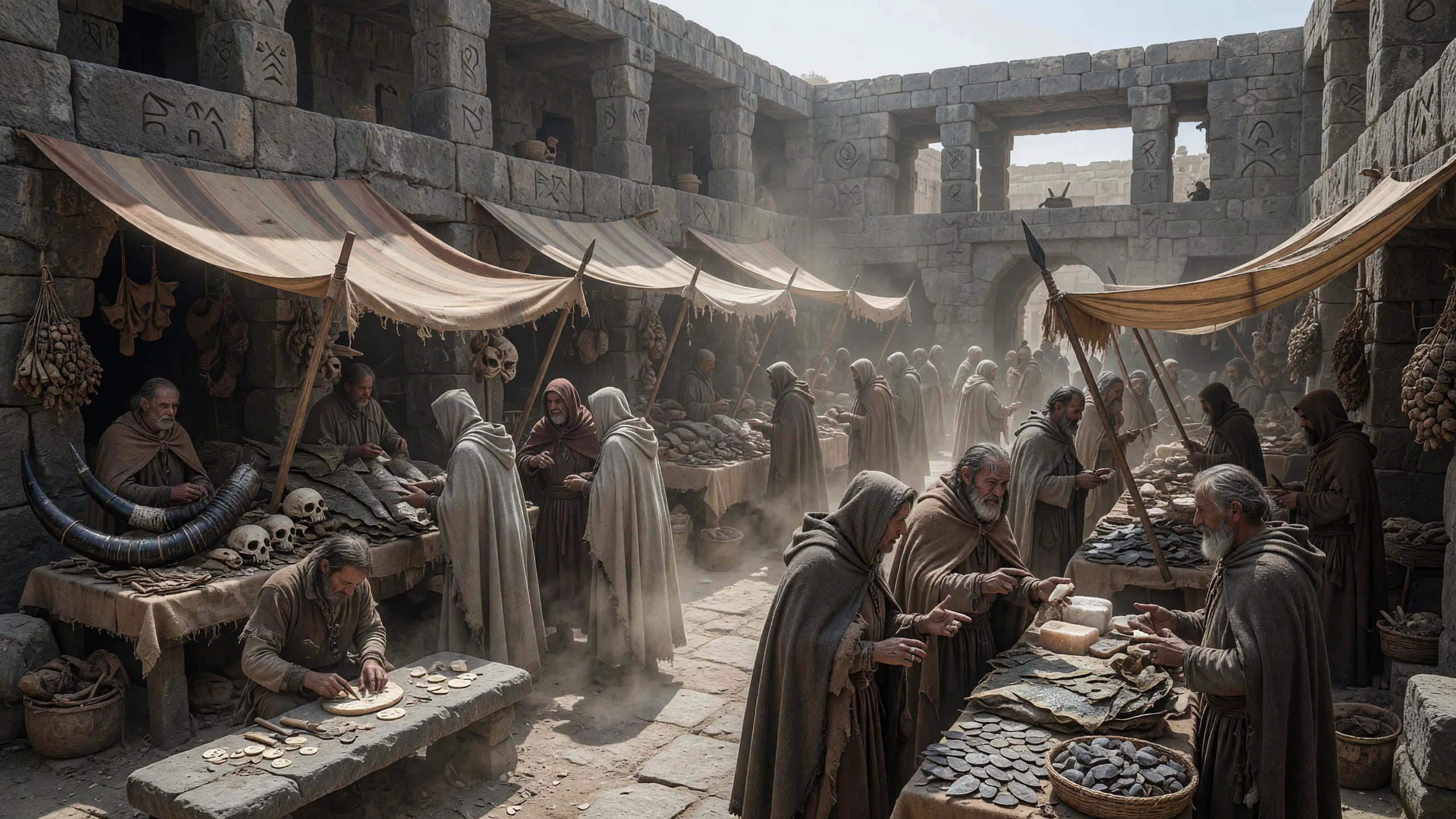
The market of Rupater is not one plaza but a knot of clan courts, each with its own customary rights. Mountain clans bring hides, wool, obsidian, flint, salt, hardy tubers, monster trophies, guide-contracts and warriors for hire. Outsiders bring grain, cloth, iron, oil, tools, medicine, coin, and news. Argument is expected. Violence inside the protected courts is answered immediately and memorably.
Coin is often the least of it. A gift, a token, a promise of hosting, a marriage settlement, a burial right — these move more than silver ever will. A poor gift can ruin a contract. A respected token can open a valley.
The courts are also the one place where the mountain Rupatois and the ash Rupatene insult each other under shared law. The ash clans are the older road-people of the southern plains, herders and well-keepers and monster-hunters who guard the caravan traces; where the mountain clans hold water in stone, the ash nomads remember water in motion. The mountain folk call them sea-cousins, for the flat ash sea that eventually reaches the ocean. The nomads call the mountain folk sky-cousins, and defer with enormous theatrical solemnity to the great wisdom obtained by sitting on rocks above the rest of humanity.
It is cousinhood, not rivalry — affectionate, mocking, and lately strained. War has strangled the old roads the ash clans lived by. Some have grown restless. Some have grown worse than restless.
Rupater belongs to the Infernate now, though it was never conquered. It was explained.
The priests of Kharbeta did not arrive to preach. They arrived to announce that the Rupatois had been adherents of the Creed all along without knowing it: that their endurance, their hard merit, their hierarchy of competence and their contempt for weakness were nothing but the Infernal truth glimpsed in a primitive mirror. In exchange for iron, trade, standing, and the endless military hiring of its clans, Rupater became the southern gate, the mustering ground, and the warrior market of the mountain corridor.
Rupater was not converted by the Creed so much as canonized by it.
The bargain protects the city in a way that feels almost like a joke. Because Kharbeta has declared Rupatois custom sacred, no ordinary administrator is permitted to improve it. The tokens remain. The ossuaries remain. The paired matriarchs and patriarchs remain, and the gift economy, and the hospitality law, and the rough justice of the mountains.
But the theology around those practices is being quietly rewritten. Ancestral bones become proof of Creedal hierarchy. Clan endurance becomes natural election. The old safe-conduct token becomes route-law sanctified by a god the mountains never asked for. The city keeps every practice it ever had, and slowly loses the right to say what any of them mean.
Merynon commands. Kharbeta sanctifies. Flammund remembers.
Rupater opens the mountain.
And in the deepest vaults, where the lamps are few and the elders will not speak above a whisper, there is a rumor that will not die: that when the corpse-armies rose and Skaitos fell, not every bone that walked belonged to a stranger. No one has proven it. Everyone has counted the niches.
Show a Rupater token to a killer, they say on the road, and he must decide whether he hates you more than he fears his grandmother.
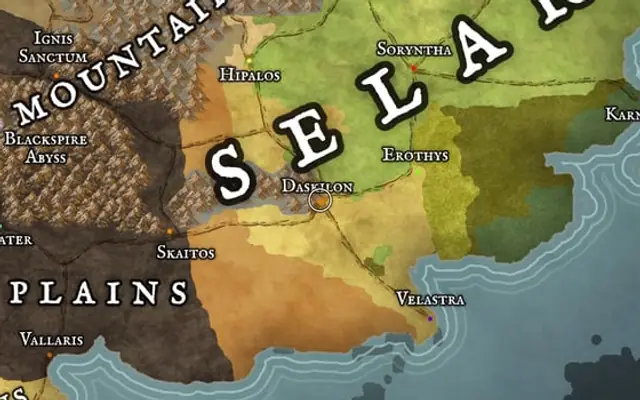 CityDaskilonThe armoured heart of the south-east — an original Suvanar foundation on the edge of the Ashen Plains whose merit-chosen Strategoi teach war as a craft, whose forges alone can…
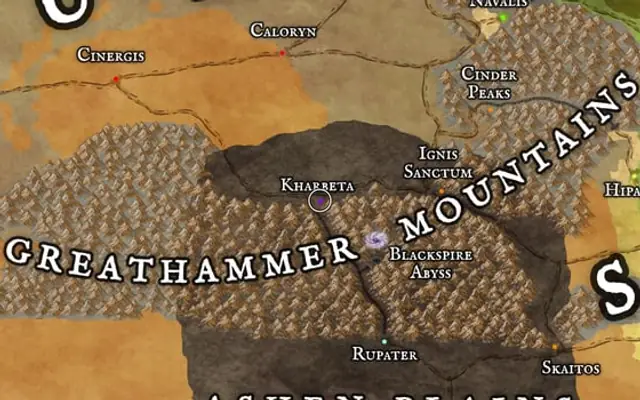 CityKharbetaThe rebuilt black capital of the giants, now the Serpent's Crown — religious seat of the Infernate, Rysalia's city, where pilgrims arrive free and ambitious and mostly leave as…
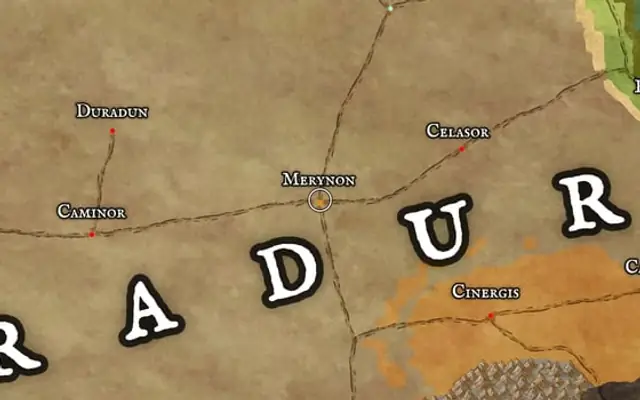 CityMerynonAn impossible ivory city in the temperate desert — administrative capital of the Infernate, seat of the Grand Hierophant, renamed for the Dark Queen and run on registers, roads…
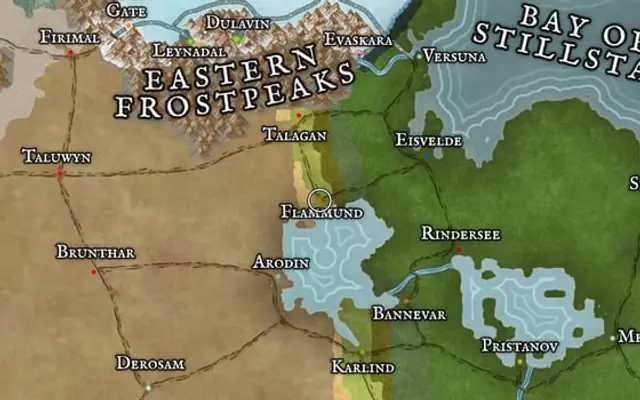 CityFlammundThe lake-kingdom where the Infernal Creed was first proclaimed — an independent Suvanar monarchy of eighty thousand, holiest city of the faith, and the respectable face of the…
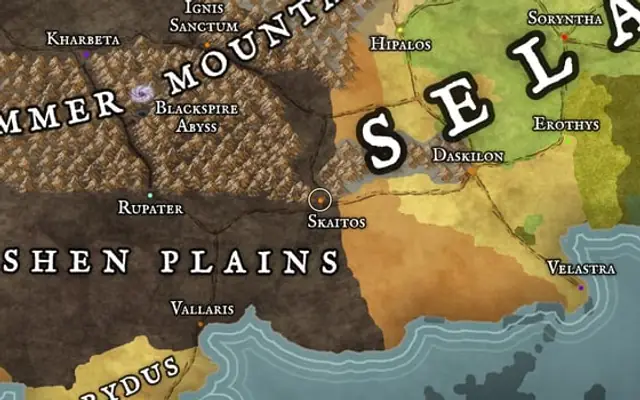 CitySkaitosA city built for thirty thousand where barely three thousand still breathe — Skaitos fell to the Cinder Witch in the winter of 1313, and her Shadow Coven now keeps court in its…
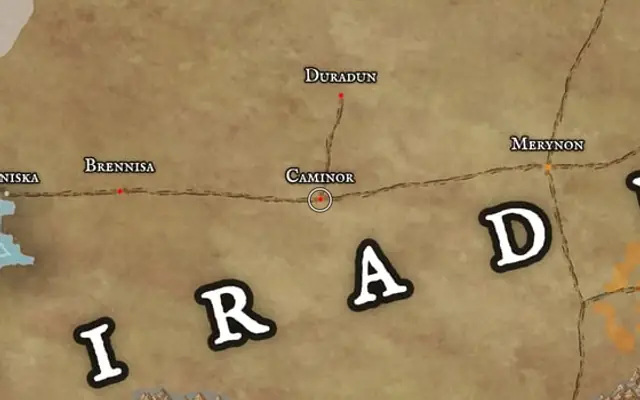 CityCaminorBlack basalt, deep iron and dwarven waterworks — the foundry city whose furnaces arm the Infernate, where ore enters at one gate and equipped armies leave by the other.