No people of Kworgale was made for the work the way the Himanar were made for it. Where another might learn a trade, a dwarf is a trade — a thing shaped to a purpose and content in the shaping. They do not weep at funerals, for they have few; they do not boast of bloodlines, for they all descend from one hand. They simply work, shoulder to shoulder in the firelit dark beneath the northern mountains, and the long centuries pass over them like weather over stone. To stand in a dwarven hold is to stand inside a single enormous patience, the kind that wears down glaciers.
Himanar is their own word, glossed by those who use it as Men of Ice, or Men of Water. The rest of the world says dwarf, and the word is not wrong — short, broad, heavily bearded, at home in deep places, entirely legible to a stranger who has never met one. What it fails to carry is that almost nothing beneath the surface of a dwarf works the way the surface promises. He was not born. He does not think with the soft grey matter every other people thinks with. Not all of his memories are his own.
One burden, shared, the holds say. One hammer, eternal.
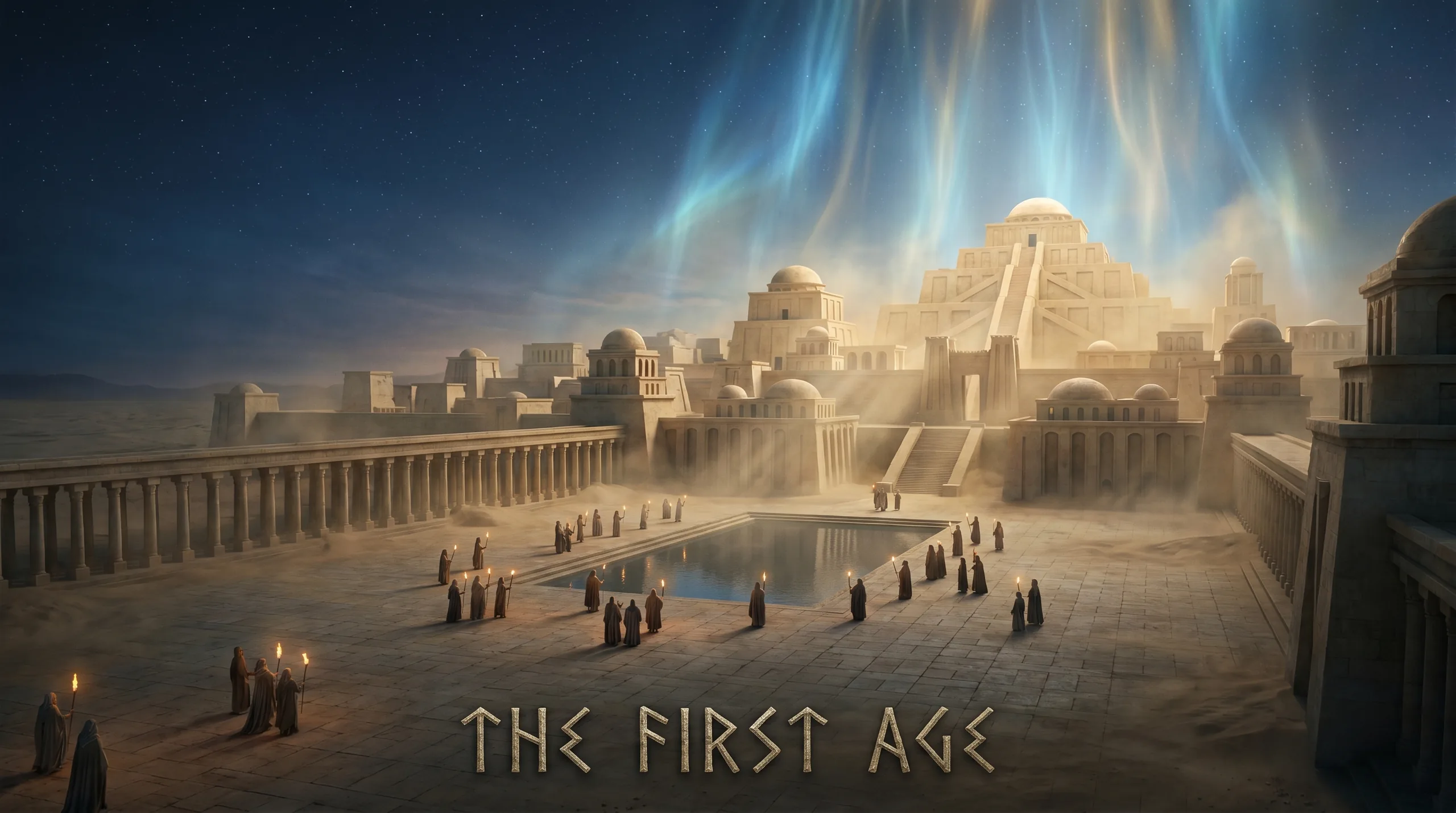
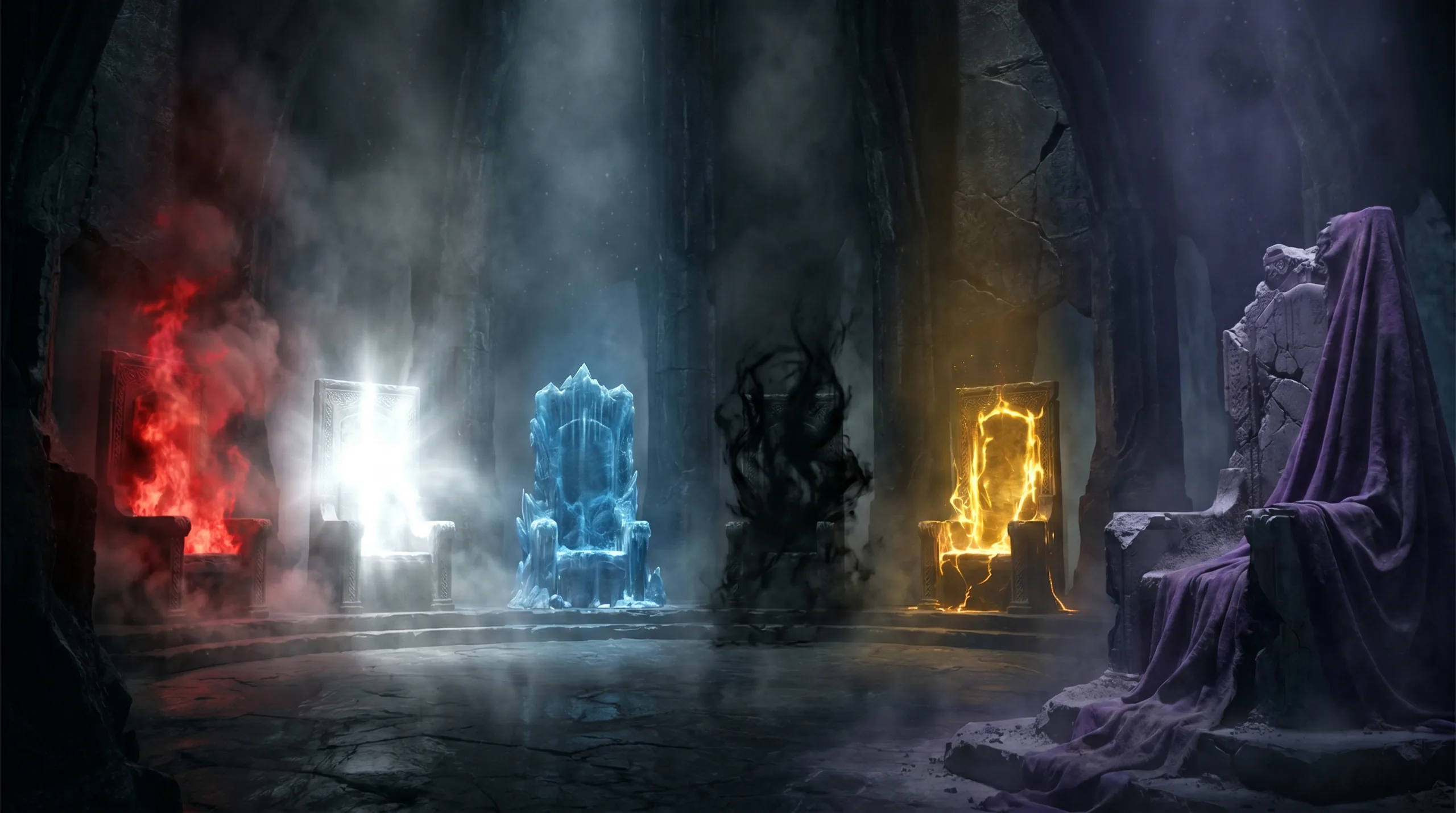
Like all the Elekoi, the dwarves were once Elehath — the winged celestials who fled a lost world and came to Kworgale in crystal ships. In the Great Renewal, some thirty-three centuries ago, most of those immortals laid down their old memory and rose again as mortal peoples. Five did not diminish, and one of them, the Elder called the Hammer, gathered the dwarves to himself as his own.
He made more than dwarves: the vessels of all three Elekoi peoples came off his anvil, though never by his hand alone — the Warden tuned each new mind to its new world, the Ruby taught the soul to leave the shape it had always worn, the Ancient Devil tethered each spirit to its body, the Ancient Deity guarded the boundary of the rite. Five hundred dwarves he shaped himself. These are the Greatsons, who woke with more capacity in them than any dwarf made since — founders of the lines, and the reason he is called Greatfather at all. He was visibly older when they opened their eyes. That was not fatigue. He had spent himself into them, permanently and by design, and the whole shape of dwarven life follows from it.
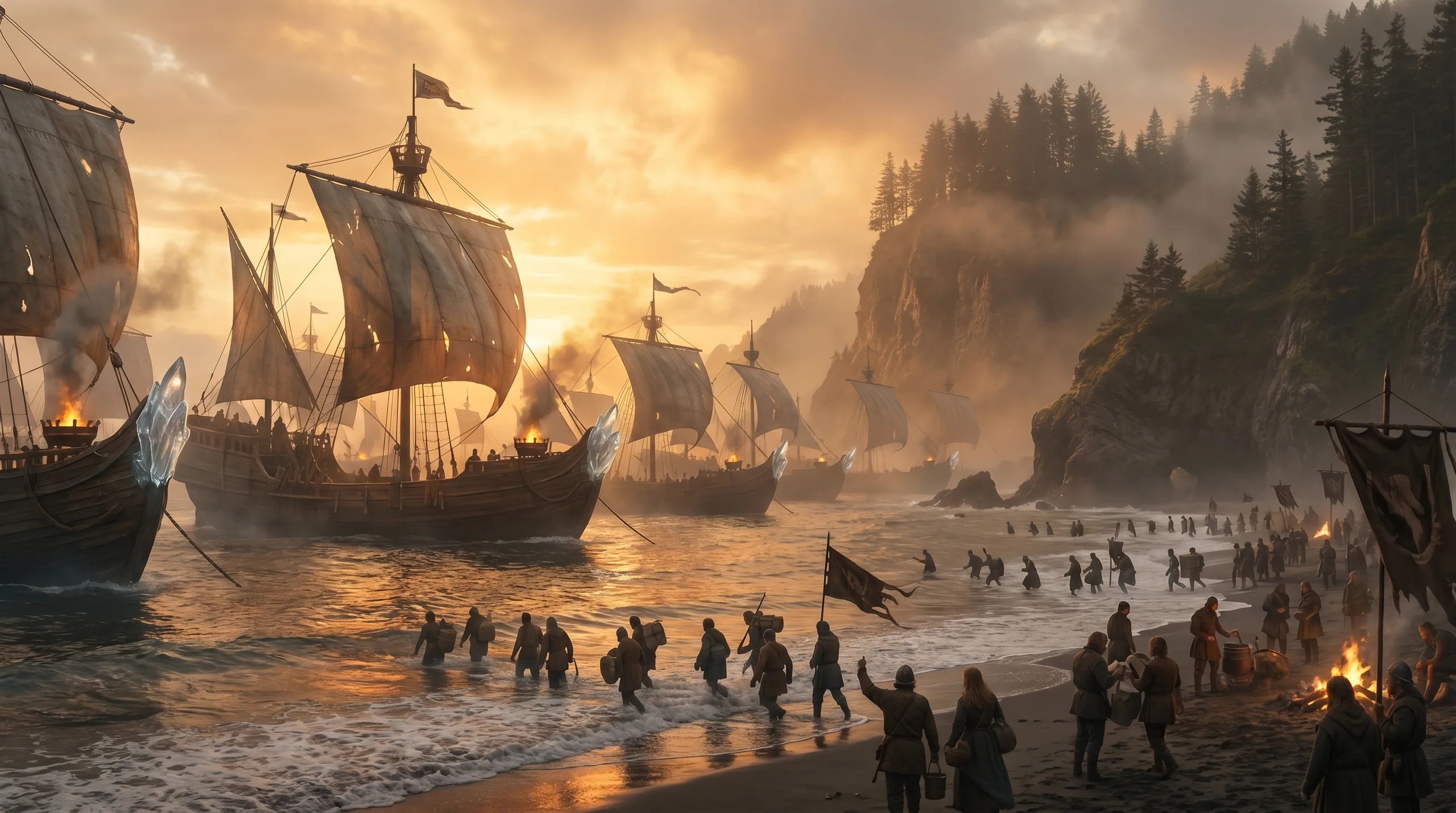
For five centuries all the peoples lived together in Vadesh, the Ur-City. Then came the great seaborne migration of the Fivefold Fleets, and the dwarves turned their prows north and west toward the cold country no one else wanted — the iron mountains, the fjord cliffs, the frozen shore. There they found exactly what their maker had bred them to love: hard things that yield only to hard work. They did not conquer the northwest. They negotiated with it, rune by rune, until the mountains agreed to be their home.
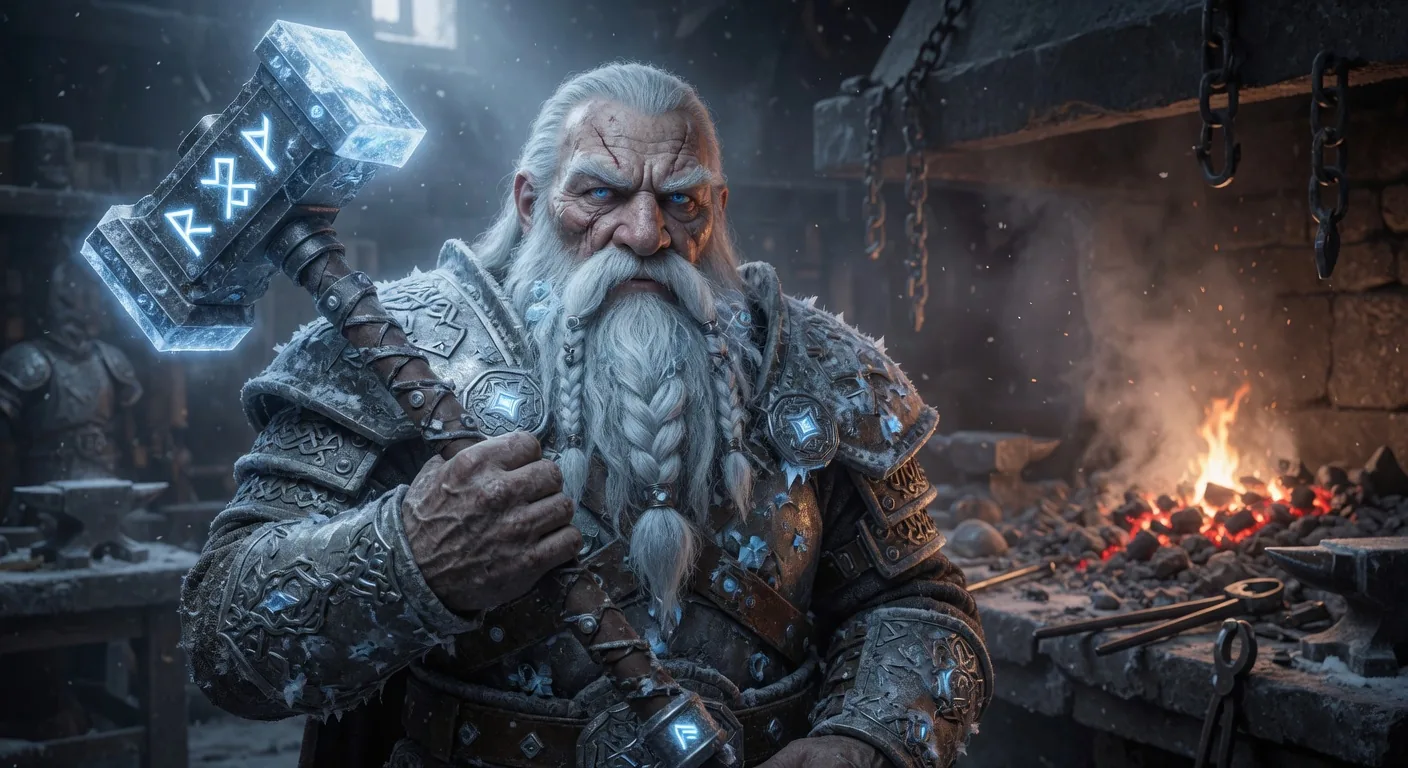
A dwarf is broad and powerful, hewn rather than grown, with deep-set eyes that catch the forge-light and burn bright in faces seamed like carved rock. Hair and beard run white or iron-grey — the Hammer's white — and the eldest among them are venerable past reckoning, weathered to the look of statues that learned to breathe. He is alive, and it is worth saying plainly: not a golem, not an automaton, not a walking artifact.
Behind that face is a mind of living crystal — architecture rather than tissue, fixed, exact, enormously capacious. A dwarf does not misremember a measurement, a formula or a face, and he can pass what he knows into another mind of the same kind without losing anything in the carrying, which no other people can do at all. And he cannot grow. The lattice puts out no new pathways; it has a ceiling, and the ceiling never moves. A dwarf improves by ordering what he already holds — better arrangement, better method, better use of the room remaining — never by making more room. Dwarven brilliance therefore takes the form of organisation, and a dwarf handed a genuinely new idea will sit with it for a decade before touching it. He is not being slow. He is working out what it will cost him to keep it.
They are biologically near-immortal, and there is a price written into their making. A dwarf does not father a child; he crafts a son — prepares a new and empty crystalline mind and gives into it portions of his own: memory, skill, structure, and the unbroken chain of the Hammer's essence he received from his own maker. What he gives is gone. Not lent, not copied, not recovered by rest. The son who wakes is a genuine new person with his own will and his own faults, and he begins with a master's hands and a thousand years of his family's work already in him. The father is smaller for it, and stays smaller. So dwarven age is not decay but expenditure, and most shape their final sons around seven or eight centuries, pouring the last and best of themselves into the next link of the chain before the light in them banks low. It is bad manners to ask a dwarf his age; you look at his hands and his eyes and you have already counted his sons. There have never been many dwarves and there never will be. Every one of them was paid for.
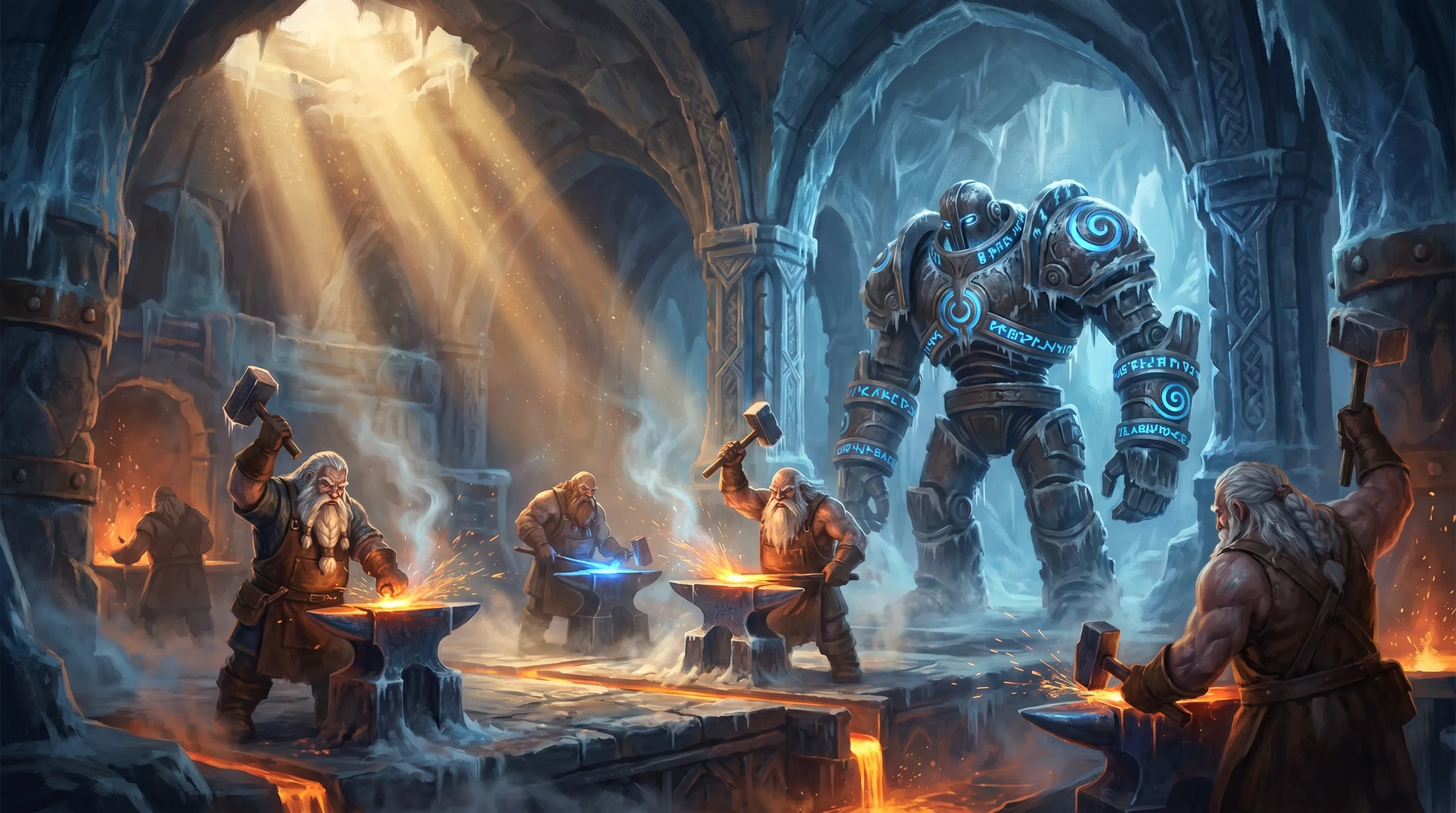
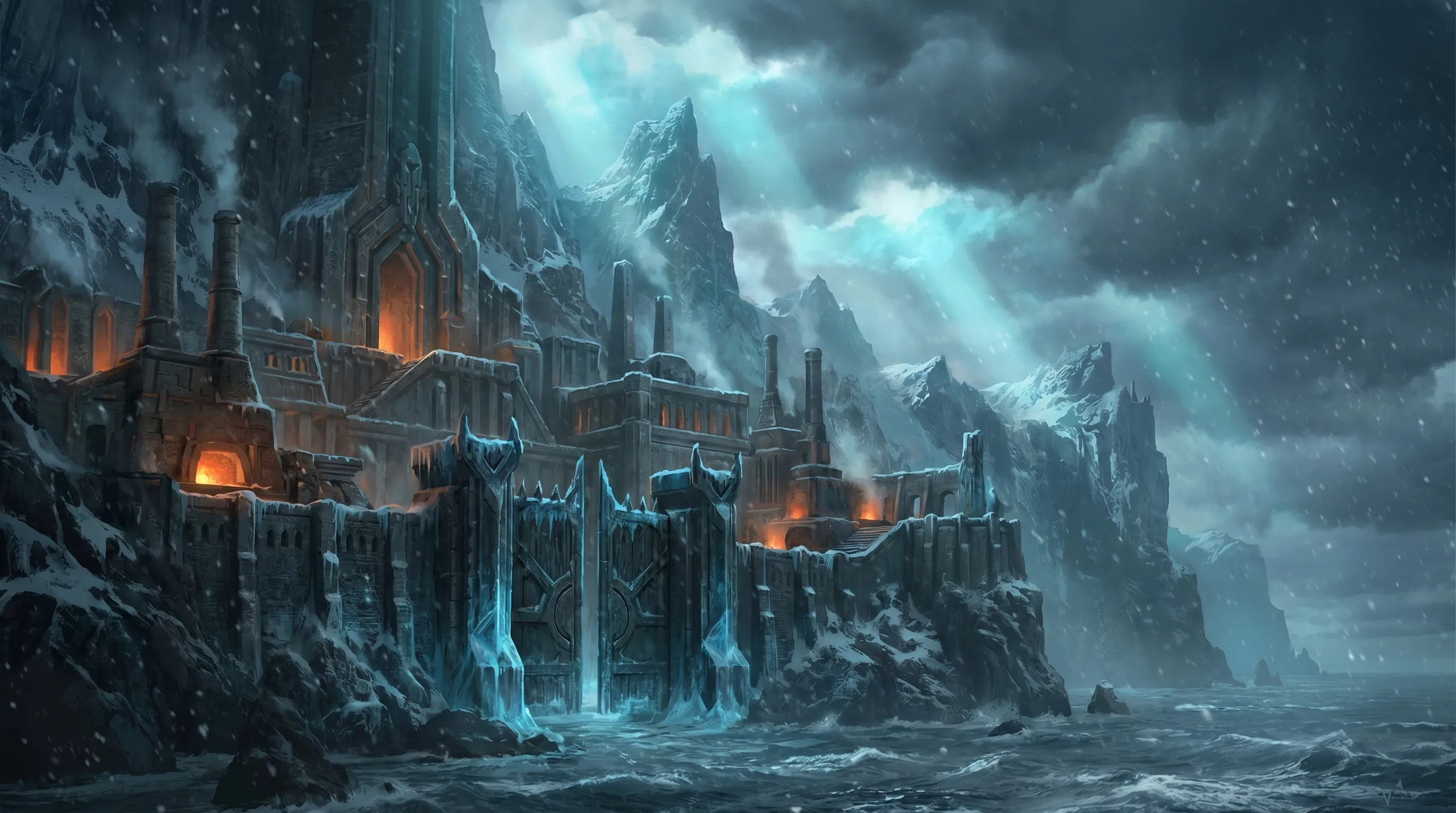
Their holds are colossal forge-cities cut into frozen peaks and the walls of the fjords: vast runic gates, halls of frost-iron and blue ice, the deep furnaces venting steam and sparks against the snow and the cold grey sea. We build downward toward the world's bones, a dwarven saying runs, and upward toward the Hammer's eye.
Dwarven descent is not a matter of records. It is physically present in the man. Because a father gives real memory along with everything else, a dwarf can carry first-hand recollection of work he never did — an apprentice sets his hands to a joint he has never once made and finds the motion already in them, because in a plain and literal sense they are his father's hands, and his father's father's. A craft tradition among the Himanar does not thin across a thousand years the way a human craft thins, mouth to mouth, a little lost at every telling. It is not taught. It is delivered. The price of that fidelity is that a dwarf cannot easily disown his own past: to break with an old method is to argue with a memory you personally hold and personally know to be true.
Every line runs back through one of the five hundred to the Greatfather, each link a father who spent part of himself to forge it. Not all five hundred survived — some ended in a hold that fell, or in a master who made no son — and the ones that endure are the clans, where genealogy and history and craft and creed are all the same substance. Dwarves of the old lines can sometimes recognise the provenance in one another the way a smith recognises his own hammerwork at twenty paces. There is no formal ledger of rank among the holds. This has never stopped anybody from keeping one.
There is a knife inside the arrangement. A line must carry enough of the father forward to keep a civilisation intact, and not so much that the son is merely the father continued. Give too little and the work is lost; give too much and no new person ever wakes. Every dwarven father makes that judgement alone, and no two holds agree where the mark should fall.
The dwarves keep no temples of the human kind, no pleading hymns or hearth-prayers, and they ask nothing at all of belief. Belief is for peoples whose god left no evidence. The Greatfather made the first five hundred with his hands; his essence is in every dwarf alive, in a chain each of them can recite; his craft still works when you strike it; and his design is proved again in every son made and every father who dims. He is remembered in blue, in unity, in the shared burden, in artifice, in the making of living things, and in ice, and his title is genealogical and theological and technical at once. Every son-making is the first sacrifice performed again at a smaller scale. Every work sent out into a stranger's hands is doctrine in practice — one mind's mastery made usable by somebody who never earned it, which is what the Greatfather did for his sons and what he refused to do by dissolving them into one another. Even the swearing is his: by the Greatfather's anvil is what a dwarf says when he drops something on his foot.
What the holds keep instead of temples is an authority deciding what may be made and who may be taught to make it. Nothing in the craft itself reserves the highest works for consecrated hands; any dwarf with the knowledge could do them. The knowledge is simply never allowed to reach him. The monopoly rests on teaching, on silence, and on the holds' agreement with one another — not on a law that cannot be broken but on a secret that has not yet been told. Break the unity and nothing whatever is violated. Everything simply stops being theirs.
That authority reaches past the maker, too. What is made in a hold answers to the hold, and past the hold to the keepers of the rite, so a dwarf's greatest work is never entirely his own to command. Custom restrains the use of that reach; only custom does, and the keepers know precisely how much worse the craft would permit. Which is why the definitions are guarded so jealously — what is a tool, what is a servant, what is a person, what is a dwarf. Somewhere in the deep holds sits an office that answers those questions, and its rulings have never been idle theology. They decide who can be owned.
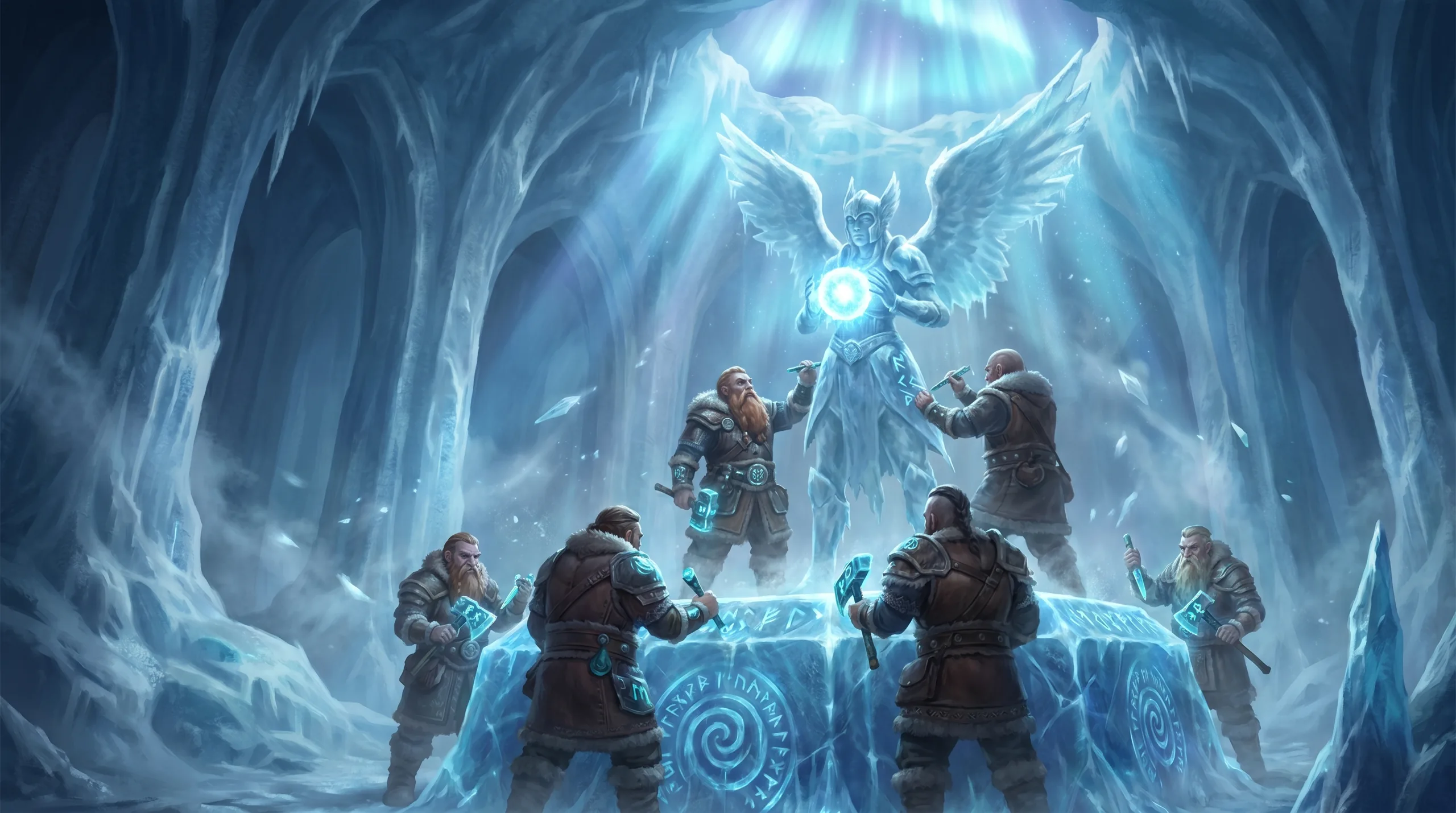
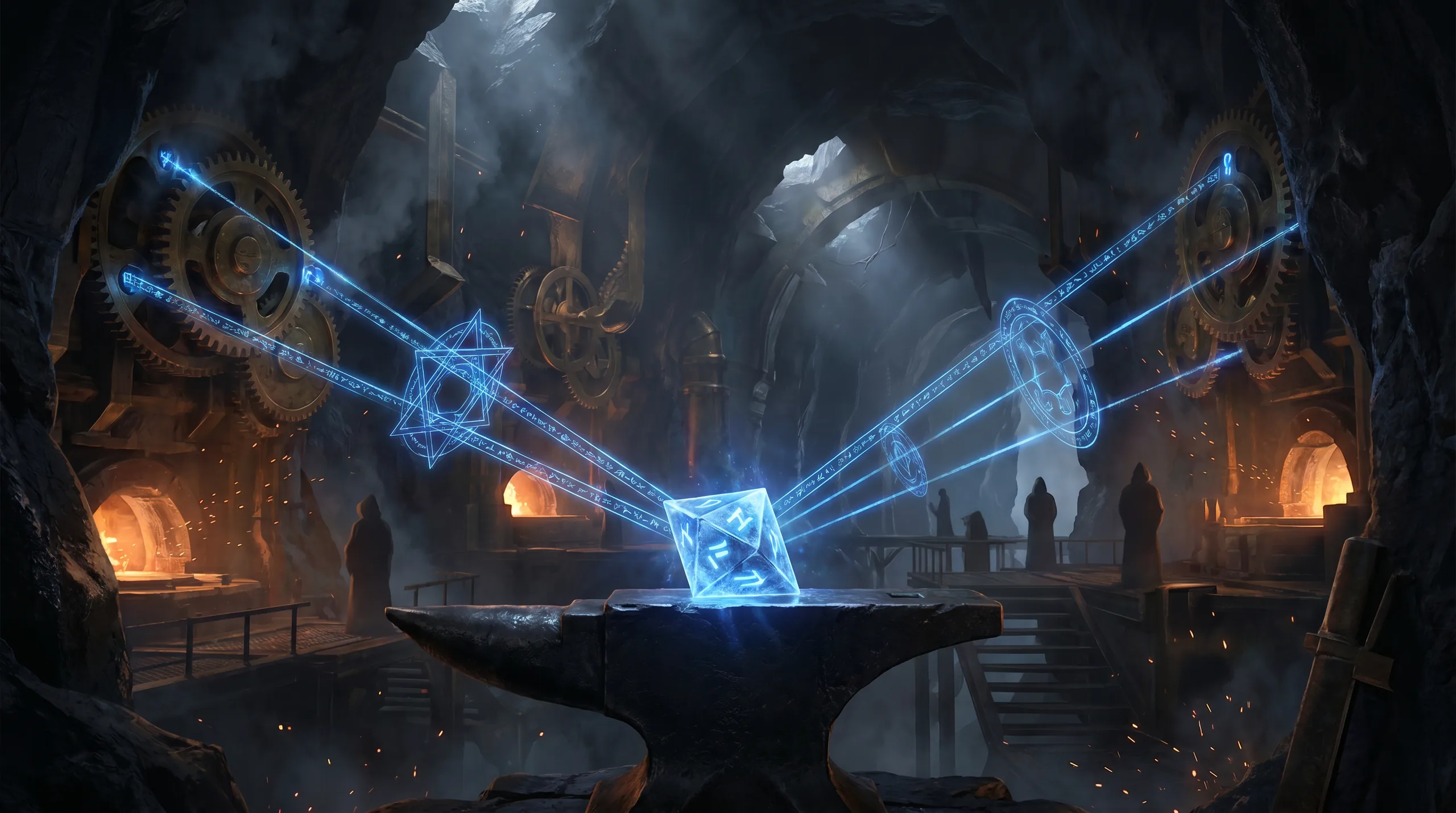
Each people wields thymara — the force born of sapient minds — through the schema gifted by its patron Elder. To the dwarves the Hammer gave the Numina: the artifice that stores thymara within crafted matter and breathes purpose into sorcerous constructs. A dwarven blade is not merely sharp; it remembers. A dwarven gate does not merely close; it judges who may pass. The greatest works walk and ward and labour on their own, given motion by the runes graven into them.
A true work of the craft is a numinar, and its virtue is that it does not care whose hand holds it: charge, formula and pre-solved work sit in the stone, and possession is the whole of the key. It can put an operation into the hands of somebody who could never have performed it, and does, daily, across the continent. There is an intimacy in the making that outsiders miss — the dwarf's own thinking is crystalline and the numinar's storage is crystalline, so what he does is set a piece of his ordered mind down outside himself, in a stone that will hold it long after he has stopped.
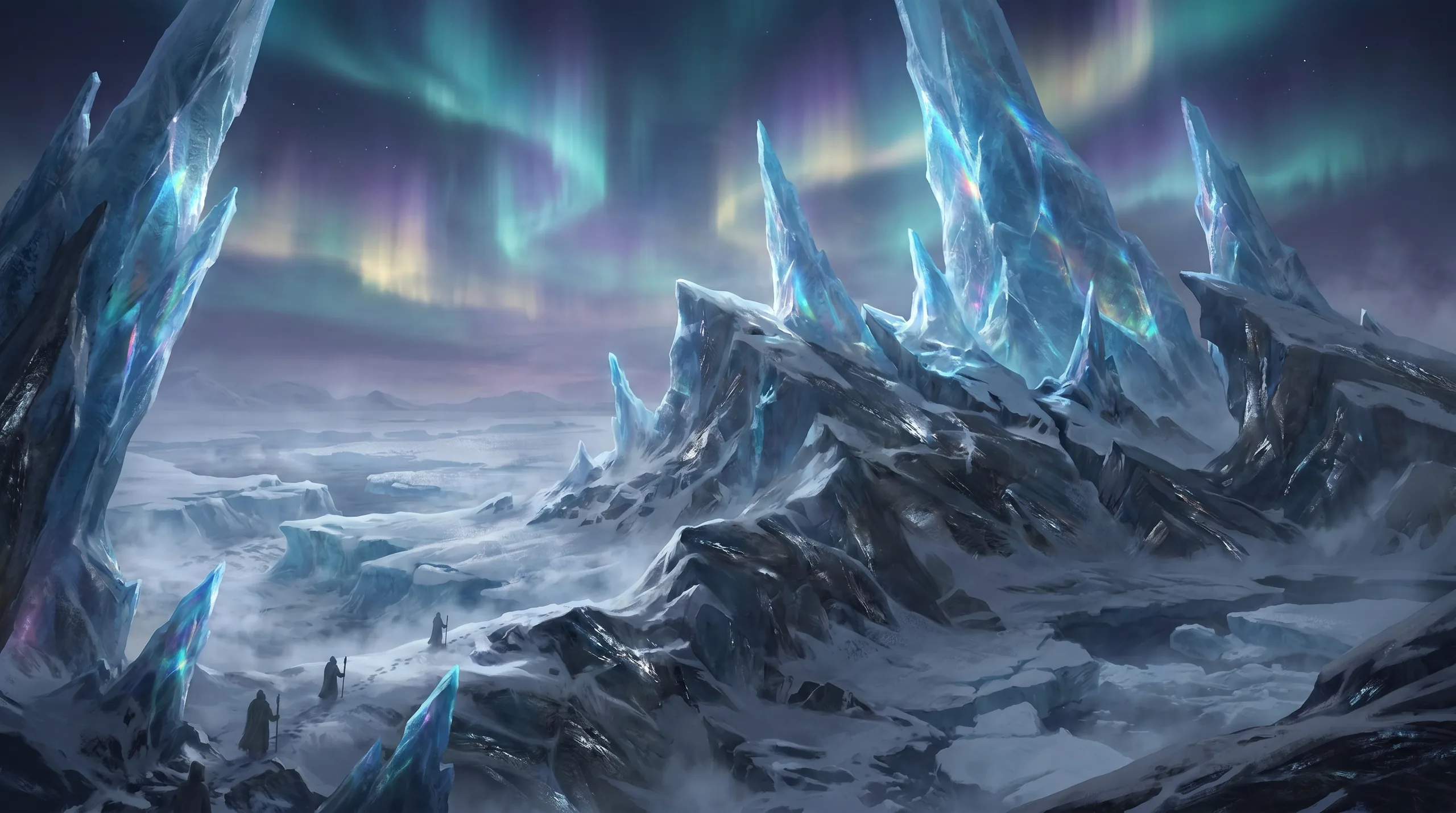
The dwarves are an ice-aligned people, and nowhere is the Numina more wondrous than in the far north, in the Glacial Dominion, where the Polar Dwarves keep the oldest cold in the world. They are masters of ice-forging, and they shape Eternal Frost — an ice that will not melt though you set it in a furnace's heart. Communing with the Great Spirit of Ice, the iceforgers breathe life into their masterworks: the Frostforged Valkyries, beautiful living maidens sculpted from frost, who guard the white wastes and serve the Frost Queen of the Dominion. Their first law is humility. Never take ice for reckless gain, the iceforgers teach. Craft is a conversation with the frozen world — and the frozen world remembers a rude guest.

The holds' real power is not the mountains they sit on but what comes out of them. There is scarcely a worked crystal or gemstone deposit anywhere on Kworgalya without dwarves somewhere in it — owners, partners, or the assayers nobody else can replace — and little iron of consequence that does not pass a dwarven hand between the seam and the forge. Nothing in the Numina forbids an outsider from learning it; the dwarven grip is simply overdetermined, resting at once on crystalline minds, unbroken provenance, technique inherited first-hand, guild networks older than most kingdoms, ownership of the materials, and a deliberate habit of not explaining things. Any one of those could be prised loose. All of them at once has never been managed.
What it buys them is a position no army has ever bought anyone. The guilds keep a studied neutrality and are believed abroad, so two kingdoms at war will be supplied out of the same hold, both knowing it, and neither willing to say so aloud. A guild-factor walks into either camp under no flag but his own and is heard in both. It is not that either side trusts him; it is that neither can afford what happens if he stops coming. A surprising share of the continent's peace has been made across dwarven tables by men who came to talk about ore.
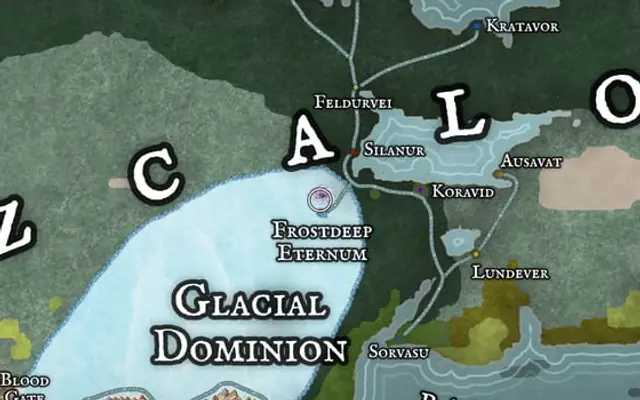
North of everything stands Frostdeep Eternum, the great surviving work of the Hammer's own hand, raised where the mortal world and the Veil lie against one another. The holds say the Greatfather's Heart is kept there, and his body with it. What is beyond dispute is the machinery — an architecture built to draw thymara through into the deep places, turn part of it to the Heart's keeping, and return the rest as a reserve for dwarves and Valkyries that would never run dry. He did not build it alone. He built it with the Ancient Devil, in a season when the two of them worked closely enough that the rest of the world began counting ships and drawing conclusions. The cold that lies over Frostdeep for leagues in every direction is not weather but exhaust, the vented breath of something still running under the ice, and the reason the permafrost there pays no attention to the seasons. Something went wrong with the works long ago. Whatever it was, it did not stop the cold. How much of the machinery the keepers still understand is a question they do not invite.
The Himanar are not one people and have not been for a long age. Frostdeep keeps the orthodoxy — the guarded knowledge, the old lines, the last word on what may be made and by whom — and it stands inside the Glacial Dominion, where the line between the Dominion's writ and the holds' authority has never been drawn on any map, chiefly because drawing it would require somebody to lose. Westward in the taiga, Kotori sits on its home mountain and has believed something else for centuries: a martial hold and a power in its own right, answering to no other, heterodox by Frostdeep's reckoning in matters neither will specify in front of strangers. Out along the guild roads are dwarves who have not seen the inside of a hold in two hundred years, whose loyalty runs to a charter and a ledger. Others live scattered through the Dominion among ice elves and frost-touched peoples, dwarves by making and Dominion subjects by residence, content to leave the contradiction unexamined.
And some have been driven out altogether. There is at least one community of exiled dwarves living far from any hold, sheltered by foreigners who paid a real political price for it and have never been publicly thanked. They were not expelled for a crime. They were expelled for a question — the one underneath every quarrel the Himanar have ever had among themselves. How much of the father must survive in the son, and how much has to be surrendered before the son is genuinely free? Frostdeep has its answer, Kotori another. The exiles carried the question further than either would allow, and that is why they live where they live.
Their creed is lived rather than spoken, and it comes to this: no work belongs to one dwarf. The weight of any task is set on every shoulder in the hold, so that none is crushed and none stands idle. To shirk is the only true sin, and to ask for help is no shame at all but simple arithmetic. Every dwarf knows the names of his makers back toward the Hammer, an unbroken line of hands passing the same fire forward, and to honour that line is to honour the Elder at its head.
It makes them stubborn, slow to anger, and very nearly impossible to break. In the two great crusades against the Beasts, dwarven legions held lines that should have buckled, because a dwarf does not flee a burden — he leans into it and waits for the brother beside him to lean too. When the Elders fell into the Conflagration and the Deity made the Sacrifice that ended it, the dwarves did what dwarves do. They lowered their heads, banked their grief, and went back to the forge to rebuild a broken world one true thing at a time.
There is a cost the holds leave out of their sayings. A people who share every burden also share every decision, and a dwarf who wants no part of a decision has fewer places to stand than he supposes. The creed that makes them unbreakable in a shield-line makes them very hard to leave.
Stone forgets nothing, they say in the deep holds, and neither do we.
 LoreThe Great RenewalEvery history of Kworgale begins at the same place: the Great Renewal, the act of creation, surrender, and forgetting from which the mortal world was born. It is dated, by…
 LoreThe Five Elder GodsBefore they were gods, they were exiles. The powers the world calls the Elder Elehath — the Elders — were once members of a deathless race of star-born beings who came to…
 LoreThe Fivefold FleetsFive and a half centuries after the founding of Vadesh, the children of the Ur-City set out to inherit the world. The great dispersal is remembered as the Fivefold Fleets, and…
 MagicNumina — The Vessel-CraftThe Ruby gave power to blood. The Hammer gave it to steel. A dwarven master pours finished magic into a starsteel numinar. Numina is the schema of artifice — the patient,…
 RegionThe Glacial DominionA vast frozen realm spanning much of north and northeastern Kworgale, ruled by the immortal Frost Queen Glacya from the Iridescent Throne within the Crystalline Palace of…
 LoreThe Great Spirits of Fire and IceOlder than the gods — older, perhaps, than the world's own memory of itself — are the Great Spirits of Fire and Ice. They are not gods in the way the Elders are gods. They have…
 LandmarkFrostdeep EternumElves and dwarves raised Frostdeep Eternum together in the third wave, out past the treeline on the open ice of the north, where its work is neither harvest nor trade; the…