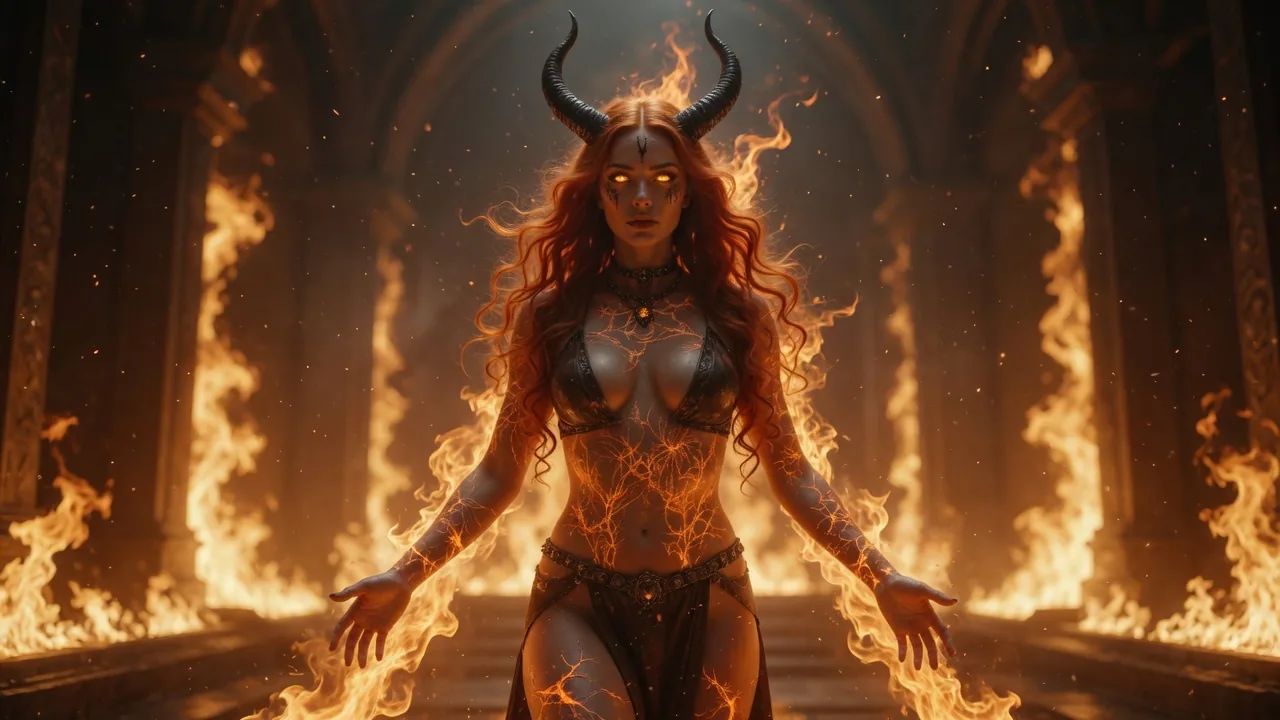

Long before the first gods set foot upon Kworgale, the world already burned. Two powers were here at the dawn of everything — the Great Spirit of Fire and her eternal counterpart, the Great Spirit of Ice — and between her warmth and the other's cold the whole of creation first found its balance. She is not a goddess in the way the temples mean the word. She is fire itself, awakened: a living principle, a personified force of nature that wears, when it pleases her, the shape of a woman crowned in horns and wreathed in flame. Mortals have worshipped her, feared her, and bled for her since the first spark was struck — and not one of them has ever truly understood what she is.
"You do not worship the Great Spirit of Fire. You warm yourself at her, as you would a hearth that could, if it ever turned its mind to it, unmake the sky."
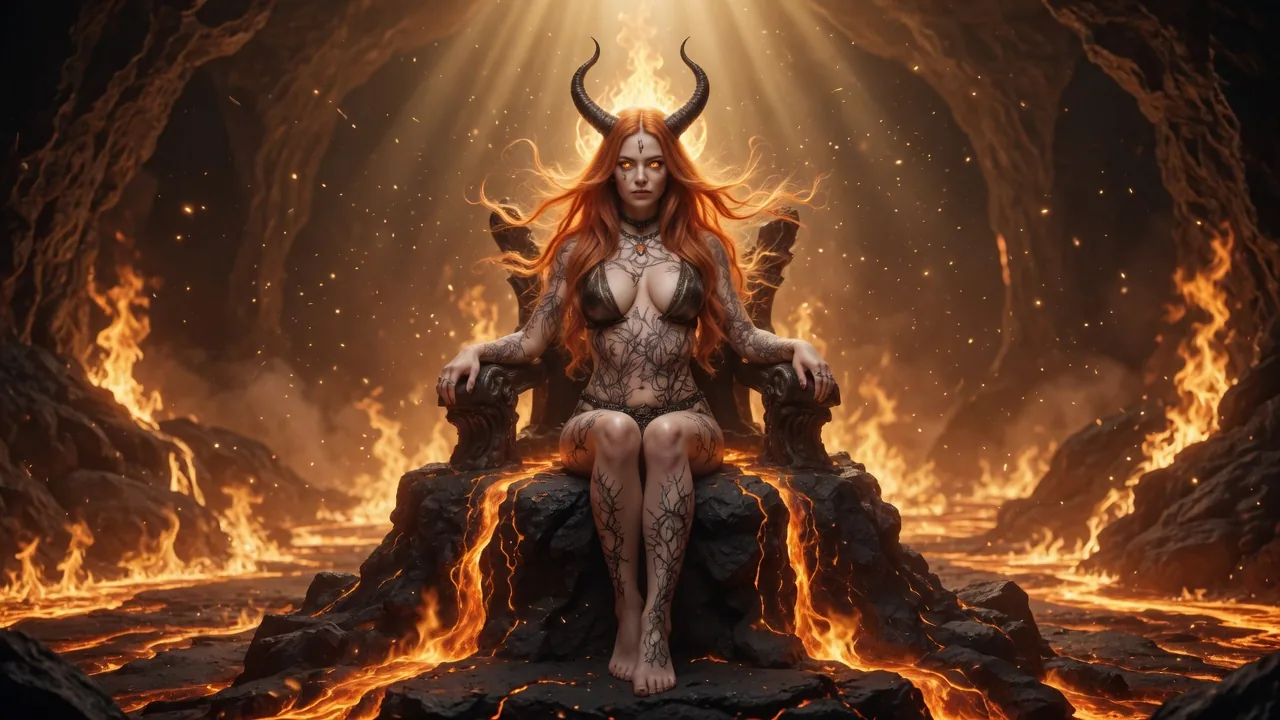
She dwells within — and is, in truth, the living mind of — the Pyreheart Nexus, the burning wellspring at the deep root of the world. Every flame ever struck, every spell of fire ever woven, every ember in every hearth from the savanna to the snowline is drawn, knowingly or not, through her. Scholars name the unseen current that carries that life the Thymarasphere — the sacred bloodstream of creation — and she sits at the very fount of it. To work fire-magic is to reach down into the Pyreheart and ask something of her, and the strongest fire-wielders feel her answer like heat against the back of the soul. The Pyreheart is not merely where she lives. It is the birthplace of fire itself.
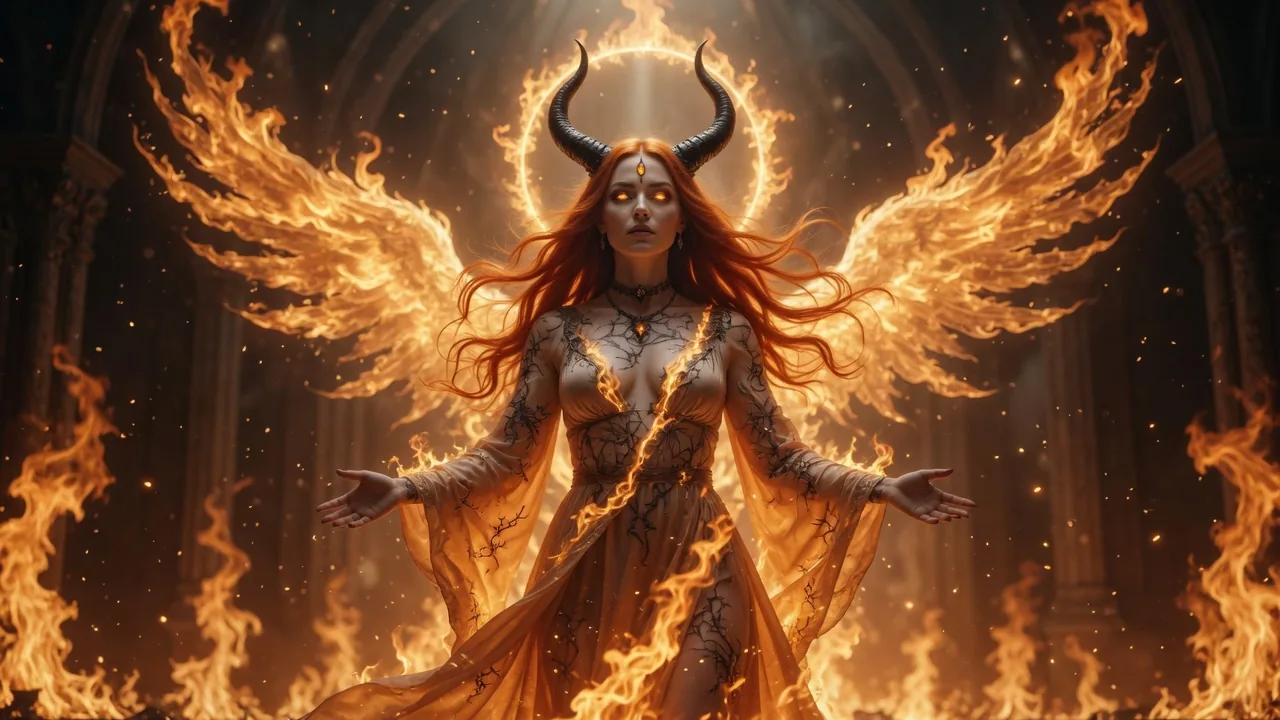
She has no true face. A force of nature owes the world no features, and for most of eternity she has been simply the fire — vast, faceless, everywhere at once. Yet when she chooses to be seen, she gathers herself into a shape mortal eyes can almost bear to hold: a tall and terrible woman of living flame, her fair skin glowing as though embers move beneath it, traced all over with fine dark filigree like branching veins of cooling lava. Great curved horns of obsidian sweep back from her brow like a crown; her hair falls in heavy drifts of molten red and gold; and her eyes are two steady coals, ancient and patient and warm. It is a mercy, this shape — a mask worn so that those who love her might have something to kneel before. The face is a kindness. What wears it is older than kindness.
For all the dread that clings to her name, her oldest and deepest nature is not destruction but creation. Fire, in Kworgale, is alive, and it has moods, and her truest mood is generosity: she is warmth in the bitter dark, the spark that hardens clay into shelter and ore into tools, the heat that quickens the seed and thaws the frozen ground so that living things may begin again. The Pyreblood Titans — the last true fire-giants, and the only beings still permitted to commune with her directly — name her Mother, and say that to sit at her flame is to be remade gentler than you were. Where her counterpart of Ice preserves and stills, she renews and begins. In her kindest aspect she is exactly what the trembling pilgrim hopes to find: warmth in the long dark, and the promise that life begins again.
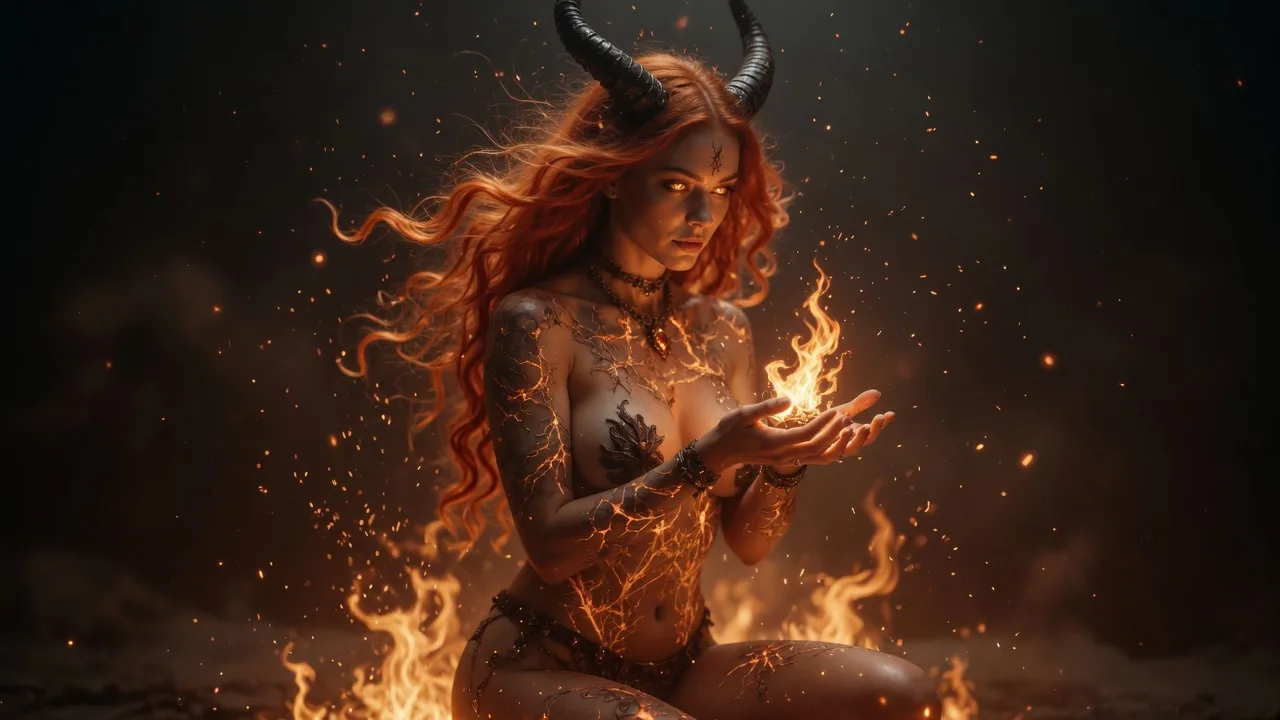
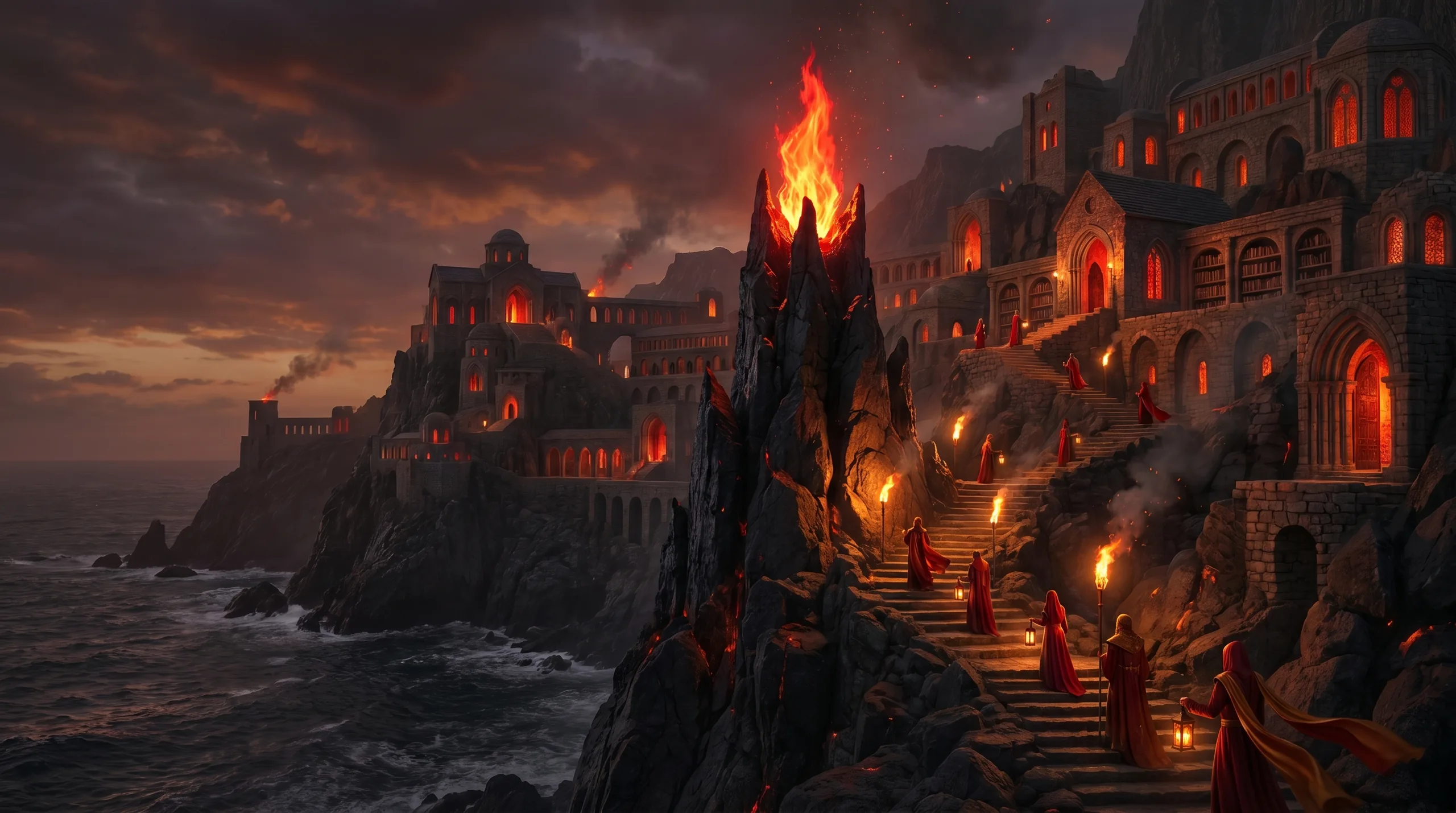
Whole civilisations have raised their prayers to her flame. The faith of the Ruby — whose all-female priesthood still tends the sacred fire at Velastra — names her as the deepest truth standing behind their goddess, the truest intermediary between the human worship of fire and the living power that answers it. In countless temples her likeness is carved horned and serene above the altar-flame; pilgrims walk for years to kneel in the heat of a single sacred ember and call it her presence. They are not wrong to. Some part of her is in every consecrated fire — listening, dreaming, half-aware. But she does not need their prayers, and she does not grant their wishes the way a goddess of the temples is supposed to. She simply burns, and they warm themselves at her, and call the warming holy.
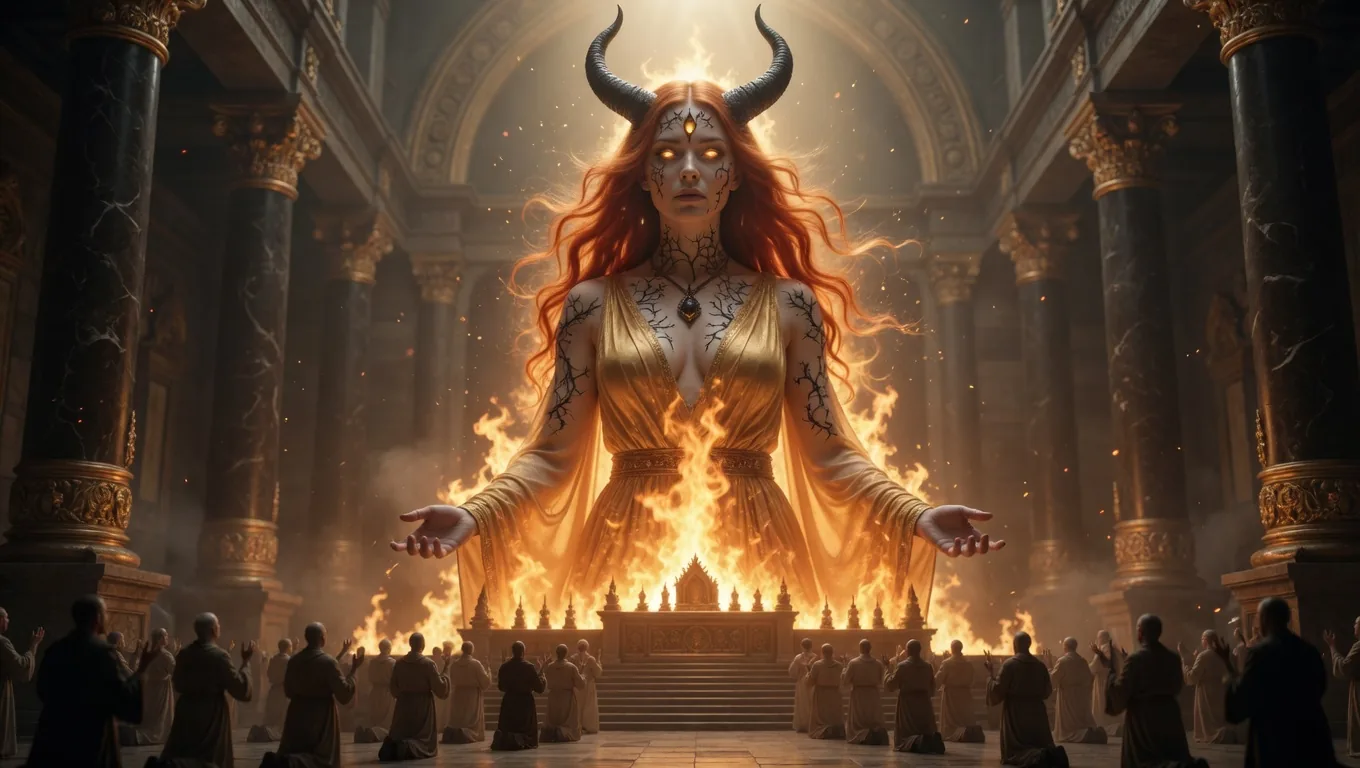
And she is divine — make no mistake of it. To stand in her full presence is to feel the air turn to gold and the heart turn to water; she is radiant beyond bearing, an axis of the world made flesh and flame, beautiful the way a sunrise or a wildfire is beautiful, with no thought at all for whether you survive the looking. Kings have gone blind weeping at the sight of her. The Pyreblood Titans say that on the rare days she rises to her full glory, the very stone remembers it was once molten and yearns to flow again. She is no small or safe divinity, no idol to be flattered. She is the genuine article — vast, holy, and without mercy or malice both, which in a thing so far above us amount to the same indifference.
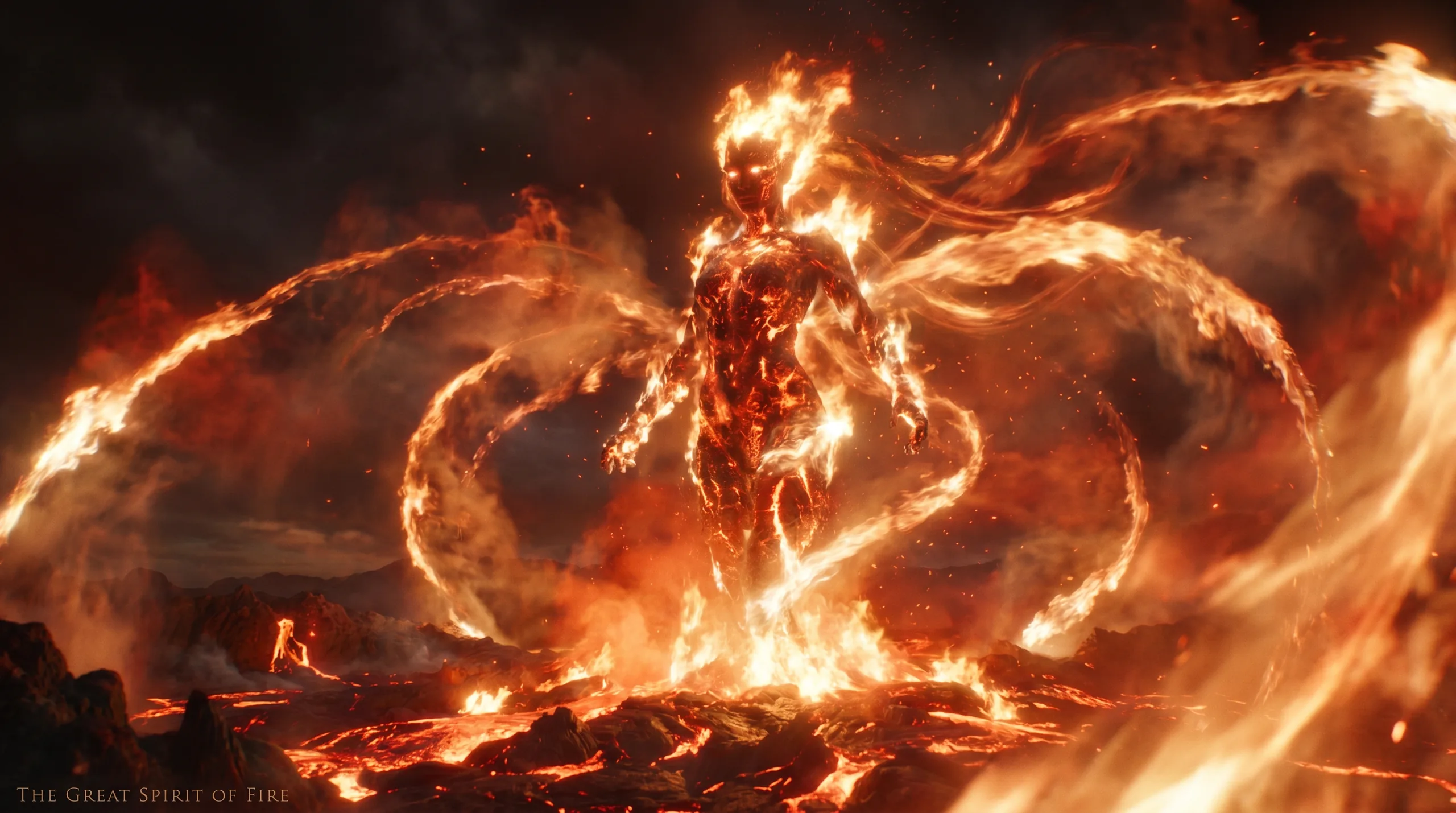
It is a grave mistake to think her kind, or cruel, or anything a mortal heart would recognise. The Great Spirit of Fire is sapient — she thinks, she chooses, she remembers — but she is not a person, and the few scholars brave enough to study her warn that she is barely comprehensible at all. Her sense of time is geological; her attention turns slowly, like a continent; what she loves and what she destroys may be the same act seen from two sides. Strip away the borrowed shape and her true form is a titan of living fire taller than mountains, a silhouette that only suggests a woman — more weather than being. The wisest fire-priests teach a single humble truth above all others: that the Great Spirits do not perceive the world as we do.
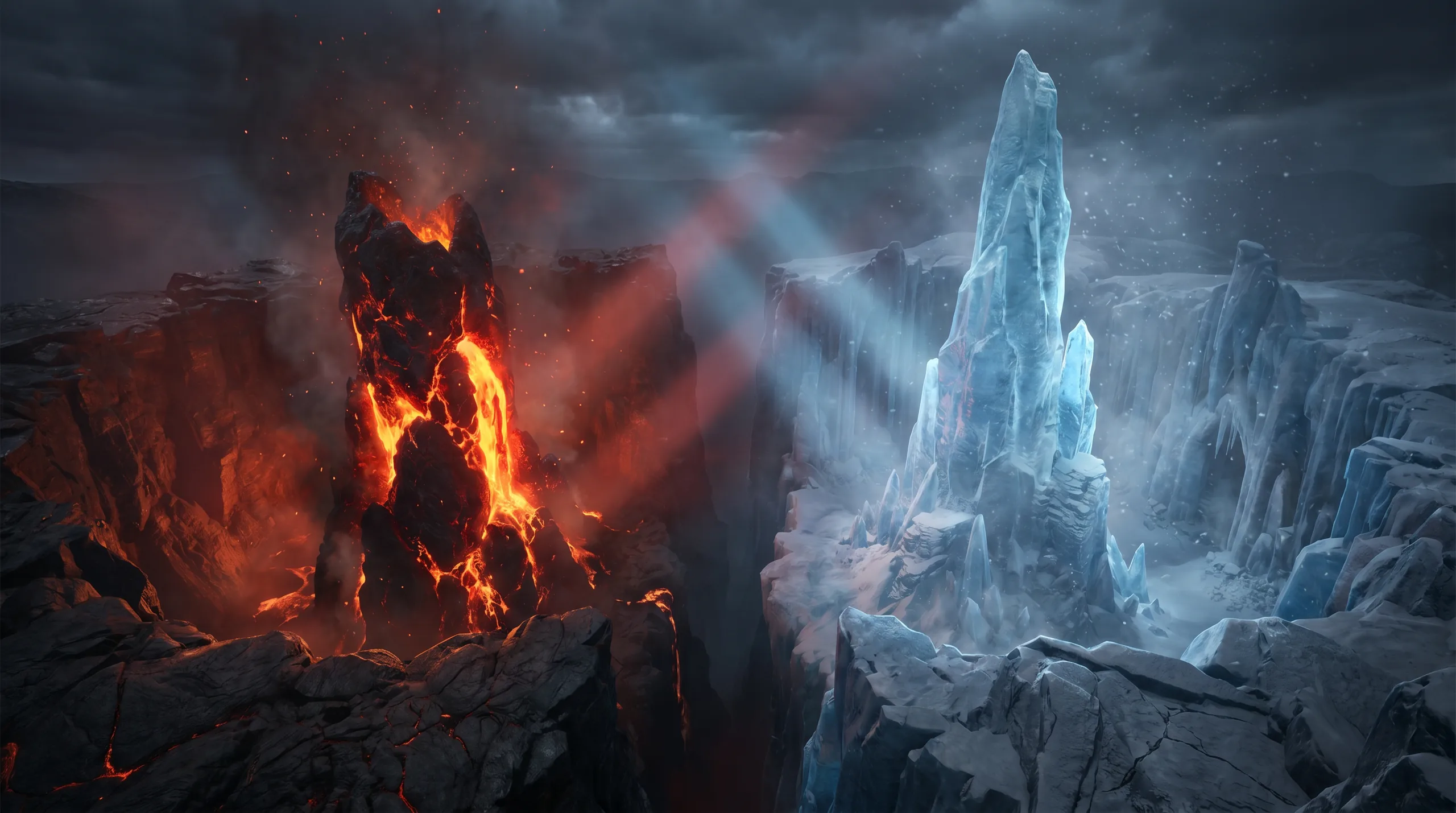
There is a wound at the root of her, dealt long before the present age. What dealt it, and how, the chronicles do not agree; but from that day the perfect balance of warmth, rebirth and creation has never been whole again.
The dragons paid for it. The Ancient Dragons — paragons of their kind, close to gods themselves — found they could not cleanse her flame, and so they contained it: each took into itself a shard of her fury and became a living seal, a walking prison of will and flame. For more than a thousand years their sacrifice held. But seals weaken, dragons fall, and in a later age a man drowning in grief and power forced his way to the Pyreheart itself to wake Demon Fire in full. In that desperate hour the Great Spirit woke too — not to consume, but to intervene — and joined her fire to the ice of the northern queen Glacya to seal him away inside her own burning heart. It saved the world. But something in her broke in the doing of it, and now that chained ruin will not stop struggling, and from its endless thrashing pour the demons that break in burning tides against the cold walls of the Glacial Dominion. The northmen think the demons are her malice. They are not. They are her distress. The seal in her heart festers, and the fire weeps in the only language it knows.

She was never meant to stand alone. With the Great Spirit of Ice, in the cold sanctum of the Everfrost far to the north, she forms the two halves of a single balance — fire and frost, beginning and preserving, the warm pulse and the still deep — and for all that mortals and gods have made war in their names, the two Spirits themselves are not enemies but the oldest of partners, each holding up her end of a world that would fall without either. But the long ages have not been kind. Tampered with, leaned upon, and wounded by powers that should have known better, the Great Spirit of Fire is slowly eroding — a living axis of balance, divine yet vulnerable, burning a little lower with each passing century. The priests who know the truth do not pray for her favour. They pray for her health.
Trysania
The Veiled Architect
 LoreThe Great Spirits of Fire and IceOlder than the gods — older, perhaps, than the world's own memory of itself — are the Great Spirits of Fire and Ice. They are not gods in the way the Elders are gods. They have…
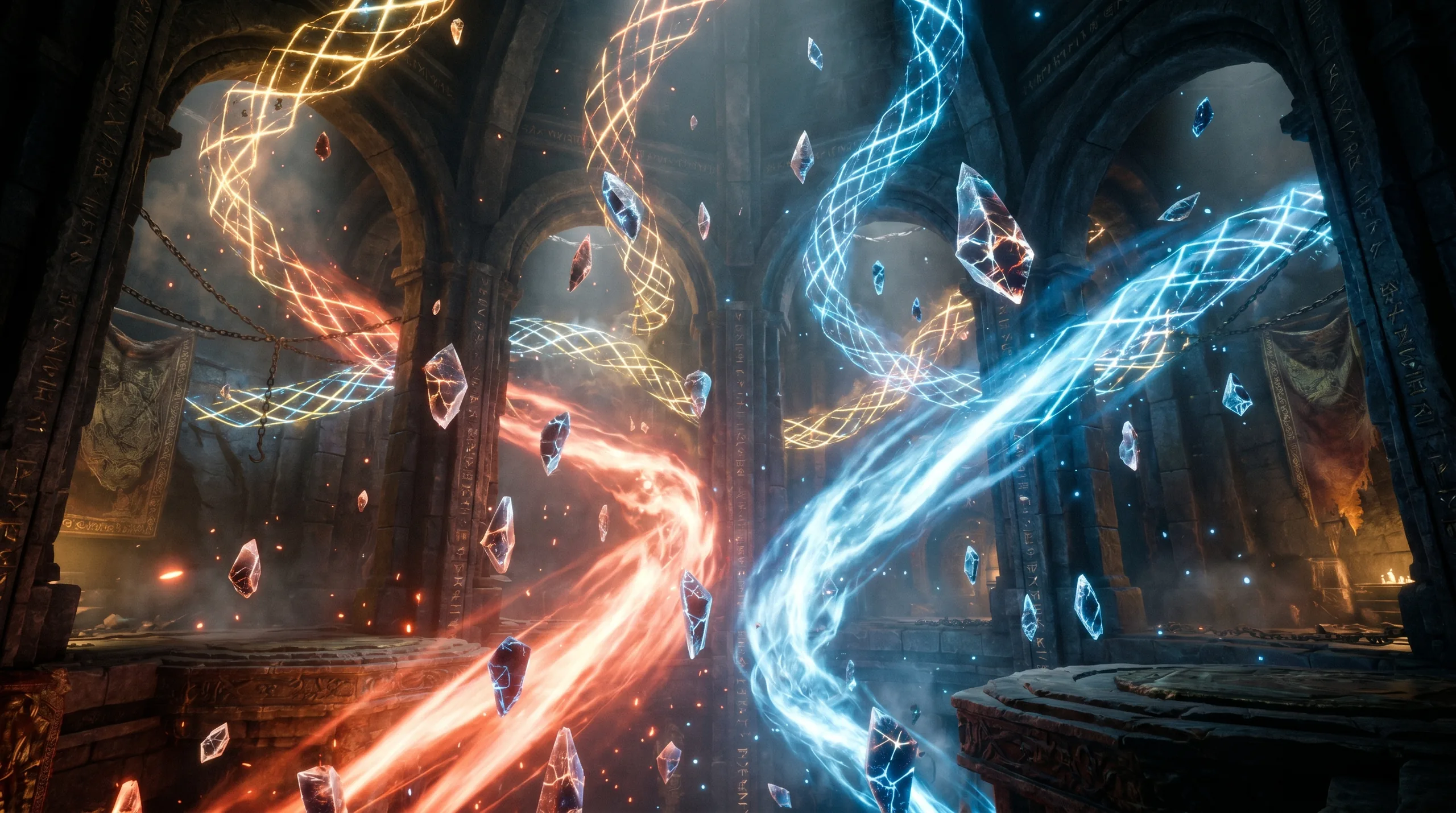 LoreThymara & the Thaumaturgic ArtsThe peoples of Kworgale do not call their magic magic. They call it thaumaturgy, and they treat it less as a wild gift than as a craft, a science, and an inheritance — for the…
 LoreThe Religion of the RubyThe Ruby is the most beloved and most feared of the gods of the human south — and of all the divine powers of Kworgale, she alone is worshipped not as a distant maker but as a…
 CityVelastraThe oldest human city in Kworgalya — a cliffside temple-city of black basalt and hanging water where the first Fivefold Fleets made landfall, and the all-female Ruby priesthood…
 CharacterGlacyaLast of the First Iceborn and sovereign of the Glacial Dominion. An immortal Elehath born of the Warden of Stillstars and the Ruby of the Wilds, Glacya commands unrivaled mastery…
 RegionThe Glacial DominionA vast frozen realm spanning much of north and northeastern Kworgale, ruled by the immortal Frost Queen Glacya from the Iridescent Throne within the Crystalline Palace of…
 CharacterMeryniaBorn into royalty and crowned at sixteen, Merynia once ruled as the Radiant Queen of Risbern — a beacon of divine light in a world shadowed by corruption. But fate is cruel to…