Atlas entry
What the charts and ledgers of Kworgalya record of this place. Its own story has not yet been told.
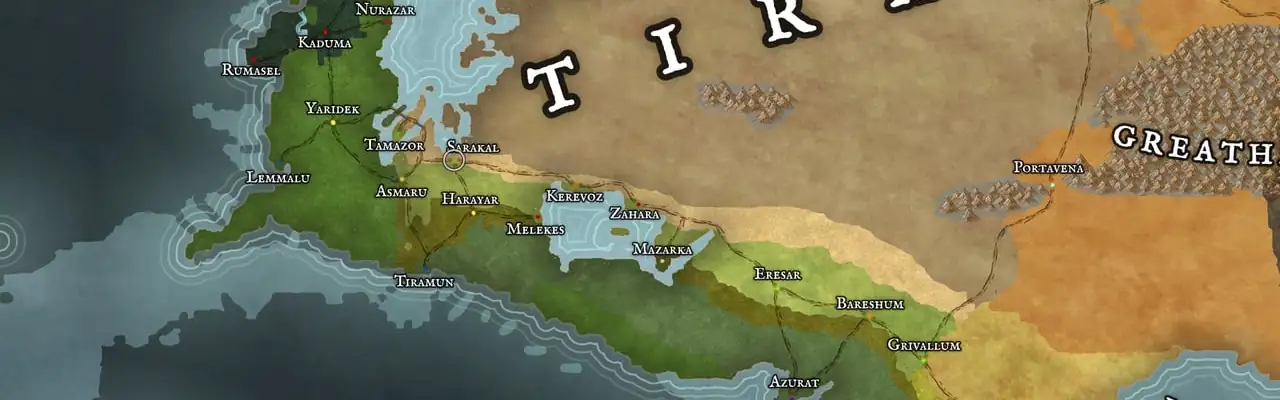
Everything Sarakal does is measured against the lake. Steppe runs a long way in every other direction, dry and thinly grassed, so the narrow belt of watered ground along the shore is worth more than any quantity of open range, and the town works it with more care than the land strictly deserves. Sarakal is old, one of the original Ashanar foundations, and it has stayed modest: irrigation off the water, grain and fodder in the wet soil, herds walked out onto the dry grass and brought back to drink. The whole settlement is arranged around how far a beast can travel between waterings.
The Ashanar here are the landward cousins of the coastal cities, holding to the same habit of the sworn word without the sea to carry it across. Sarakal's allegiance runs to Tiramun, and through Tiramun to the wider bloc of Kerevoz, a chain that reaches inland from salt water to dry grass. In the town it is felt as levies, and as the carts that come each season for whatever the watered ground has spared.
 PeopleThe AshanarThe Ashanar are the humans of Kworgalya's storm-lashed southwestern coast — corsairs, deep-sea mariners, and pact-makers who dwell beyond the reach of any written law. Bound only…
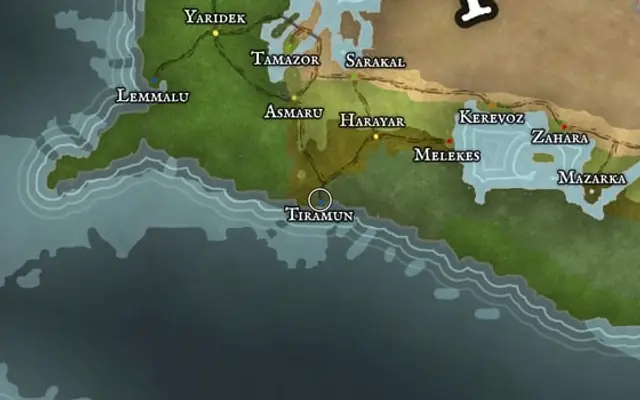 CityTiramunOne of the oldest Ashanar foundations, Tiramun is a substantial shipbuilding and naval city where south-western forest meets the ocean, a seat in its own right beneath the wider…
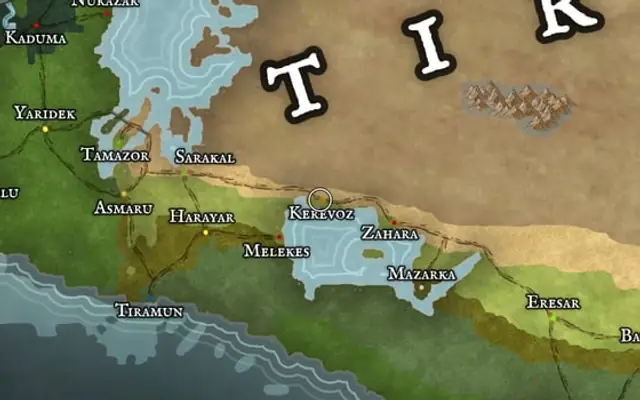 CityKerevozA modest garrison town on the open grassland of the south-west, set beside a lake, where Ashanar families live by soldiering and take their orders from Mazarka.
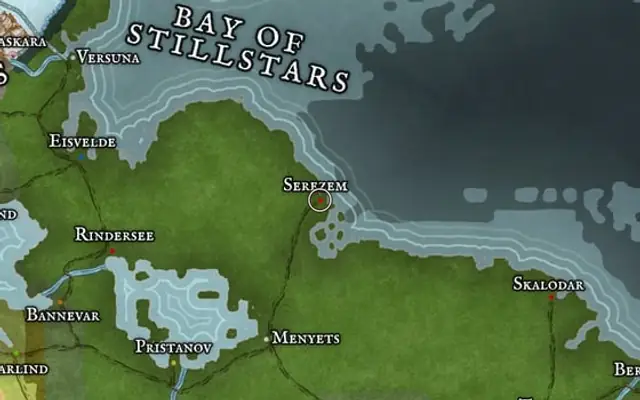 CitySerezemRain rules Serezem, a modest Suvanar mining town where the eastern rainforest meets the ocean and cut ore, worked goods and forest harvest all leave by the same wet wharves.
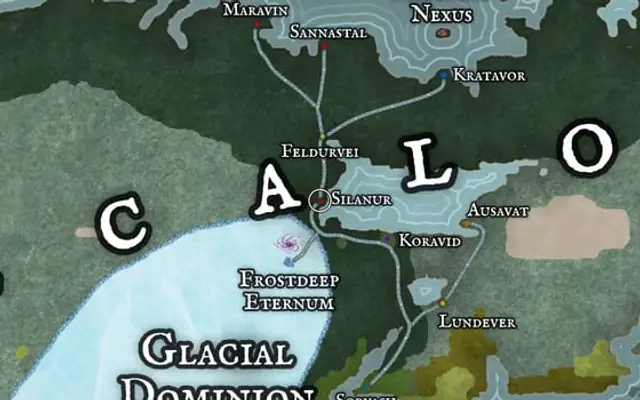 CitySilanurShafts driven beneath the northern boreal forest feed this second-wave elven mining city, whose ore leaves by barge across the lake it stands on and whose allegiance is to the…
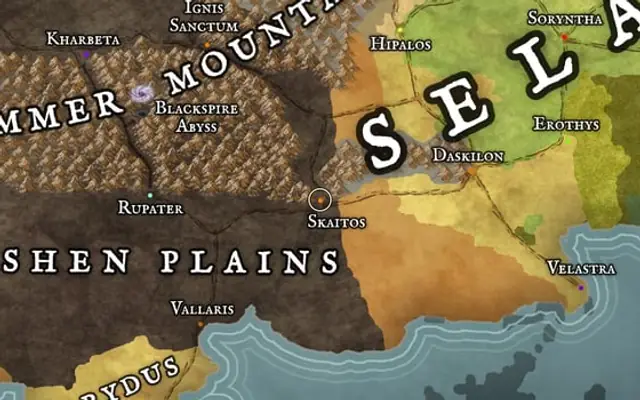 CitySkaitosA city built for thirty thousand where barely three thousand still breathe — Skaitos fell to the Cinder Witch in the winter of 1313, and her Shadow Coven now keeps court in its…
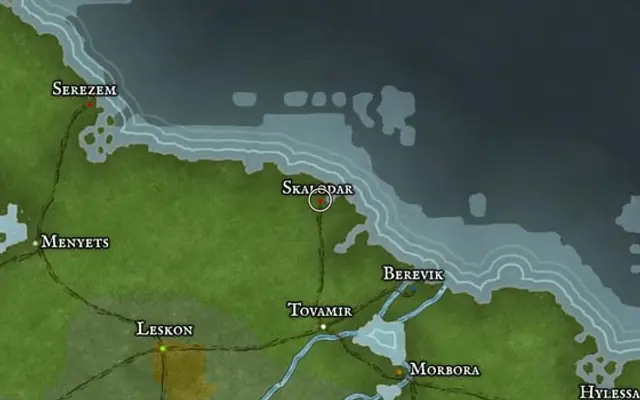 CitySkalodarOre leaves Skalodar smelted and finished, worked out of rainforest hills on the eastern coast by a modest Suvanar town that answers to Berevik and keeps the Ruby as the…
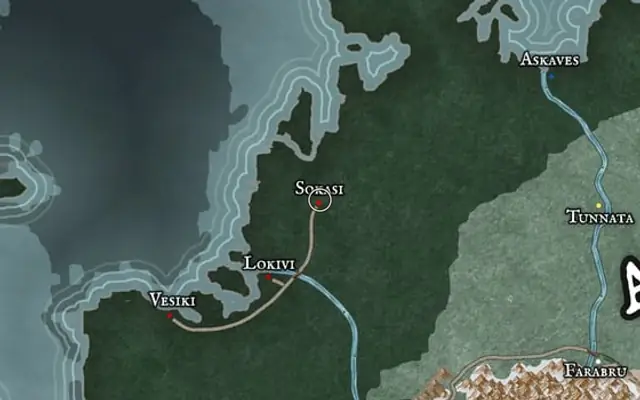 CitySokasiRaised in the second wave of dwarven expansion, Sokasi digs ore beneath the north-western pinewoods and makes the gear the neighbouring holds mine with, under the authority of…