There is one rule of building in Kworgalya and it is not use the best stone. It is use the nearest stone.
Carting rock overland costs more than the rock. A city is therefore built out of whatever the ground under it happens to be, and every skyline on the continent is a statement about local geology before it is a statement about anybody's taste. When you see a wall made of something that did not come from nearby, you are looking at money.
Almost every city in the world resolves into the same three-part answer, and you can read a place's whole social order off it.
The common stone is what the houses, warehouses, retaining walls and ordinary civic buildings are made of — rubble, fieldstone, rough courses, or fired brick where there is good clay and fuel. This is the colour of the city. It is what a stranger remembers.
The dressing stone is finer, and it appears only where the work shows: corners, gates, window surrounds, arches, inscriptions. It is very often not the same rock as the wall behind it, because the wall wants something hard and the carving wants something workable, and geology rarely provides both in one place.
The prestige material appears in temples, palace facades, dynastic tombs and ritual rooms, and its whole function is to be visibly from somewhere else or visibly harder to get. Marble. Polished banded stone. Coloured limestone. Glazed tile.
A city with all three from its own ground is rich in a way that has nothing to do with coin. A city importing its dressing stone is telling you where its trade runs.
Dark volcanic country produces black cities. Basalt is superb for foundations, walls, harbours and roads and miserable to carve, so basalt towns are austere by necessity and get their ornament from somewhere else. Velastra is carved into a cliff of fractured black basalt; Daskilon sits in the same kind of country and pairs it with granite; Kharbeta's ziggurats were raised out of the same rock in the southern ash country.
Old crystalline highland produces pale hard fortresses. Granite and banded basement stone make walls that last centuries and defeat any sculptor who has not been trained for years, which is why granite kingdoms almost always import a softer trim.
Carbonate country produces the classic castle-and-cathedral palette. Limestone quarries well, courses well, carves beautifully, and burns into the lime that all the mortar and plaster in the region depends on. Karnosta is limestone country. Where that same rock has been cooked and pressured into marble, you get the other kind of city entirely: Darolas and Rupater both work it.
Sandstone country produces warm-coloured cliff cities — walls and dwellings cut straight into the rock face where the beds are thick enough, and springs where a porous layer meets a tight one.
Ash country produces something stranger. Welded volcanic ash cuts almost like timber when fresh and hardens in the air, so caldera regions build by carving rather than stacking: vaults, chambers and whole streets cut into pale cliffs. It is also unreliable. A soft bed in the wrong place fails without warning, and wet frosty weather eats it.
Clay lowland produces no good stone at all and does not need any. It produces brick. Tirbasos is the standing example on this continent — stone-poor and brick-rich, running its lime, plaster and brickworks as an industry rather than a trade — and Kolmos fires its own out of the same logic. Brick towns need fuel more than they need quarries, which makes their politics look nothing like a quarry town's.
And the Ashen Plains give obsidian, scoria and pumice: black glass for edges, cinder for road base and drainage, and pale froth for light fill. Nothing there is a curtain wall.
A roof is a climate argument, and it is usually settled by whatever splits.
Where low-grade folded rock produces slate, you get slate roofs and slate flags and a whole regional look that follows the stone across a border. Where there is clay and fuel you get tile. Where there is neither you get timber shingle, or thatch, or — for the very rich in wet country — lead.
Getting this wrong is expensive. Heavy stone slabs on an under-built roof, or soft porous stone left facing a freezing winter, will bring a building down inside a generation, and the mason who specified it will be remembered for it.
The binder is the least visible and most consequential decision in the whole trade.
Lime — burned from limestone, chalk or marble — is the good answer, and the presence of a lime kiln quietly determines what a region can build at all. Gypsum plaster serves in the dry basins where evaporite beds are near the surface, and it is excellent inside and hopeless anywhere rain can reach it. Clay and mud plasters work in genuinely arid country and nowhere else.
This is why so many great buildings sit near unglamorous quarries. It was never about the block. It was about what would hold the block.
Stand at a gate and look at four things.
The rubble in the wall core, which tells you what the ground is. The facing, which tells you what the city could afford when that stretch was built. The quoins and the arch, which tell you what it could carve and what it had to bring in. And the repairs, which tell you every year the city had money and every year it did not.
Masons read all of this at a glance and are usually right about a place's history within a century.
Every palette carries a maintenance bill, and the locals know theirs by heart.
Carbonate country dissolves: caves open under streets, springs move, and a cellar can find the floor gone. Ash country crumbles in the wet. Foliated highland stone splits along its grain when the frost gets in, and wet schist slopes simply leave. Salt country eats its own masonry from inside. Volcanic country is superb building ground right up until the mountain has an opinion.
There is no free material. There is only the bill you have chosen, and the trades your city keeps to pay it.
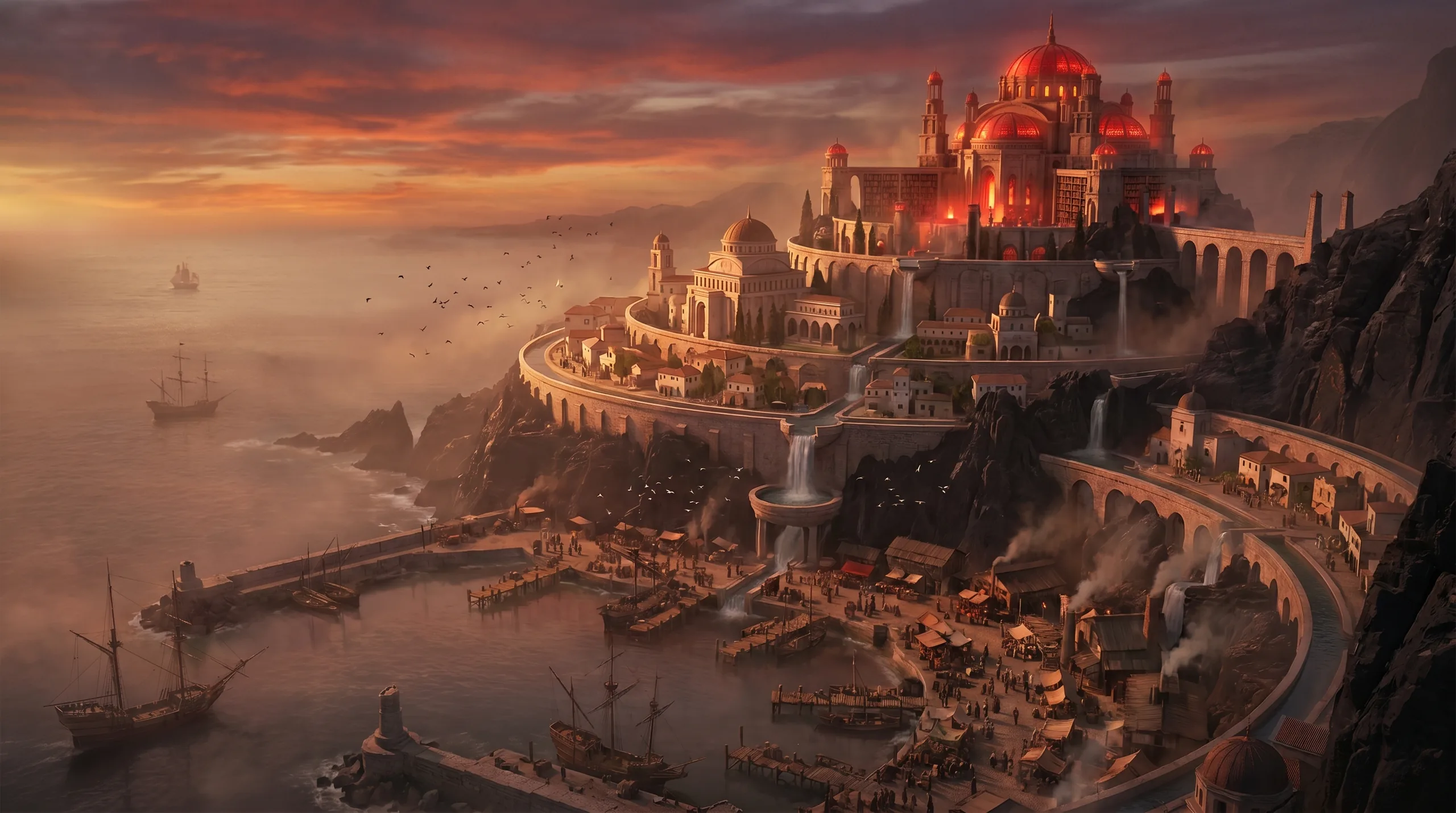 CityVelastraThe oldest human city in Kworgalya — a cliffside temple-city of black basalt and hanging water where the first Fivefold Fleets made landfall, and the all-female Ruby priesthood…
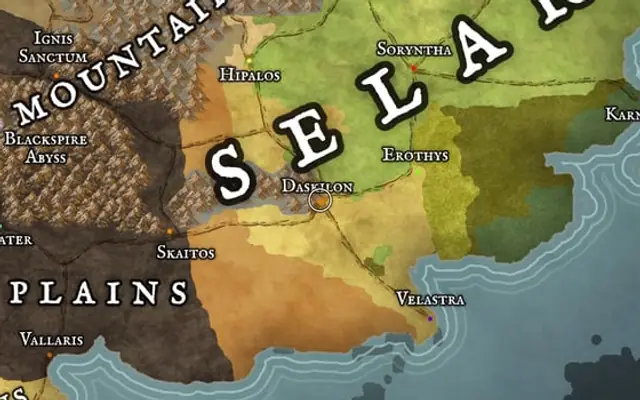 CityDaskilonThe armoured heart of the south-east — an original Suvanar foundation on the edge of the Ashen Plains whose merit-chosen Strategoi teach war as a craft, whose forges alone can…
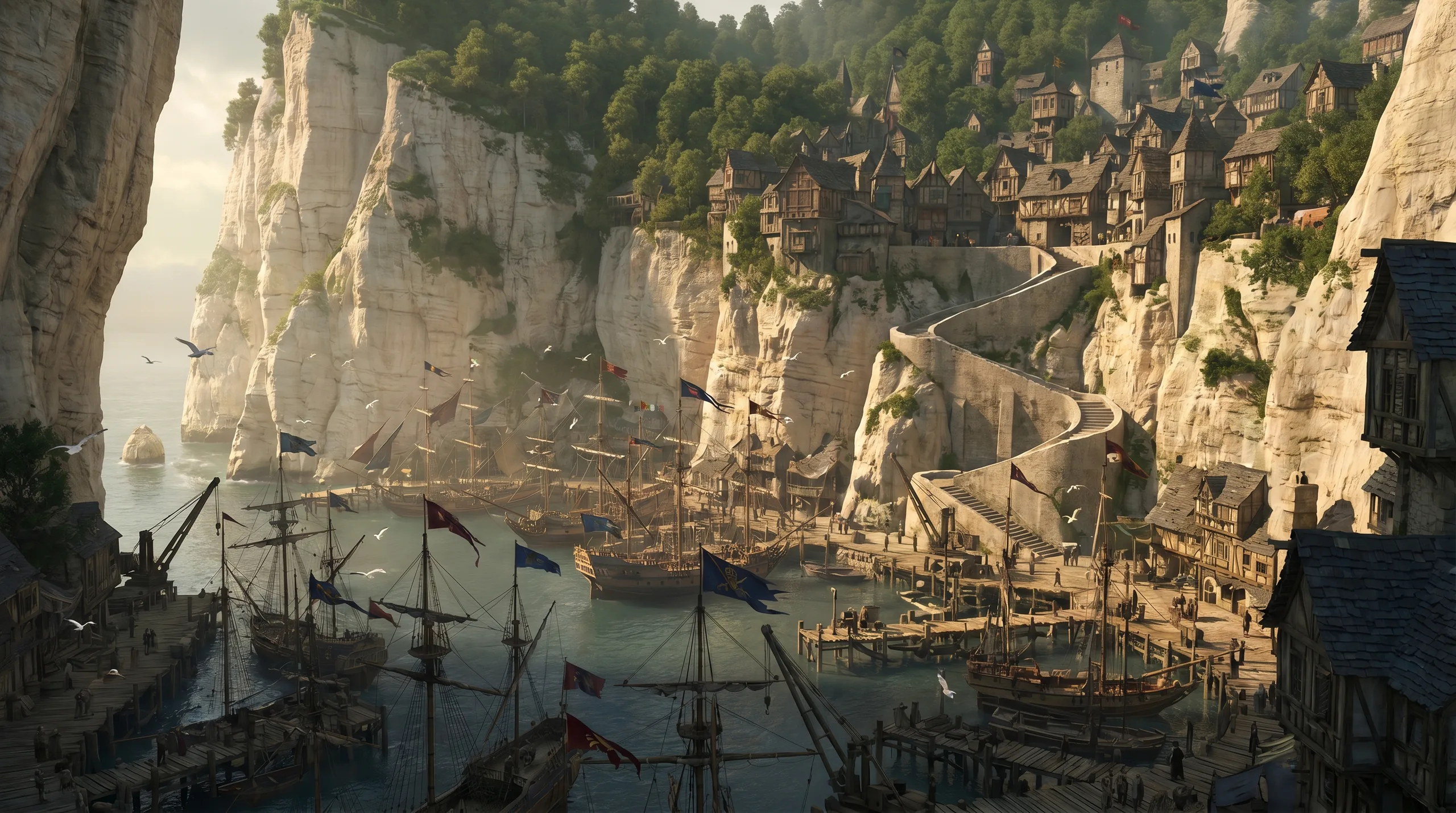 CityKarnostaThe Harbor of Freedom — a chaotic two-tiered free-haven port carved into limestone cliffs where forest meets sea, ruled by a Captains' Council, famed for its naval stores, its…
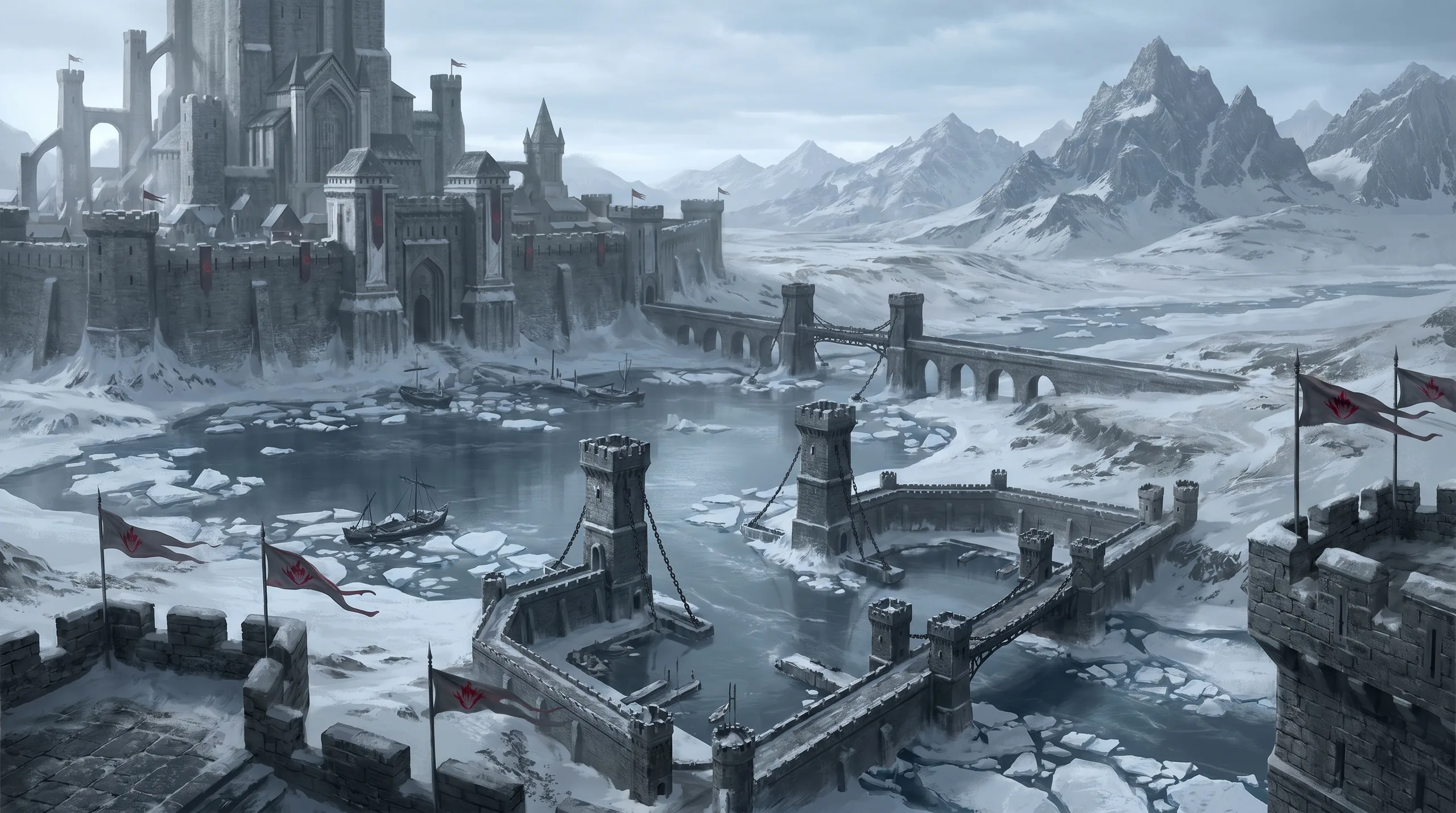 CityDarolasThe Steadfast Grey City — a severe gneiss fortress on the shore of a frozen inland lake, holding the only bridges and crossings of the northern frontier with massed slingers,…
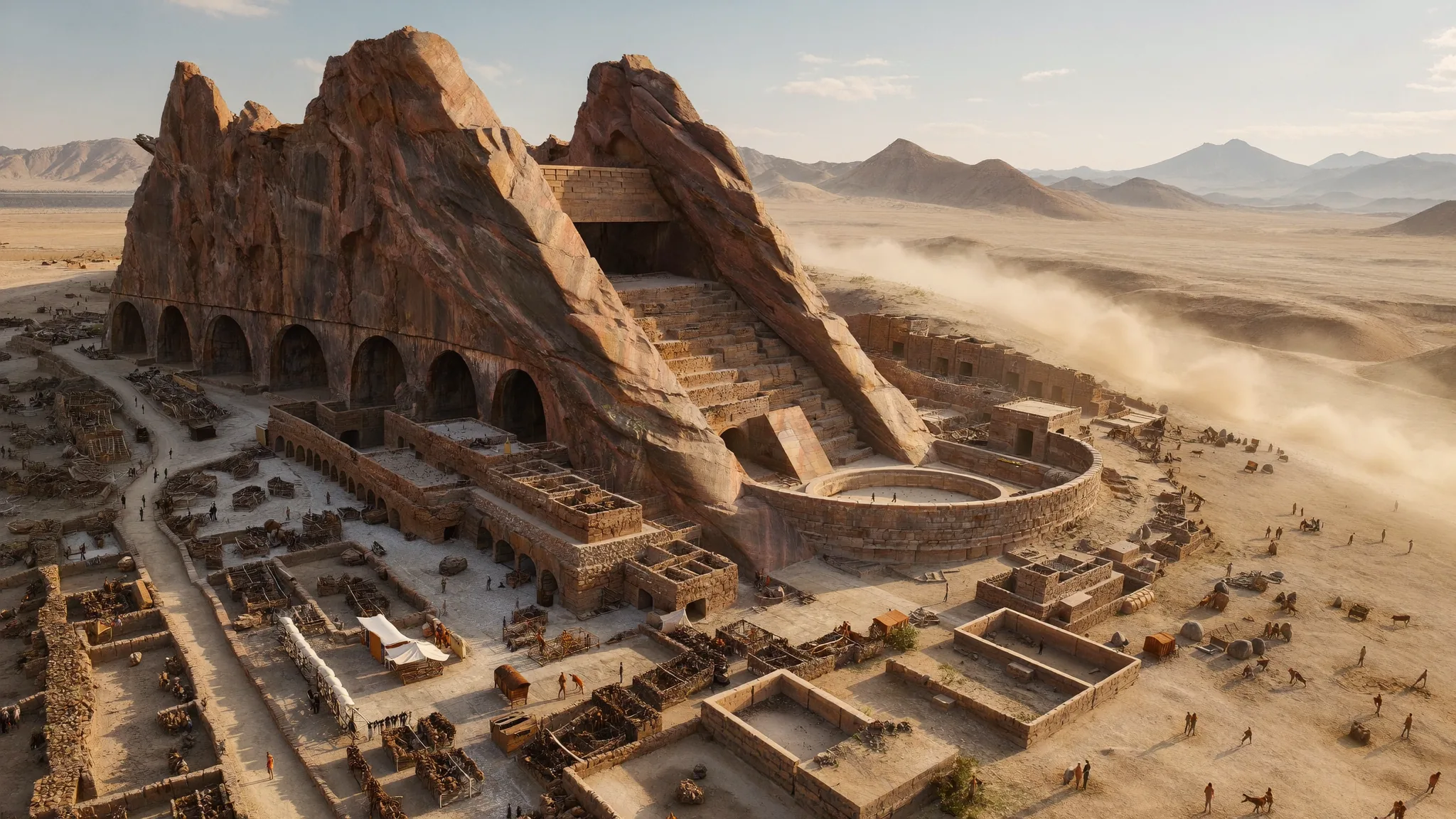 CityRupaterThe City Beneath the Mountain Bones — a fortified cistern-city where the volcanic desert meets the Greathammers, in which water is counted like scripture, safe passage is bought…
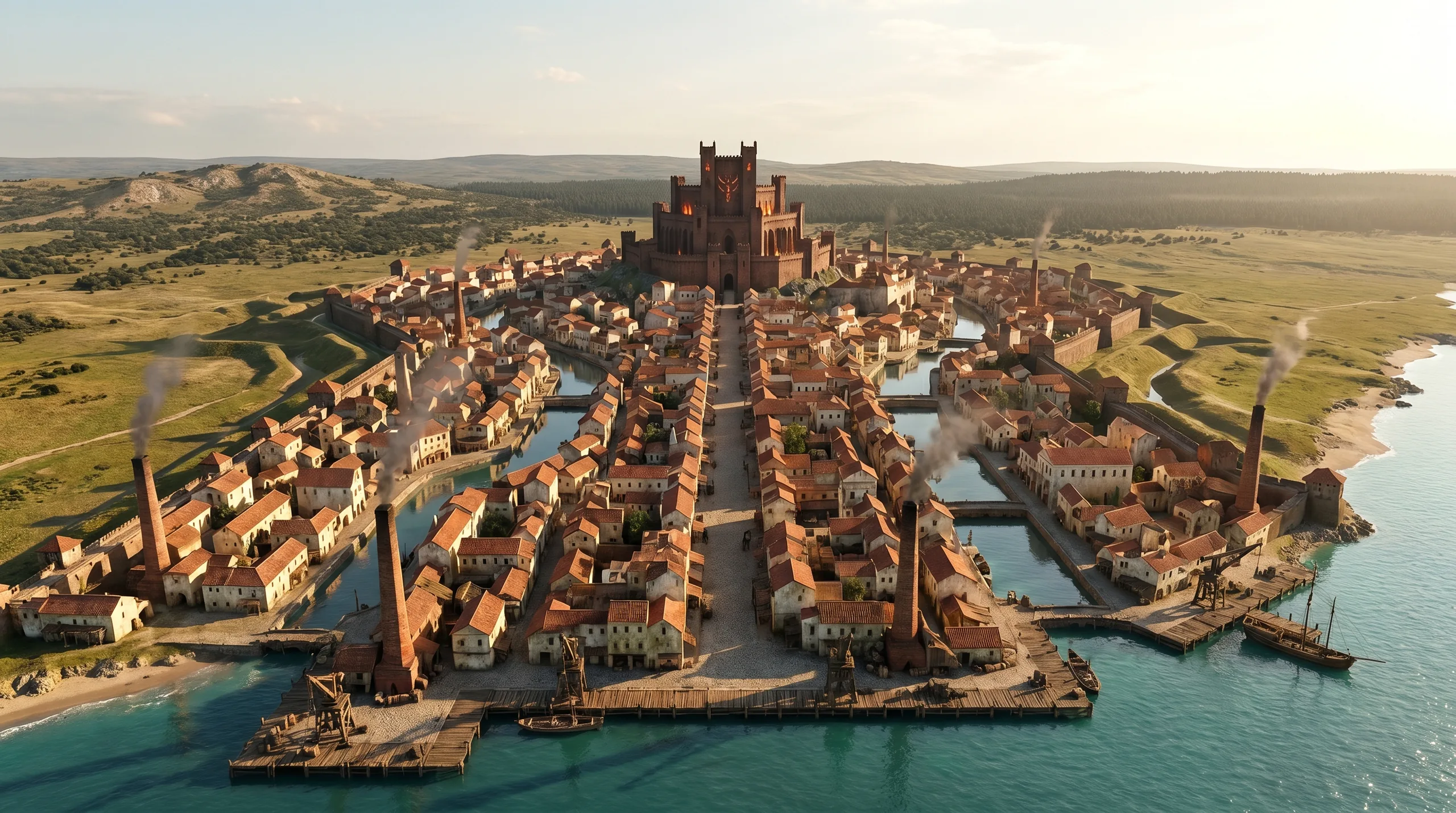 CityTirbasosThe Scorchmother's Anvil — a frontier fortress turned industrial powerhouse on the coastal grasslands, where the best-drilled legions on the southern coast still drill beneath a…
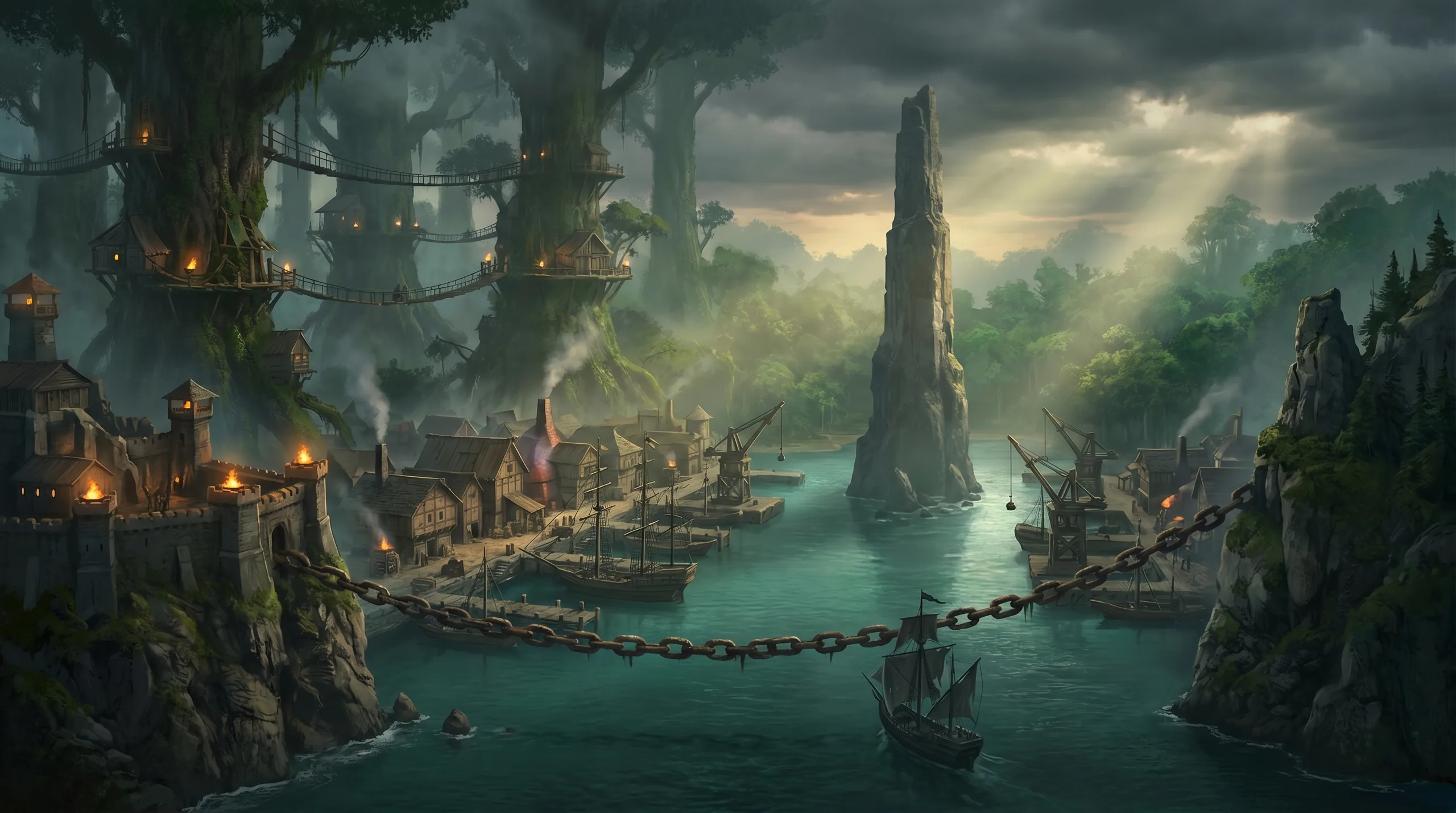 CityKolmosWhere Sky Marries Sea — a three-tiered rainforest harbor where humans, harpies, and mermaids share one polity under the Triune Queens, famed for its harbor chain, its canopy…
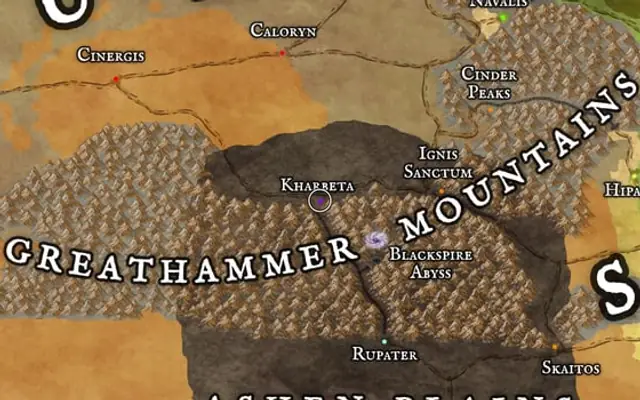 CityKharbetaThe rebuilt black capital of the giants, now the Serpent's Crown — religious seat of the Infernate, Rysalia's city, where pilgrims arrive free and ambitious and mostly leave as…