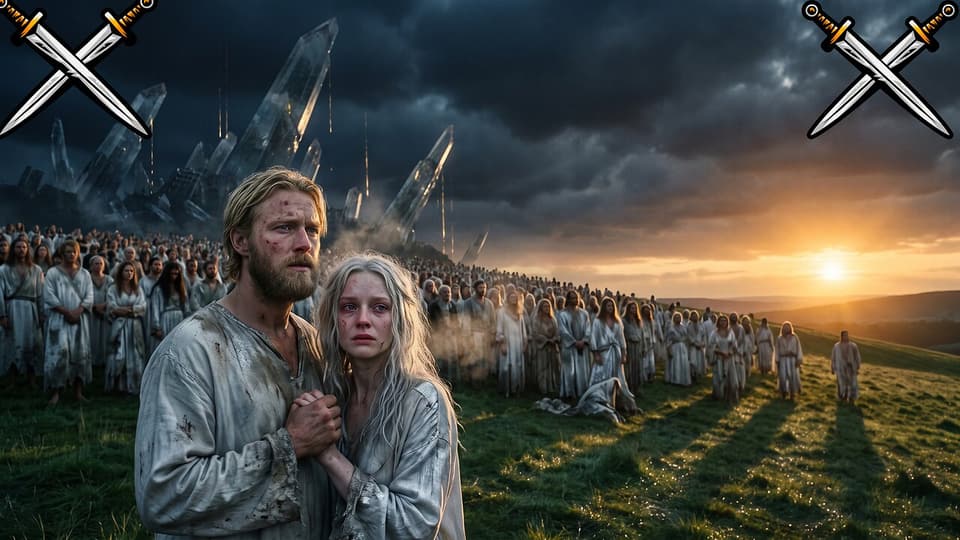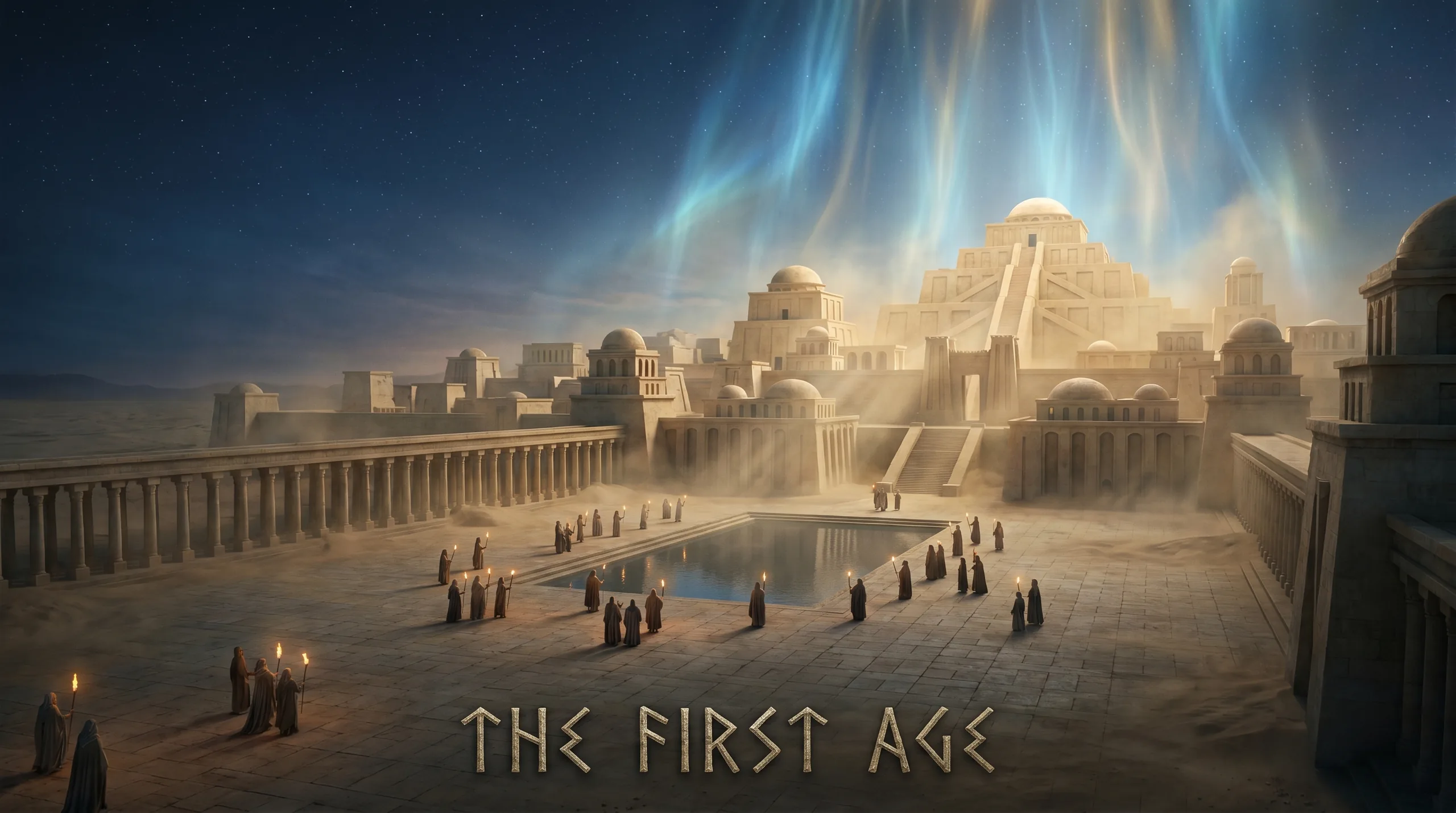
Every history of Kworgale begins at the same place: the Great Renewal, the act of creation, surrender, and forgetting from which the mortal world was born. It is dated, by tradition, to roughly two thousand years before the close of the divine age.
"They gave up forever, so that we might have a little while."
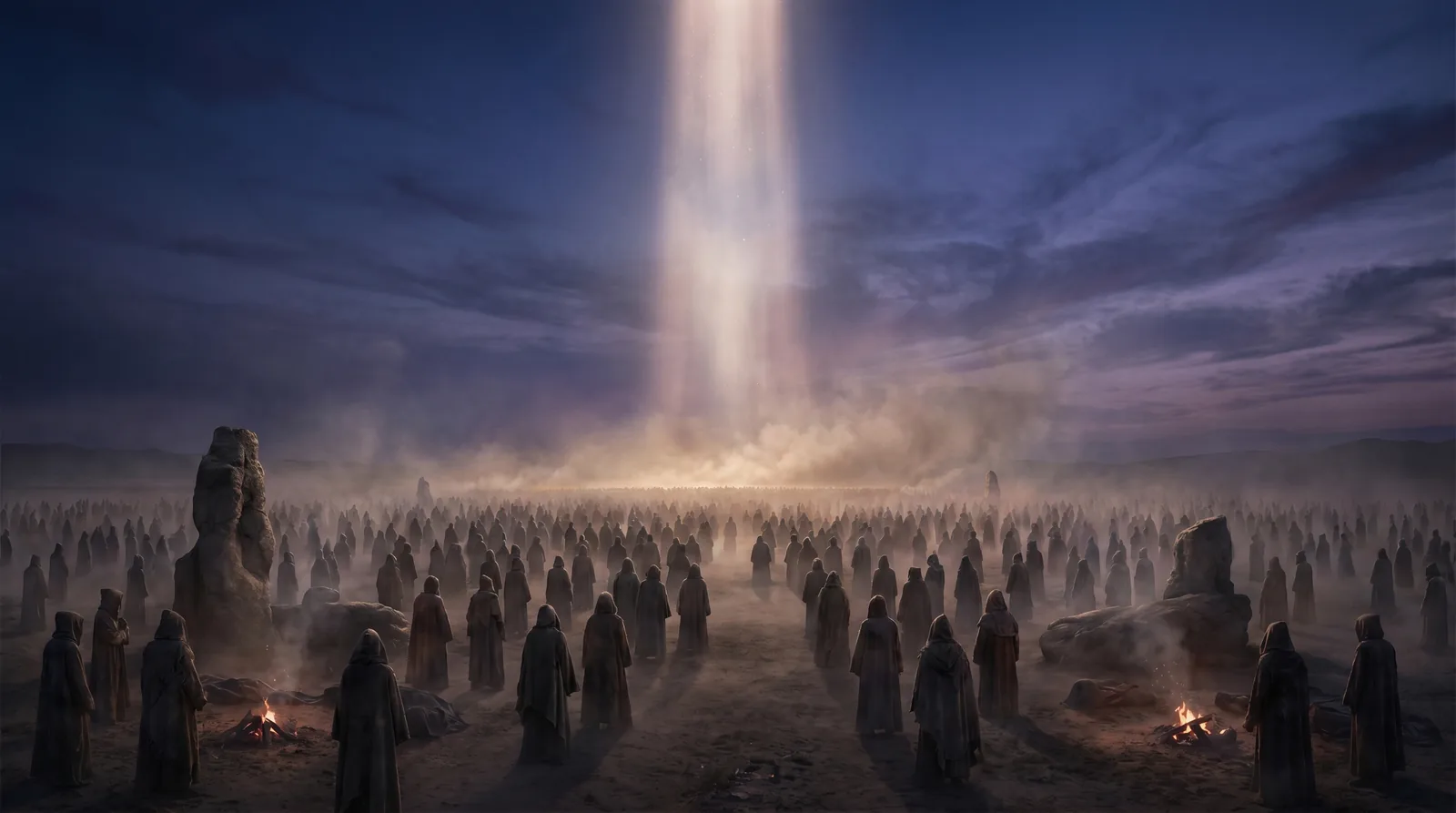
Long ago, a deathless race of star-born beings — the Elehath — fled the ruin of their own distant world and crossed the dark to Kworgale. Some fifty thousand of them survived the crossing. They were powerful beyond mortal reckoning and weary beyond mortal grief, and they carried with them the memory of how greatness, left unchecked, had destroyed everything they once knew.
On a nameless isle west of the trackless jungles of Verdarynia they raised their refuge — and found that refuge is not the same as peace. For all they had saved, they counted every hidden cost; and they feared that the light they had carried across the dark would spend itself and fade, for their power remembered a lost world, and could not drink from this one.
For a year and a day the Elehath gathered in the great amphitheatre at the heart of their city, and every voice among them was heard — each speaking in turn, or lending their voice to a speaker they trusted. The world remembers that gathering as the Last Convocation. The debates grew hot, and the old spectre of faction — the very sickness that had unmade their home — stirred again in the hall. It was the five who would be called Elders who rose then as one voice, to remind their kin what division costs, and to lead by example into unanimity.
And so the choice was made that defined everything after: the overwhelming majority would lay down their immortality and be reborn as the mortal peoples of Kworgale. Only five would remain as they were, to guide and guard the children they were making, becoming the Elder gods.
This was the true Great Renewal — not only the making of new races, but the deliberate forgetting of an old and dangerous past. To begin again, the angels chose to die into mortality, and to let memory itself become merciful.
The rite that followed asked something of each of the five.
The Hammer forged the vessels. For the Ruby he shaped humankind — energetic, fertile, and gifted with fire. For the Warden he fashioned the elves — long-lived, born to flame or to frost by the chance of their birth. And for himself he wrought the dwarves: minds of living crystal, filled with the knowledge of their forebears. The five hundred made by his own hand are called the Greatsons, and he the Greatfather, to this day.
The Warden imprinted each new mind with the resonance of its new home, tuning every soul to the world that would carry it.
The Ruby taught the hardest art of all — how a soul leaves the form it has always worn. The last mastery of self, offered as a gift.
The Ancient Devil marked each spirit in turn and tethered it to its appointed vessel, so that not one soul would go astray in the crossing.
The Ancient Deity stood guard at the boundary of the rite, so that nothing of flesh or spirit could break in upon the most important hour the world would ever keep.
And as their kin laid down their glory, what was surrendered did not vanish. It passed to the five who remained — until, for a season, the Elders stood on equal footing with the forces of nature itself.
At the height of the rite, the Elders sought audience with the powers native to their new world — the Great Spirits of Fire and Ice, resplendent in their majesty — and forged the pact under which the reborn would draw on Kworgale's own deep resonance forevermore, from the Pyreheart in the burning north to the Everfrost beneath the ice.
From what the Spirits deigned to reveal, each Elder crafted a great schema of magic, and those arts anchor every tradition of sorcery practised since: Harmonalia, the will of the state made manifest; Numina, power set into resonant crystal; Klerosia, the gift carried down bloodlines; Umbrasia, loyalty made arcane bond; Memordia, great minds kept beyond death in crystalline rest; and a sixth, whose name legend has carried forward from those ancient days in a whisper — Syndesia.
Their refuge on the nameless isle, raised in the first decade after they came down, was their first and greatest city, Vadesh — the Ur-City, the cradle of all later civilization. There, for five hundred years, gods and mortals lived side by side, and the gods taught their children law, learning, and the first thaumaturgic arts. Vadesh is the root of every tongue and tradition the world still speaks; its name lingers in temples and titles across Kworgalya. But a cradle is not meant to hold a people forever, and in time the children of Vadesh looked outward to the wide and waiting continent — and the age of the Fivefold Fleets began.
The Renewal is sung before it is studied. This is the hymn.
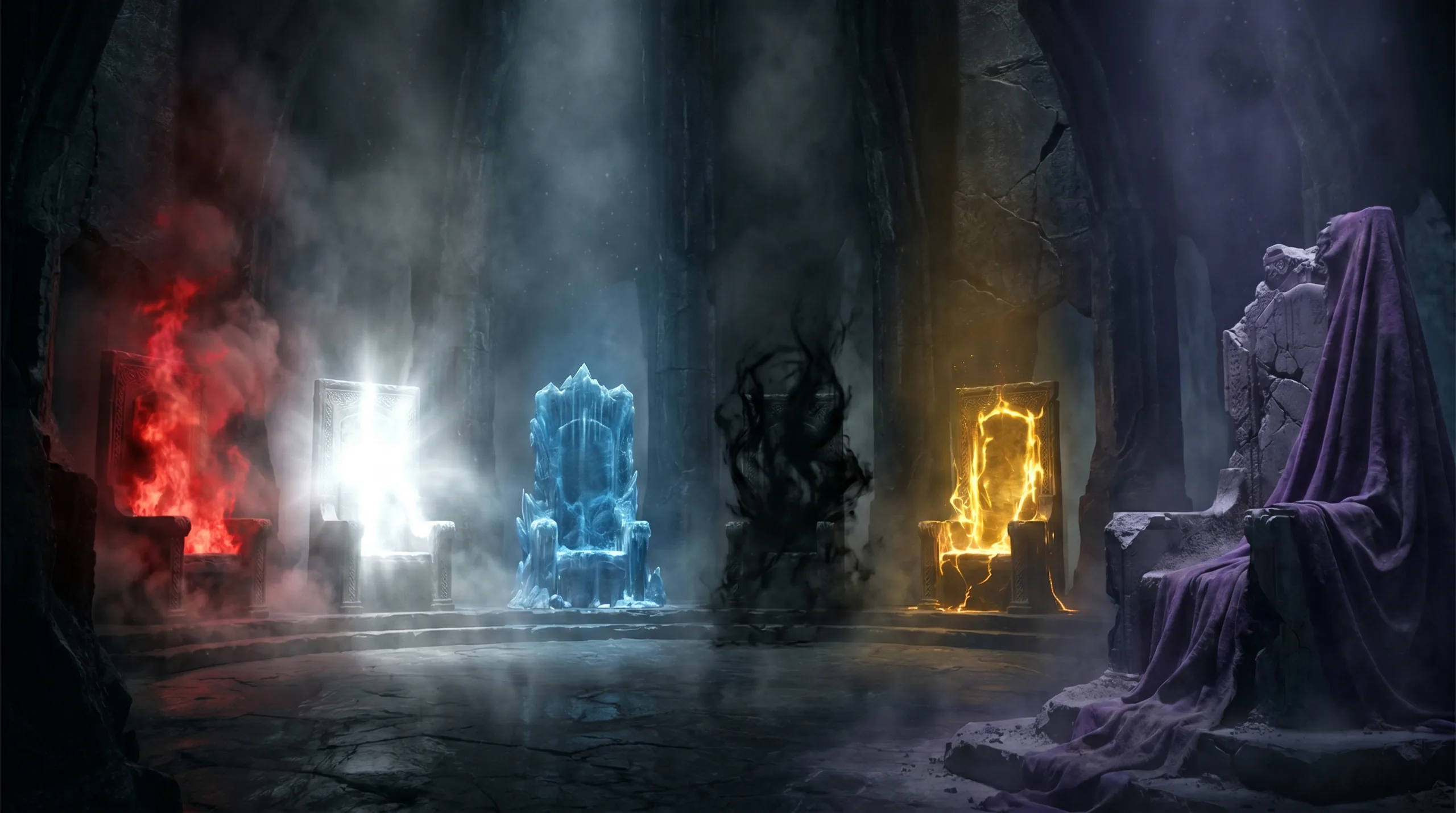 LoreThe Five Elder GodsBefore they were gods, they were exiles. The powers the world calls the Elder Elehath — the Elders — were once members of a deathless race of star-born beings who came to…
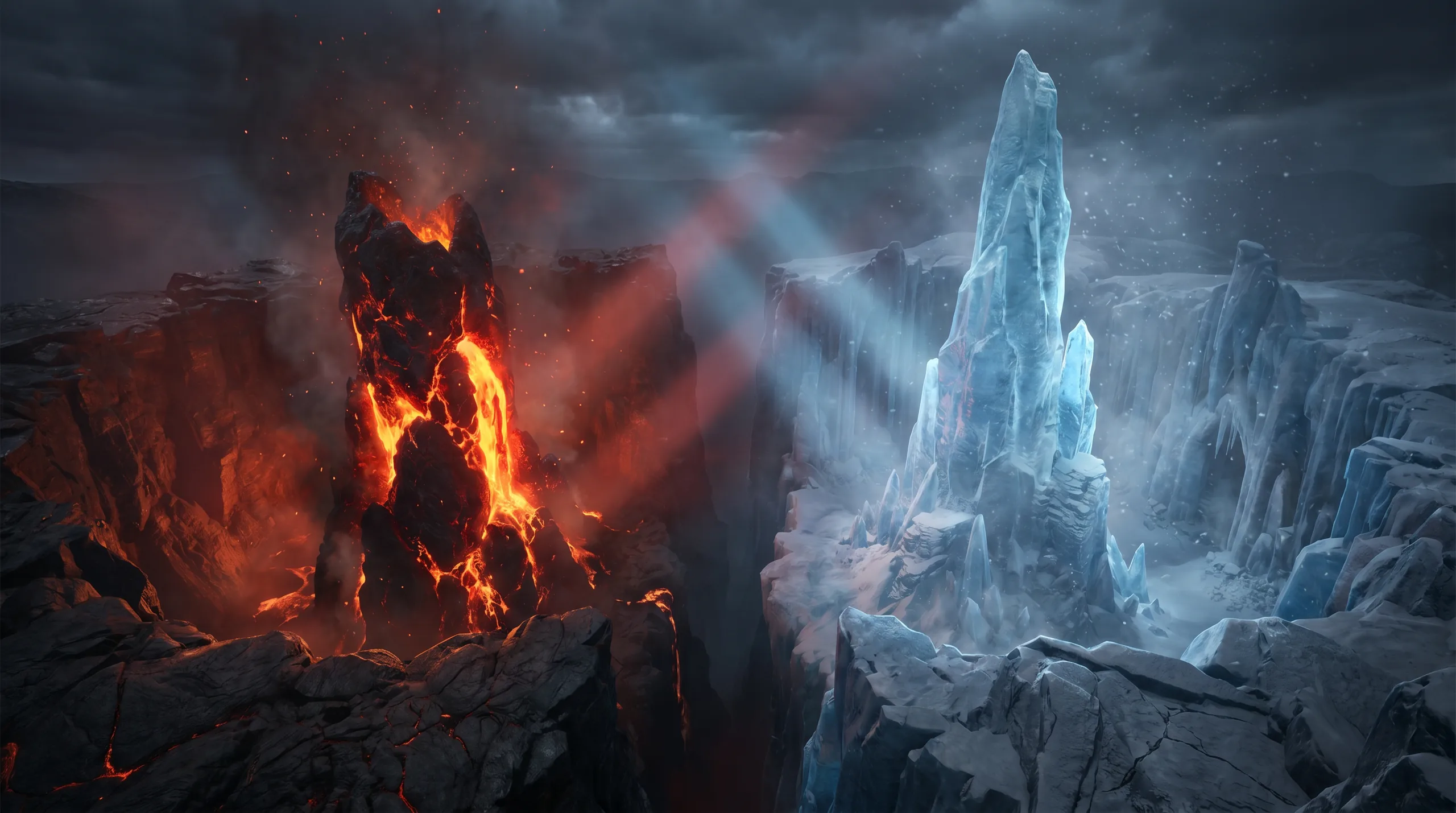 LoreThe Great Spirits of Fire and IceOlder than the gods — older, perhaps, than the world's own memory of itself — are the Great Spirits of Fire and Ice. They are not gods in the way the Elders are gods. They have…
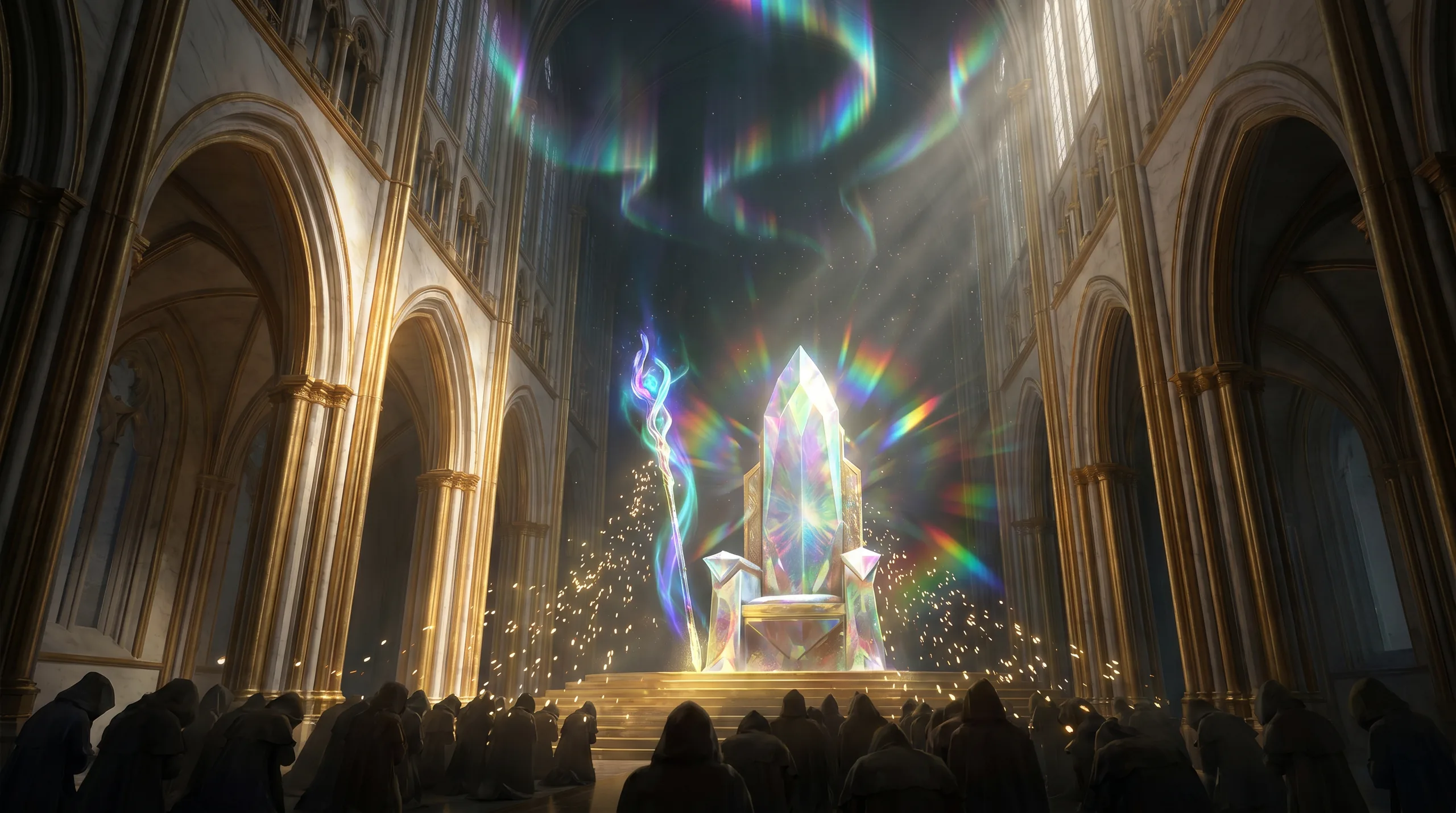 MagicHarmonalia — The Hallowed OfficeA king dies. The crown does not. Whoever lawfully lifts the Auroral Staff wields the gathered faith of a people. Harmonalia is the magic of institutions — the radiant schema of…
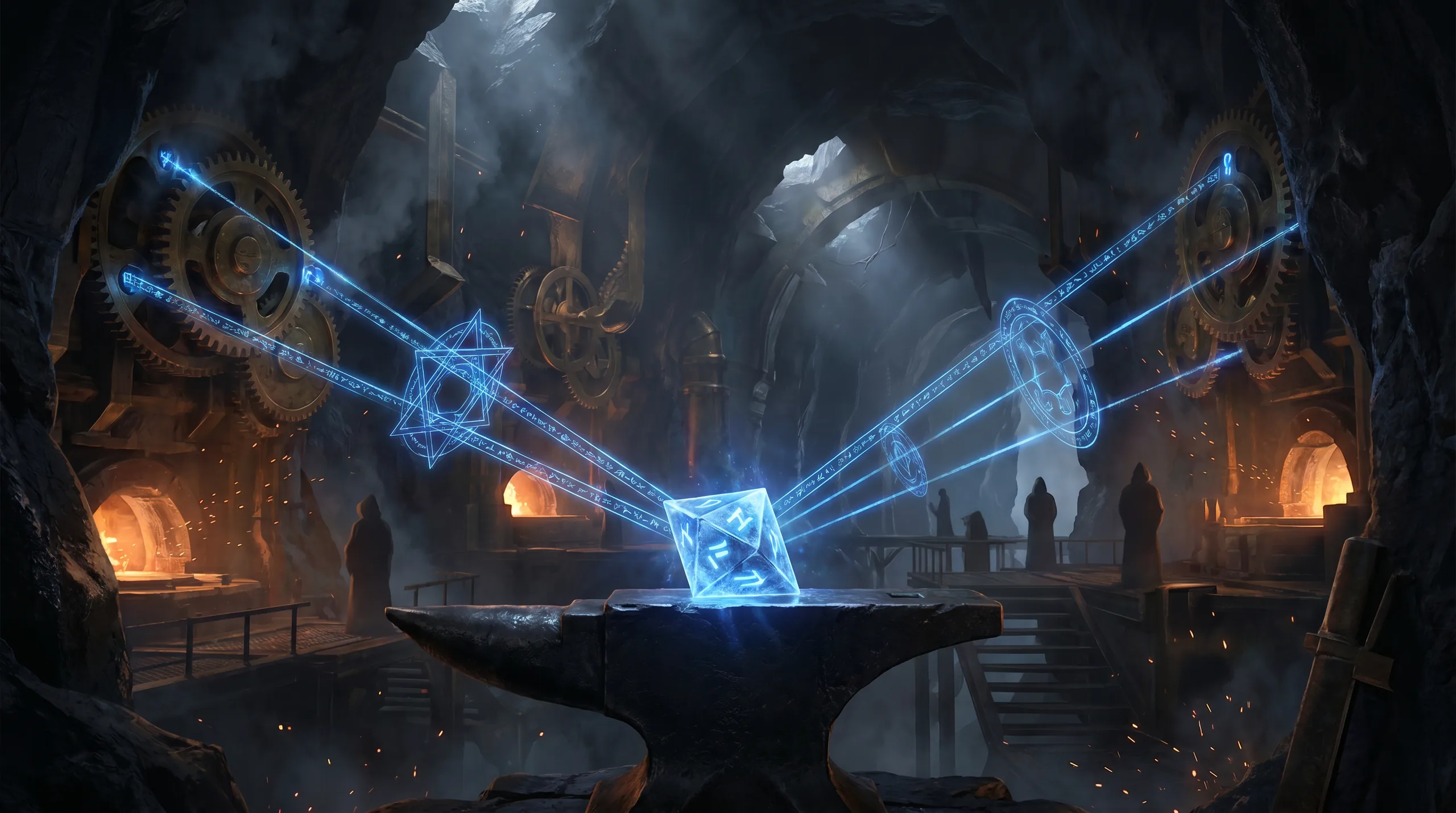 MagicNumina — The Vessel-CraftThe Ruby gave power to blood. The Hammer gave it to steel. A dwarven master pours finished magic into a starsteel numinar. Numina is the schema of artifice — the patient,…
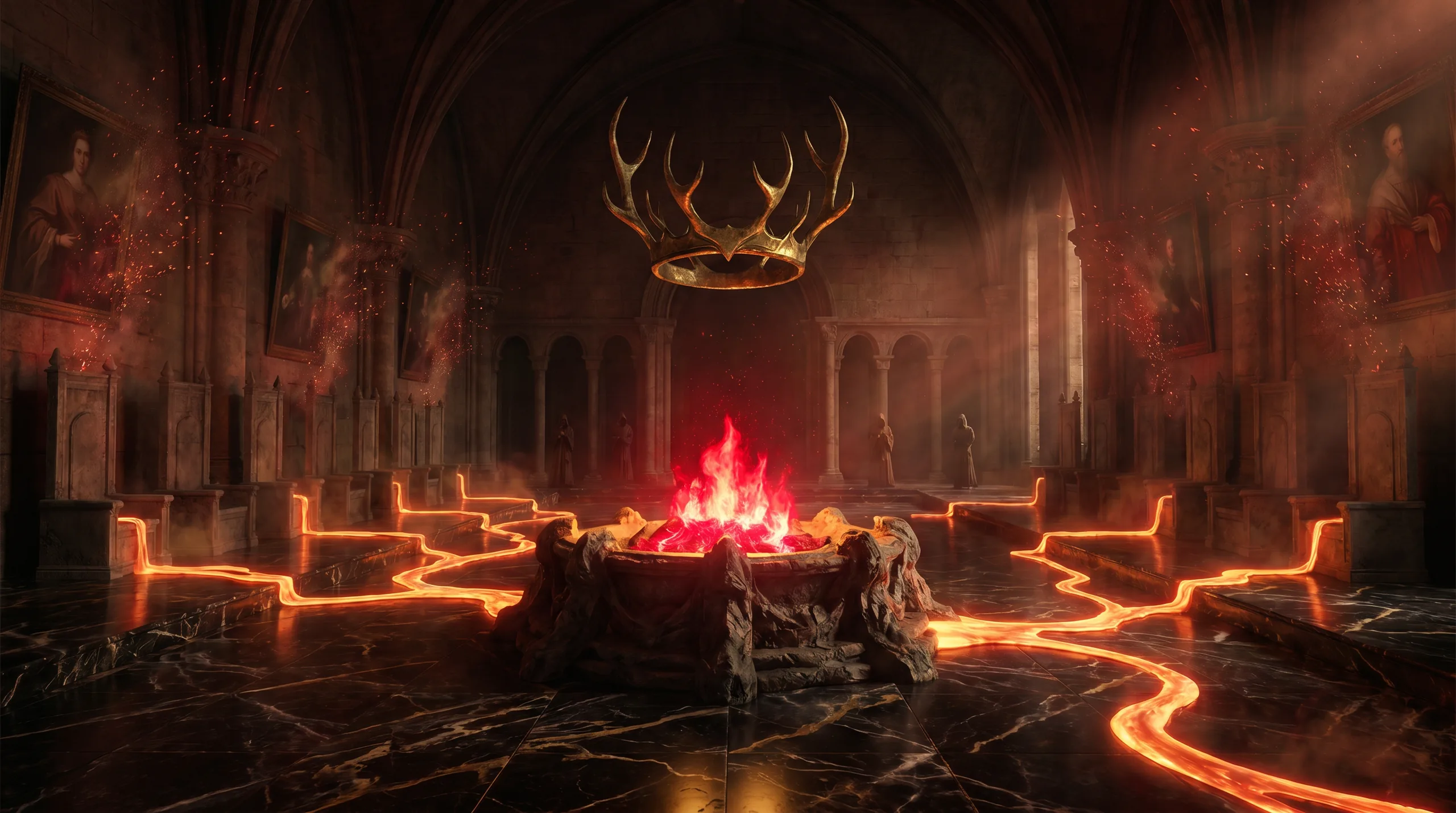 MagicKlerosia — The Kindred FlameThe Ruby's gift to her children was not power, but belonging. An officer of the Klerokon fire-corps looses the gathered flame of his bloodline. Klerosia is the magic of…
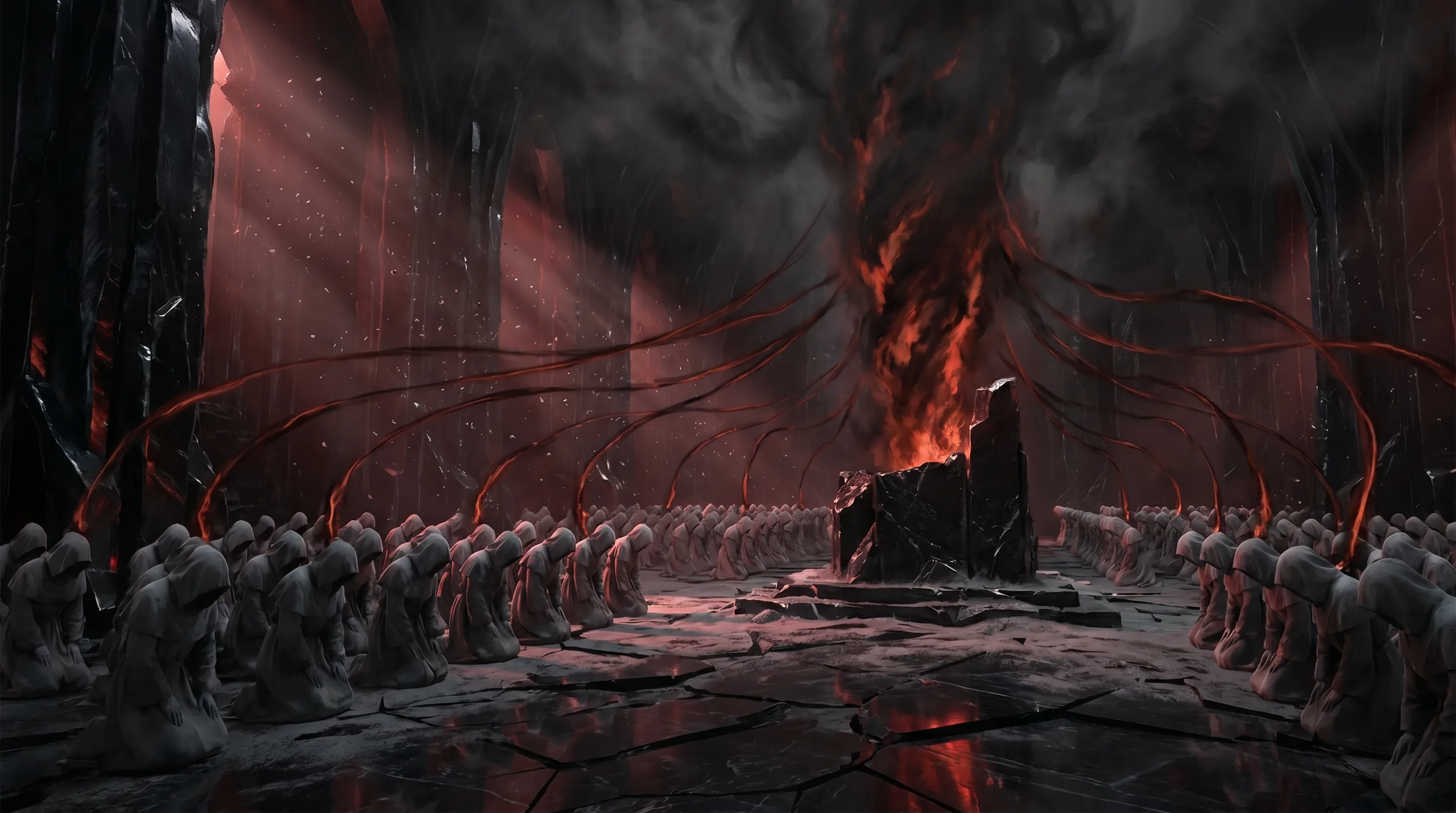 MagicUmbrasia — The DevotionSome power is taken. This power is given — and once given, never wholly taken back. A devotee of the Legion of Ash pours their own fire upward — into another. Umbrasia is the…
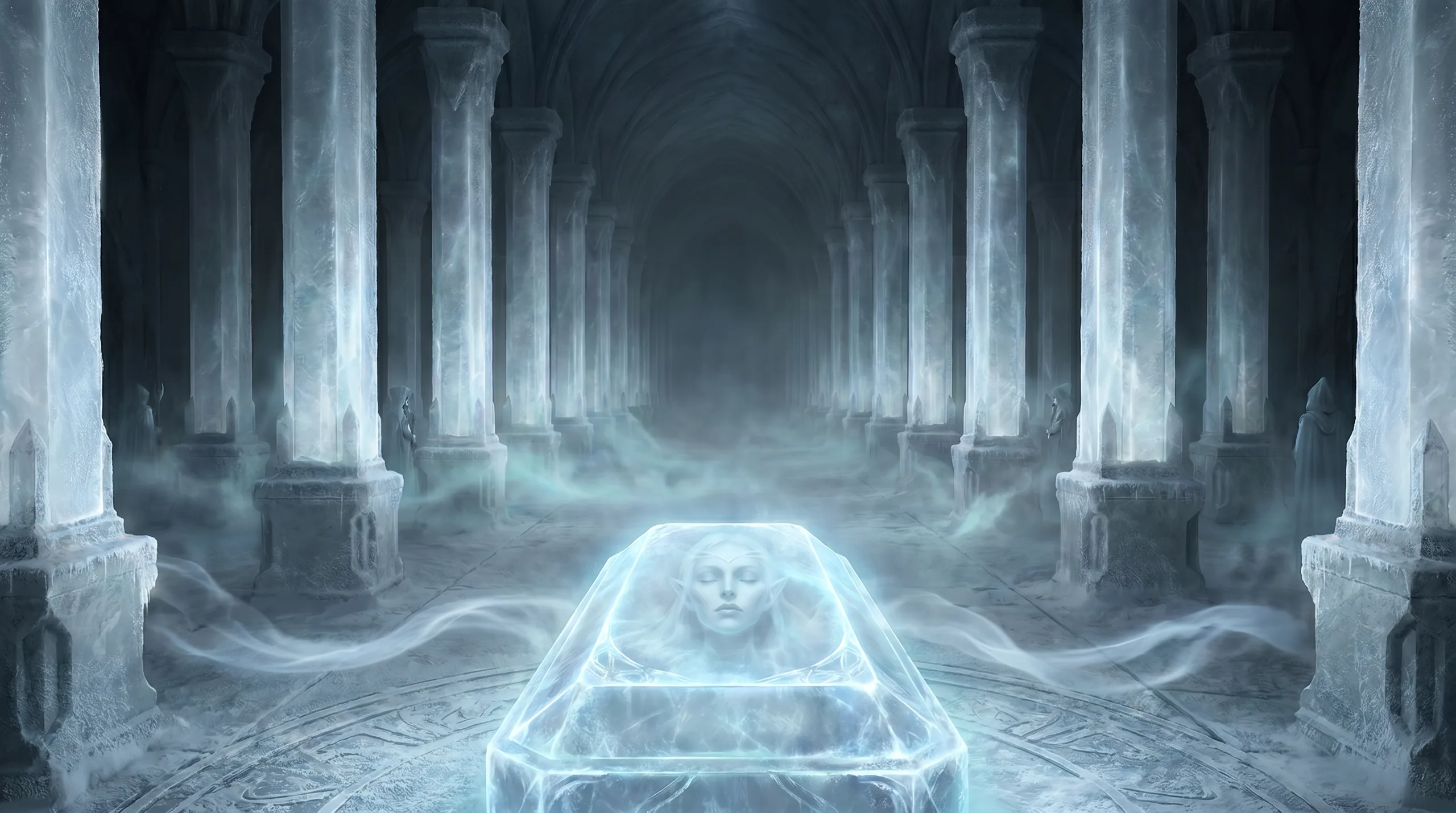 MagicMemordia — The Kept MemoryAmong the elves, death is not the end of counsel. It is the beginning of it. A keeper of the Glacial Dominion wakes the wisdom sleeping in the crystal. Memordia is the schema of…
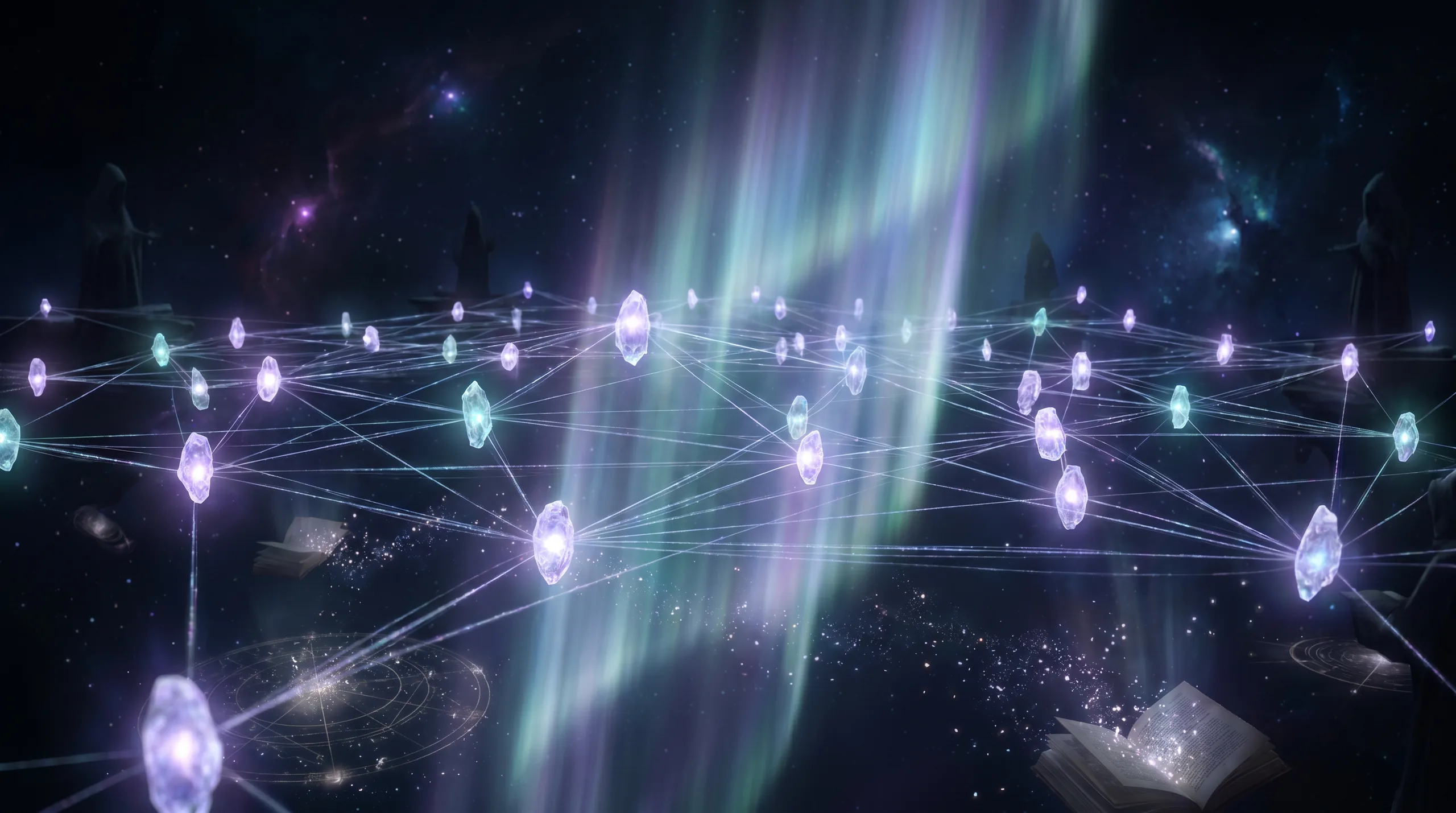 MagicSyndesia — The Open WeaveEvery other power flows one way — up to a master, into a relic, down a bloodline. This one flows between equals. A scholar weaves her thread into the open lattice of shared…