The Elehath did not begin in Kworgale. They are the people of Elehaya, a world that no longer exists — a race of undeniable achievement that mastered its world, conquered death, and then destroyed itself.
Every human, elf and dwarf alive descends from them. They know it as a story. None of them remember it, and that was deliberate.
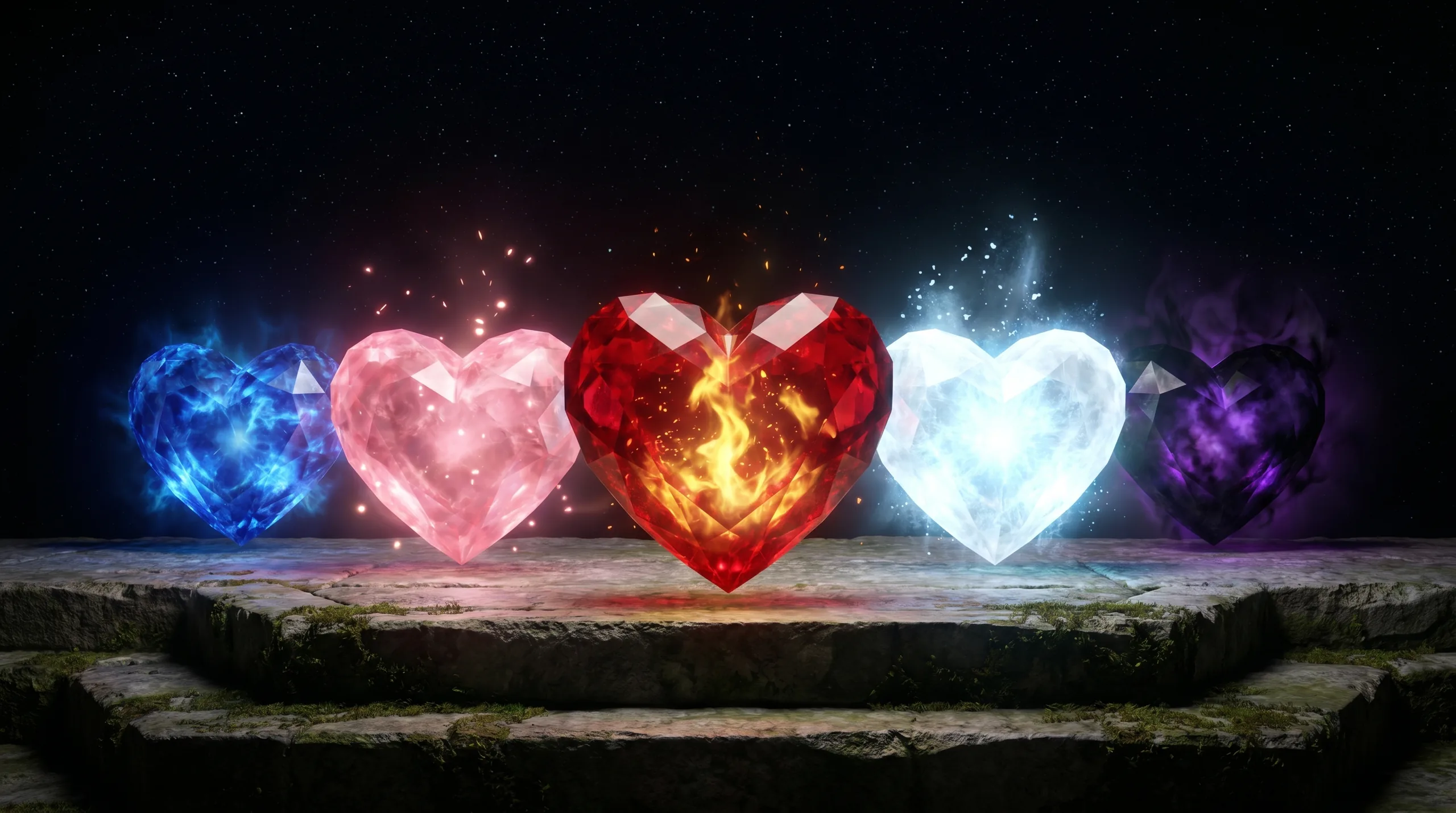
Elehaya had what Kworgale has: a thymarasphere, Great Spirits of its own, and a way into the Veil. The Elehath mastered all of it, and the Arcanatura — the natural laws of sorcery — with it. Their capstone was the conquest of death itself, by means of the Crystal Hearts, and for a time they lived in a golden age.
The golden age had a flaw at its root. A people who could not die stopped needing children, and very largely stopped needing to grow. Beneath that lay their cardinal sin: hubris, the absolute certainty that one's own way is the right way, and that no one could do it better.
In time the Elehath split into six factions over the future of their race, and the split became a war. The War Amidst the Stars ran for centuries as a stalemate, six evenly matched sides each holding the others in check.
It was during that war that the Veil was found, and with it Cosmica: an art that does not work within the laws of reality but rewrites them. One faction turned it on its enemies to break the deadlock. Soon every faction had it. The war years gave them the mysteknika too — wonder-works that drew straight on their world's elemental wells, with no living mind in between to pay for them. Nobody who enjoyed those miracles bore their cost. Nothing checked their use.
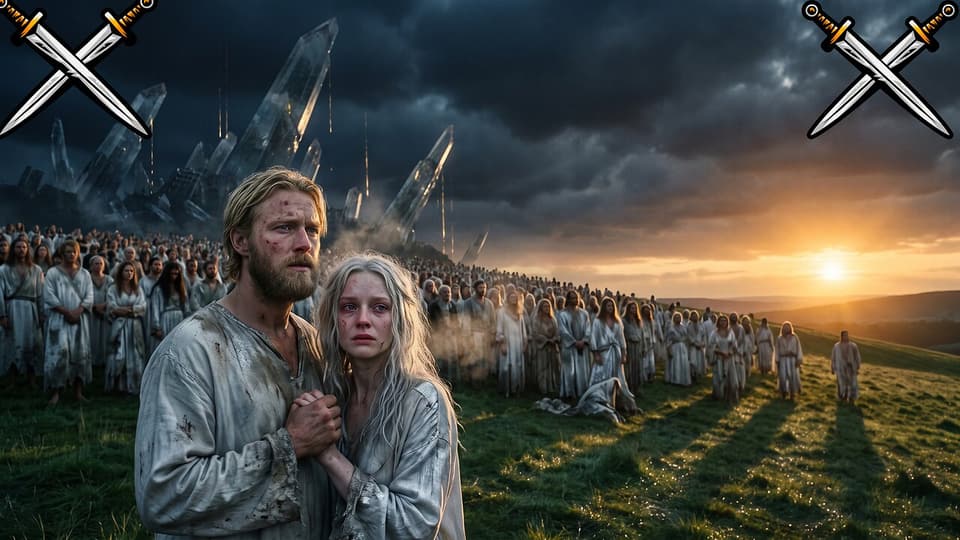
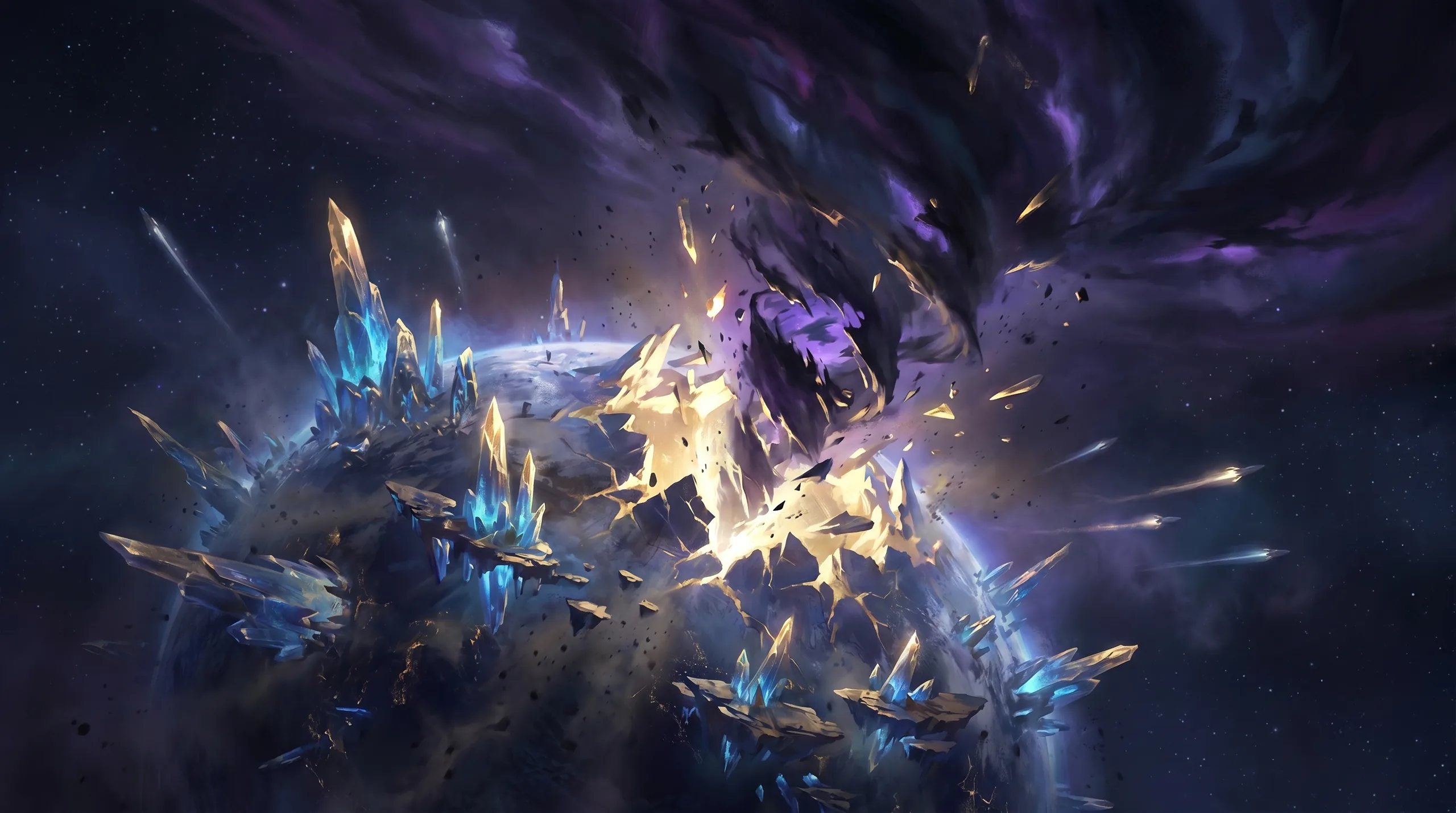
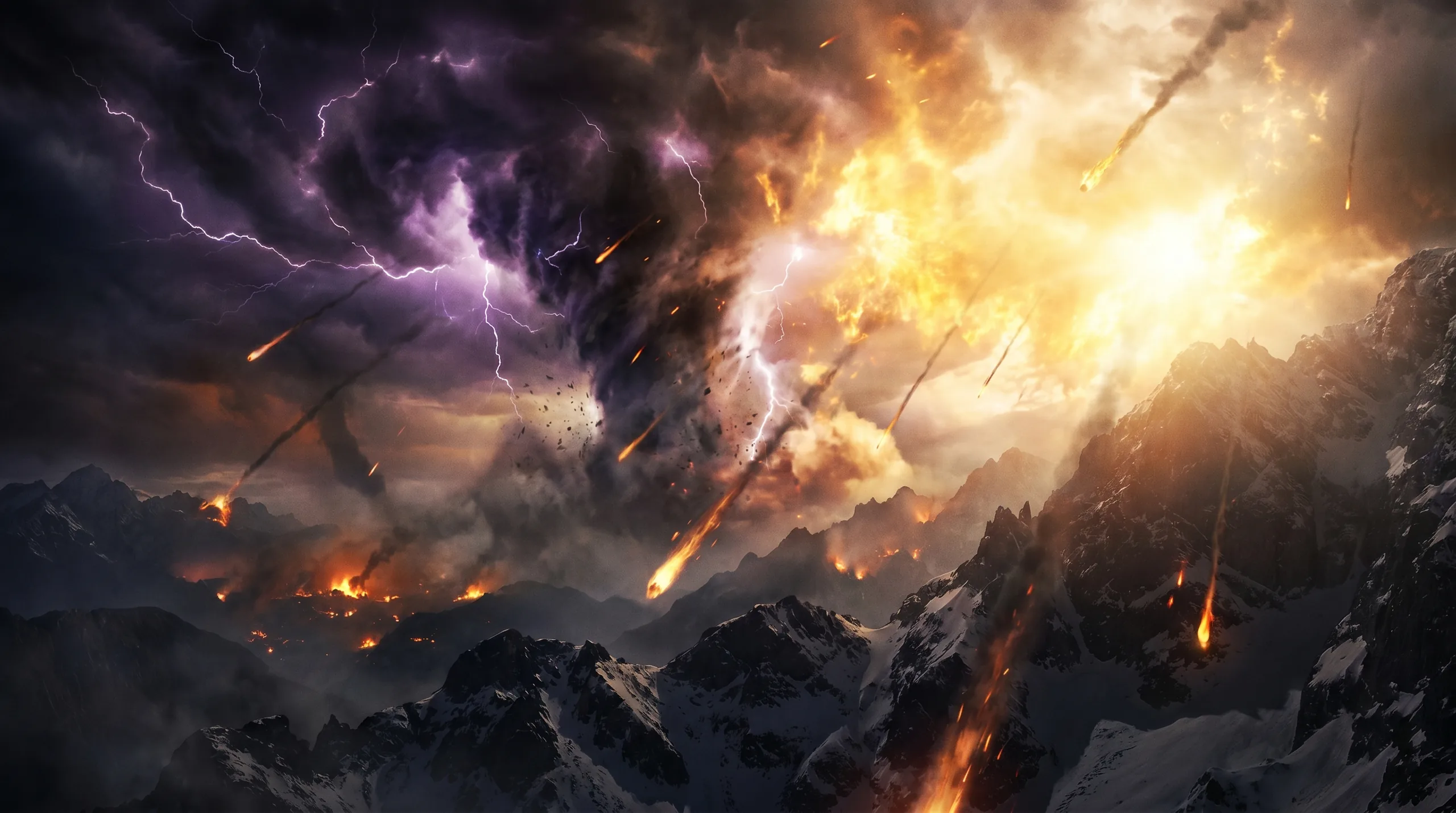
Then, in a matter of hours, the barrier between their world and the Deep Veil dissolved, and the Nightmare came down on Elehaya all at once. Some fifty million Elehath died in what the survivors named the Doom of Elehaya, roughly two thousand years before the Deity's Sacrifice.
A few had seen it coming. The wisest, most farsighted and most pragmatic of every faction came together as the Conclave. In public they argued for a negotiated peace. Their inner circle had already decided the war could not be stopped, and that the only choice left was to leave.
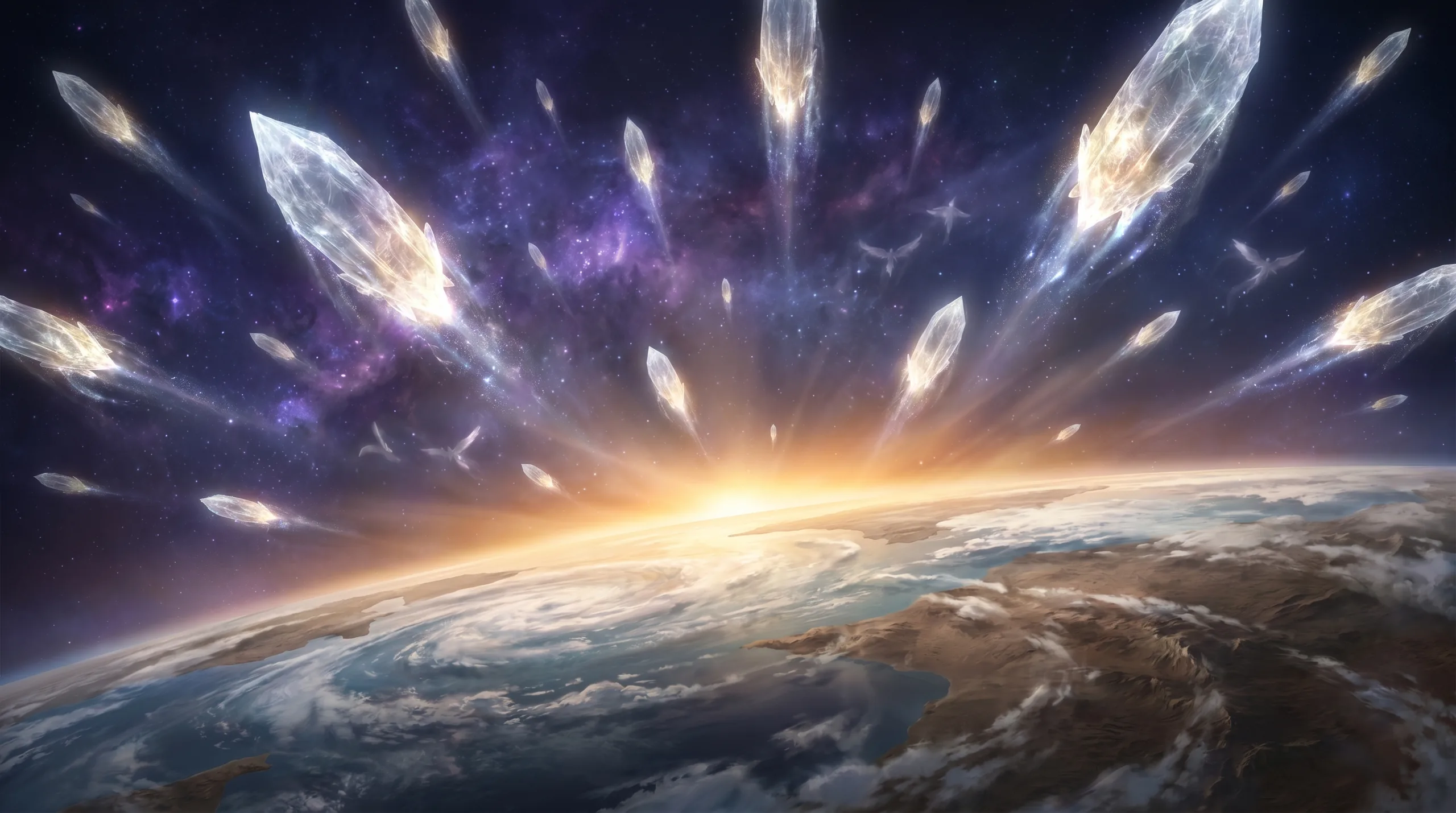
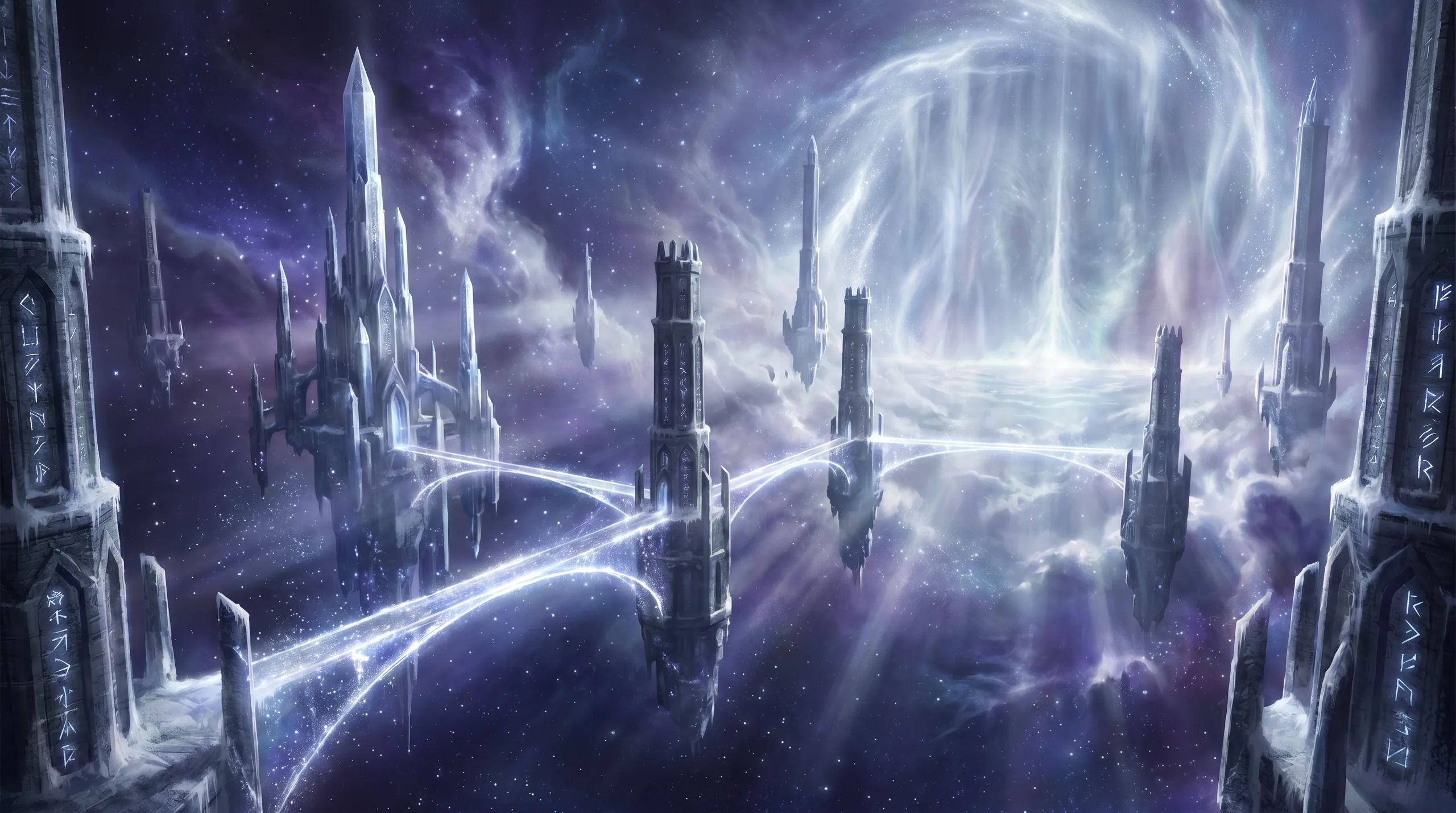
They numbered sixty thousand, about one Elehath in eight hundred. They found Kworgale, learned to navigate the Veil, and built the Crystal Ships, each raised around a Prismata that was its engine and its fuel at once. The ships were Anchors, solid enough to carry their builders through the Deep Veil without being unmade. Six were finished when the Doom came.
Ten thousand Elehath rode in each, every one of them bent on the passage. They fled through rifts already open while Elehaya was devoured behind them, and the crossing was less a matter of distance than of alignment. Five ships launched together. The sixth left hours late, and did not come down with the others.
The five tore into the sky above a nameless isle west of the jungles of Verdarynia, high enough that the tearing displaced nothing but air. The oldest telling names those days in three movements: the Doom of Elehaya, the Flight of the Elehath, and the Descent of Angels. Some fifty thousand came down.
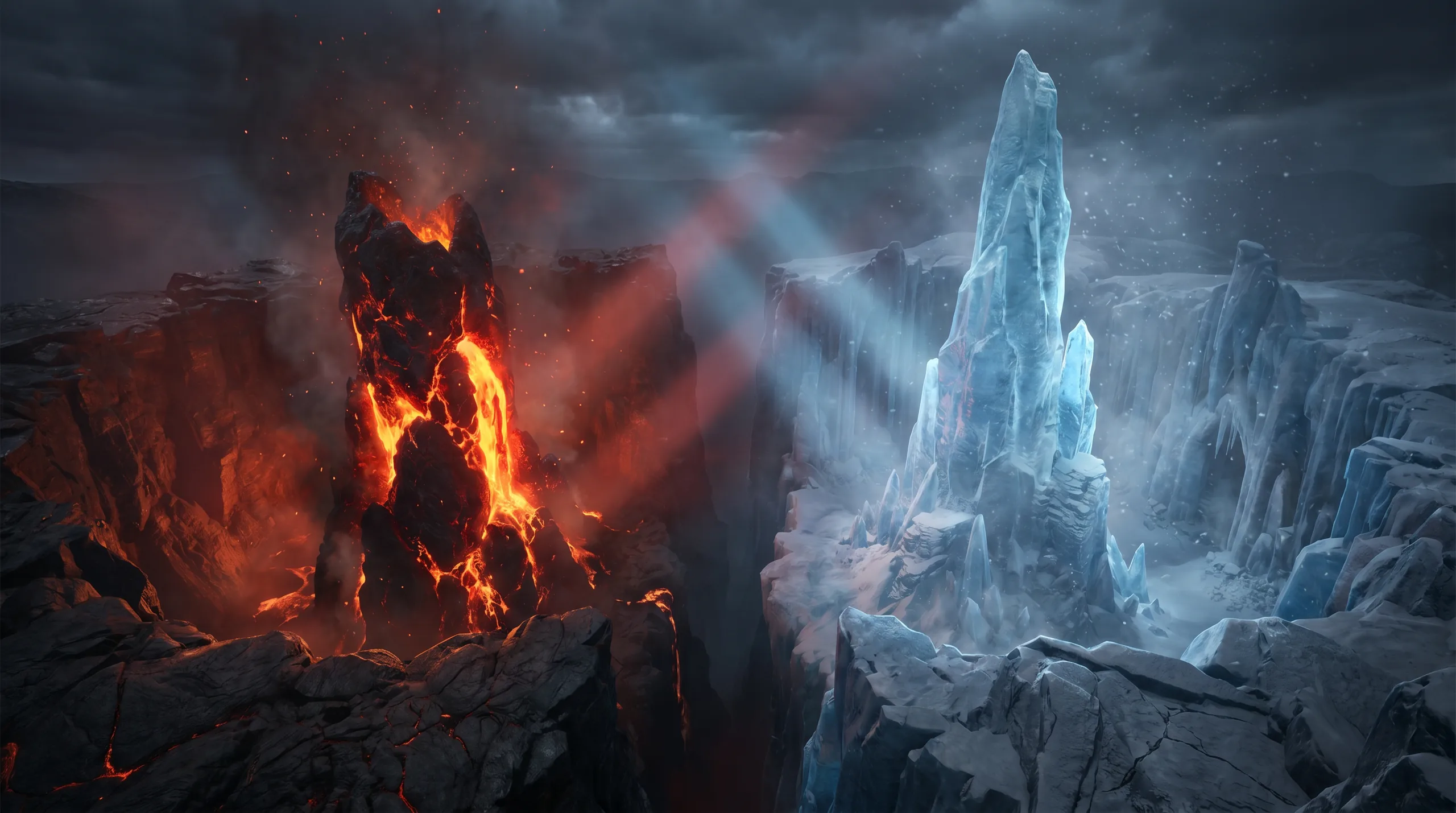
They did not come down to an empty world. Kworgale's Great Spirits of Fire and Ice were already ancient, its dragons already old, and its wilds already held by the sapient Beasts. The Elehath might have tried to overpower the Spirits. The attempt could as easily have destroyed Kworgale, and so they chose a pact instead.
Within a dozen years of landing they had raised the Ur-City of Vadesh, and found that refuge was not peace. Their minds and Hearts were tuned to the thymara of a dead world. They could spend it on Kworgale, but they could never draw it back. And the old sickness of faction was stirring again.
For a year and a day they argued it out in the Last Convocation, and at the end the overwhelming majority chose to lay down what they were. In the Great Renewal the Elehath were reborn as the Elekoi — humankind, the elves and the dwarves — in bodies the Hammer forged in the image of their old ones. They were attuned to Kworgale's own thymara and adopted into it, at a fraction of their former power. There are three peoples rather than one because nobody, not even the five who guided the rite, could say which road forward was best.
Their memories went with their old forms: the Doom, the war, the guilt. The Elders did not impose that loss. The Elehath chose it together, before the rite, and afterwards the Elders said little more of the past than that their children had come to Kworgale from the stars.
Five did not lay themselves down. They were the moderate voices who had led the best of their factions onto the ships together, and in the Renewal they became the Elders — the Elder gods of every later faith. As their kin cast off their power, the five took it in, and forged Elder Crystal Hearts of such capacity that for a time they stood level with the forces of nature. Then they struck the pact with the Great Spirits under which every Elekoi soul draws on Kworgale still.
But the Elders did not reincarnate, and so they were never attuned. Their divinity ran on the thymara of a world that was gone, and every miracle drew it down. The gods of Kworgale were finite from the first day, and a great deal of the world's history is the history of that problem.
Each took a charge. The Ruby answered for humankind, the Warden for the elves, the Hammer for the dwarves. The Ancient Devil stood guard against the enemy within, the Ancient Deity against the enemy without. A sixth seat, meant for the enemy beyond, stood empty, and the Warden kept its charge. They never claimed to be gods, and they never denied it. From Vadesh onward they walked among their children, until the Conflagration and the Deity's Sacrifice broke them and the three who survived withdrew from the world.
A Crystal Heart grows in only one way: inside an Elehath child, during an ordinary pregnancy. It cannot be made afterwards. When an Elehath is slain, the Heart keeps what the body loses, and given thymara enough it can make the body again. That is how the Elehath beat death.
A Heart can do one thing more. The essences of more than one Elehath can be poured into a single Heart, and what wakes there is their child.
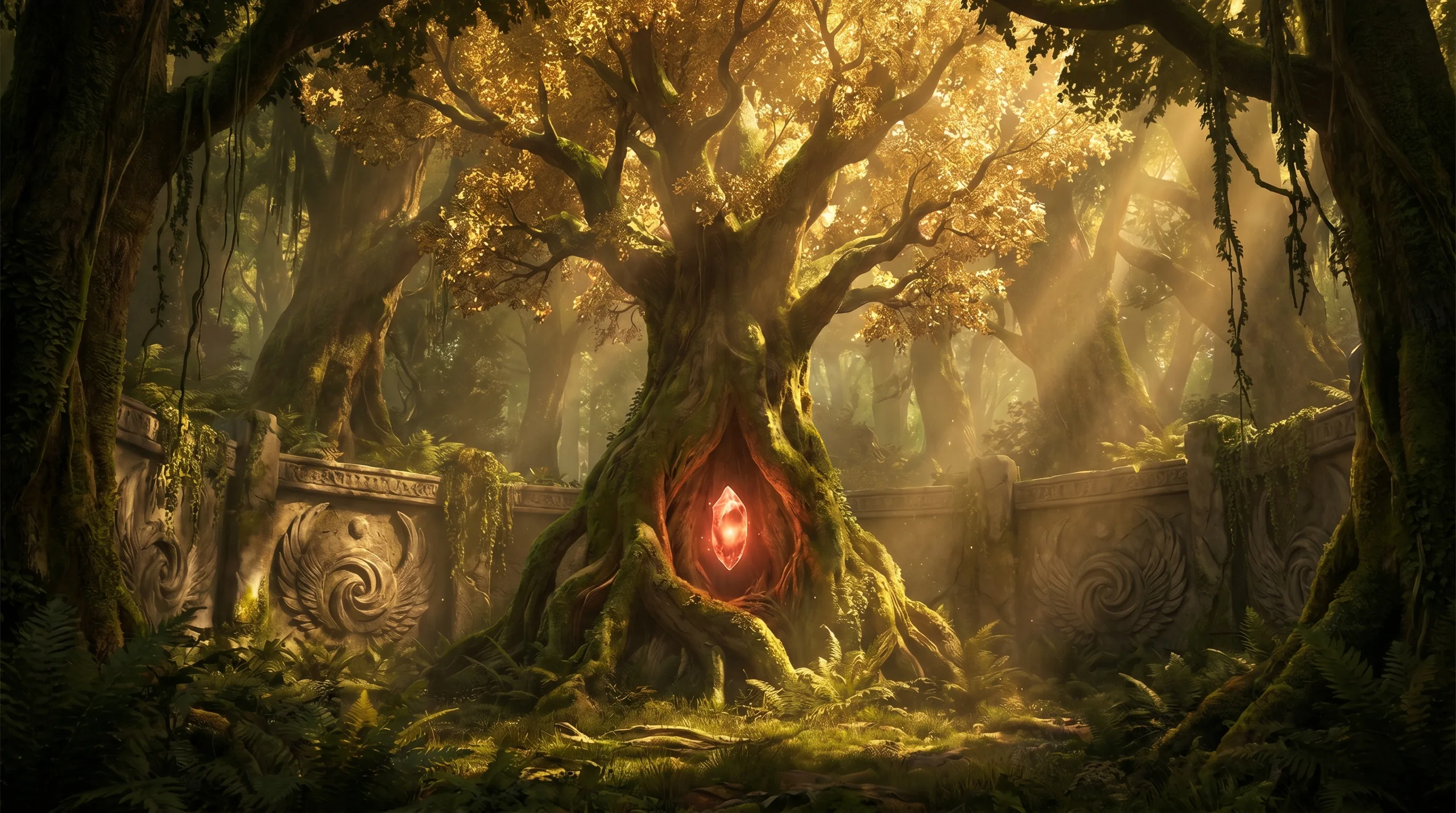
The Hearts are very nearly indestructible. They have come through cataclysms that broke mountains, and they outlast the bodies that carried them. At the heart of Sunspire Forest, inside a tree the Sunfang would die to defend, lies the Ruby's own.
The Elehath are remembered with wings, and rightly. An Elehath who spends thymara past a certain threshold, or simply chooses to, grows them. When the great expenditure is over they fall away on their own, painlessly, the way a stag sheds its antlers. A winged Elehath is not a blessed one. It is one who is working.
None of the fifty thousand walk openly in the world today. The many were reborn; the five withdrew, died, or were sealed away. What is left is a handful.
Glacya, the Frost Queen, is Elehath by birth: born on Kworgale in 26 DS to the Warden and the Ruby, and sovereign of the Glacial Dominion for more than twelve centuries. Her sister Lysara, born in 34 DS, fell in battle in 1026.
Trysania is the other. She was made during the Flight, inside her mother's Crystal Heart, aboard the one ship that came down alone. She slept in its wreck for three thousand years without knowing it, and woke a child in 1000 DS. She is some thirty-three centuries old and has been awake for a little over three of them. Born of her people's final catastrophe, now a keeper of forbidden knowledge, she carries her mother's Heart in her chest and keeps her father's somewhere safer. She works toward an end she shares with no one: a way back to what she has lost.
There are rumours of others. The Elehath have always been easier to rumour than to count.
The art born in that war did not die with Elehaya. Every documented use of Cosmica has been by a true Elehath. Whether the knowledge simply died with the rest of them, or whether only an Elehath mind can hold it, nobody living can say.
The Veil keeps its own rumour of them: a city on the far side of the barrier, and a name, Eternalya, that sailors are asked not to repeat.
The Elehath who crossed were the best of a proud race — the ones who could set down a war long enough to build a way out. Most of them chose to forget. The five who remembered also kept the convictions they had carried out of the war, and never truly set them down.
Kworgale has lived with the consequences ever since.
 LoreThymara & the Thaumaturgic ArtsThe peoples of Kworgale do not call their magic magic. They call it thaumaturgy, and they treat it less as a wild gift than as a craft, a science, and an inheritance — for the…
 LoreThe Great Spirits of Fire and IceOlder than the gods — older, perhaps, than the world's own memory of itself — are the Great Spirits of Fire and Ice. They are not gods in the way the Elders are gods. They have…
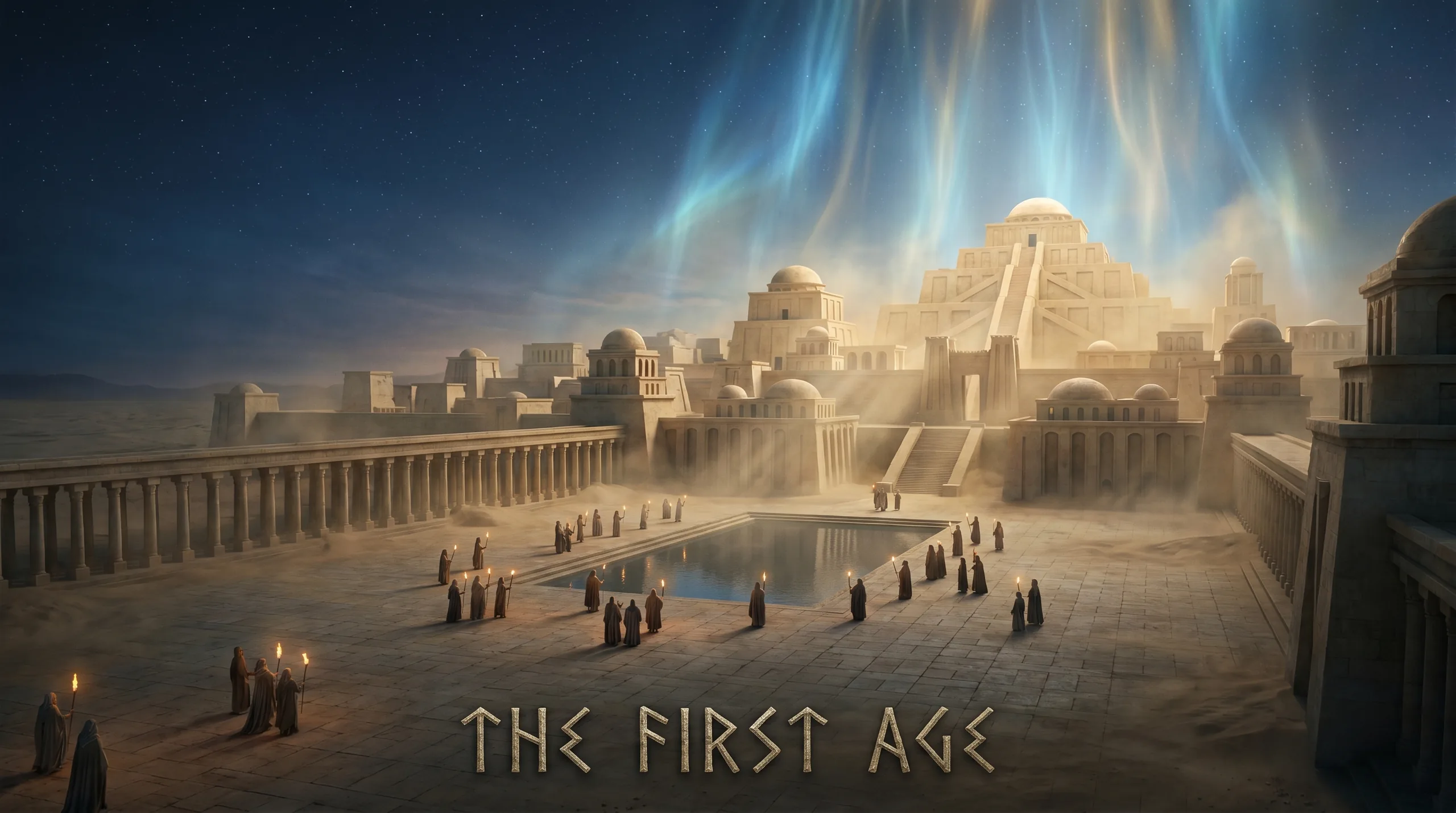 LoreThe Great RenewalEvery history of Kworgale begins at the same place: the Great Renewal, the act of creation, surrender, and forgetting from which the mortal world was born. It is dated, by…
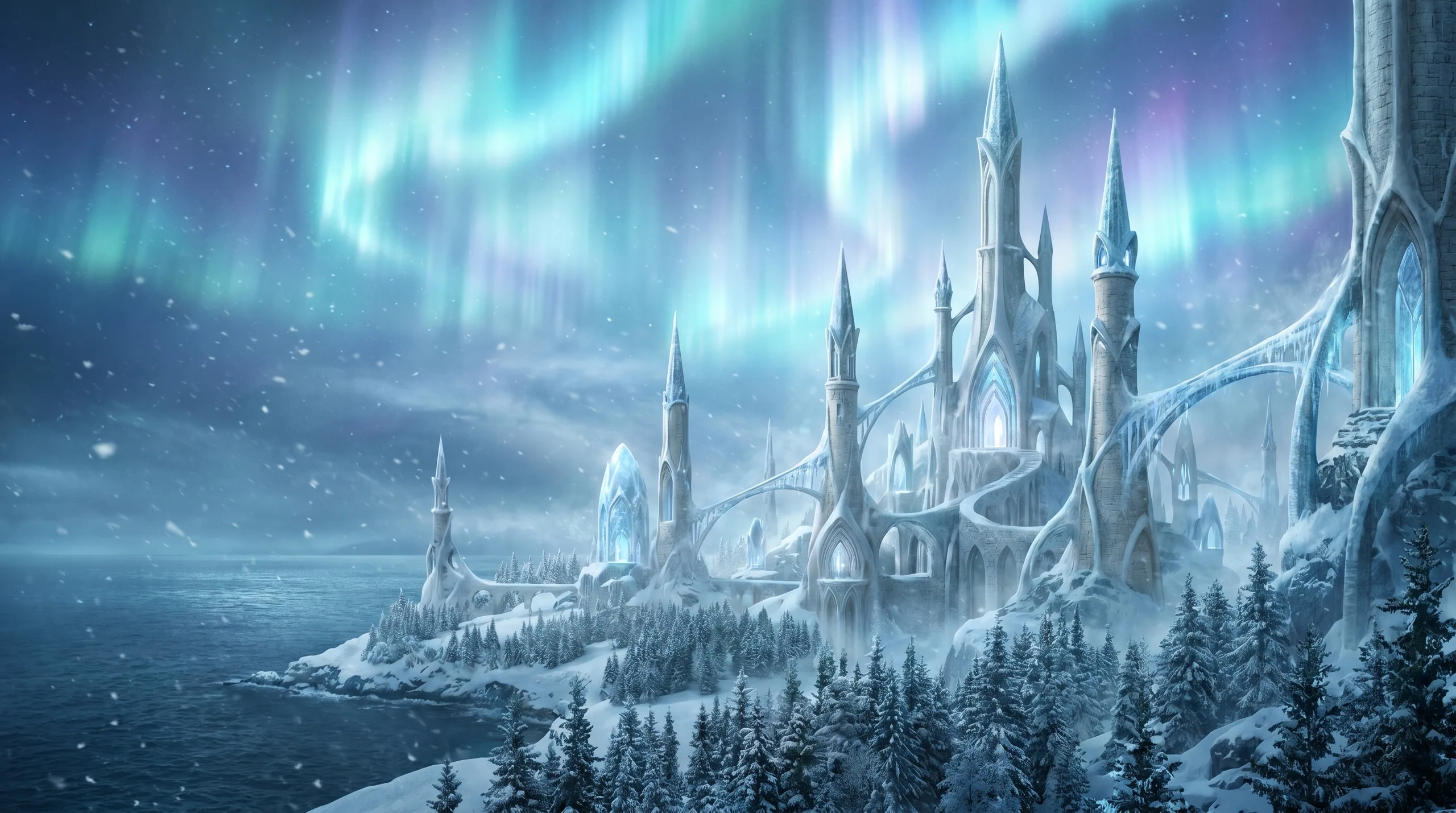 PeopleThe ElvesThe Pavanar are the Warden's children — tall, ageless, and austerely beautiful keepers of the icebound northeast. Each is born to fire or to ice, and they prize the balance of…
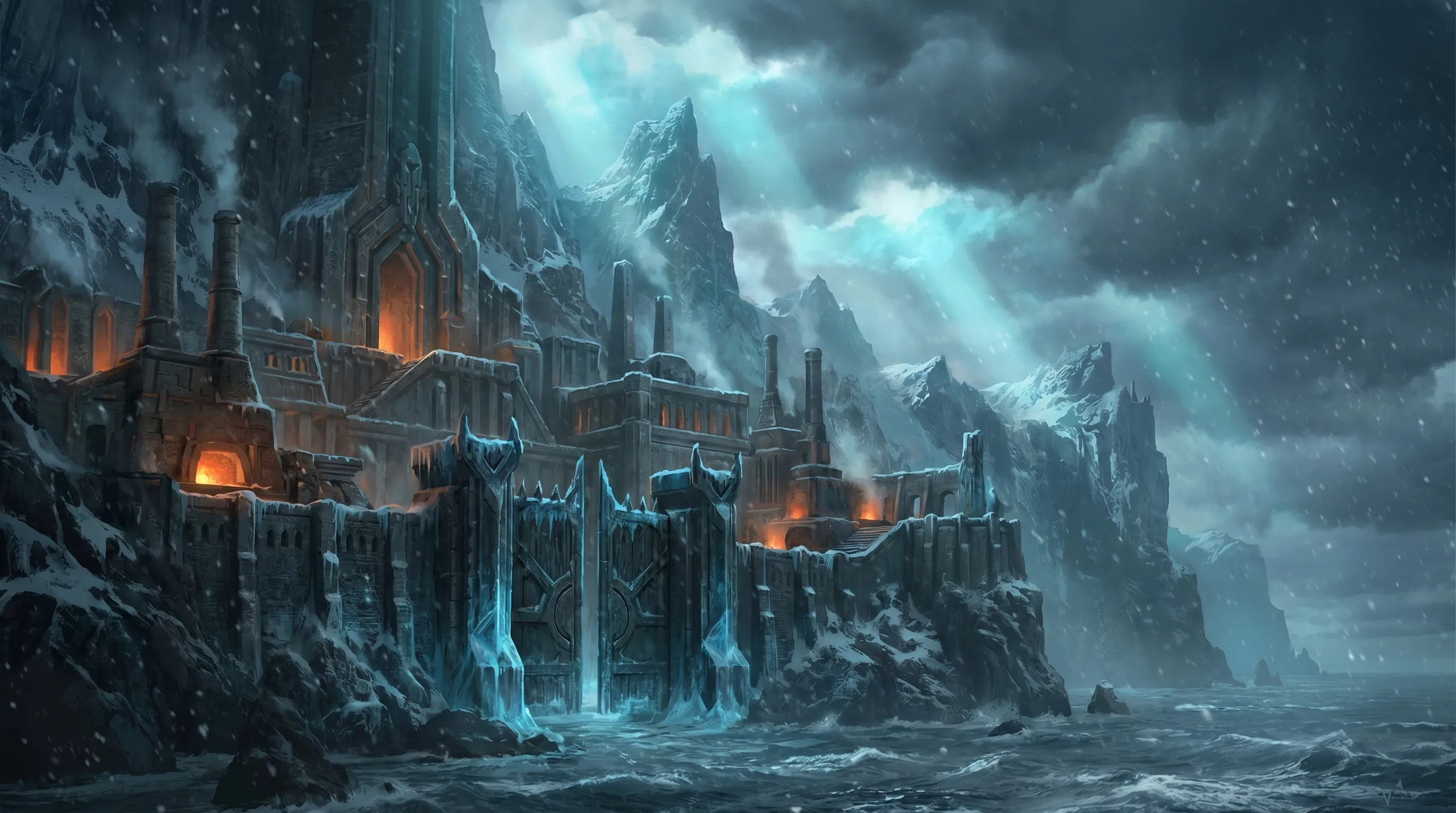 PeopleThe DwarvesThe Himanar are the Hammer's children — broad, bearded, white-haired makers who do not father their heirs but craft them, giving away a permanent piece of themselves to do it.…
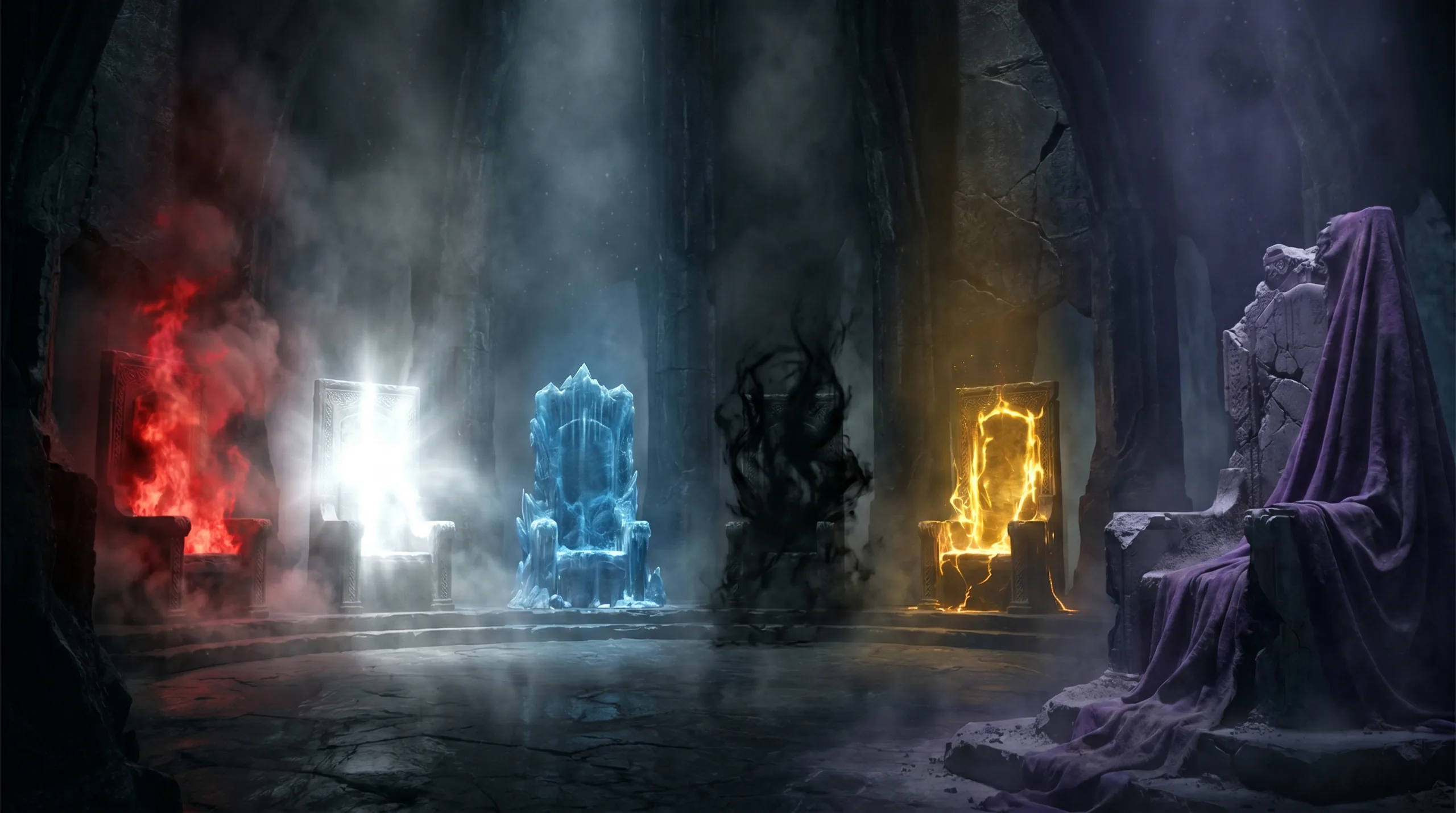 LoreThe Five Elder GodsBefore they were gods, they were exiles. The powers the world calls the Elder Elehath — the Elders — were once members of a deathless race of star-born beings who came to…
 LoreThe ConflagrationFor eighteen centuries the Elder gods guided their children. Then they destroyed each other, and the world with them. The war that ended the divine age is remembered, with dread,…